
Bevel Up or Down Smoothing Plane Build Process
 Return to main project page
Page 19 of 25
Posted 18th April 2026
The next thing to think about is the screw itself. I'd hoped to use another low-head M8 cap screw (like the one I'm using to hold the blade to the cap iron and the one I intend to use to hold the front knob in place). However, the longest one I could find isn't anywhere near long enough:
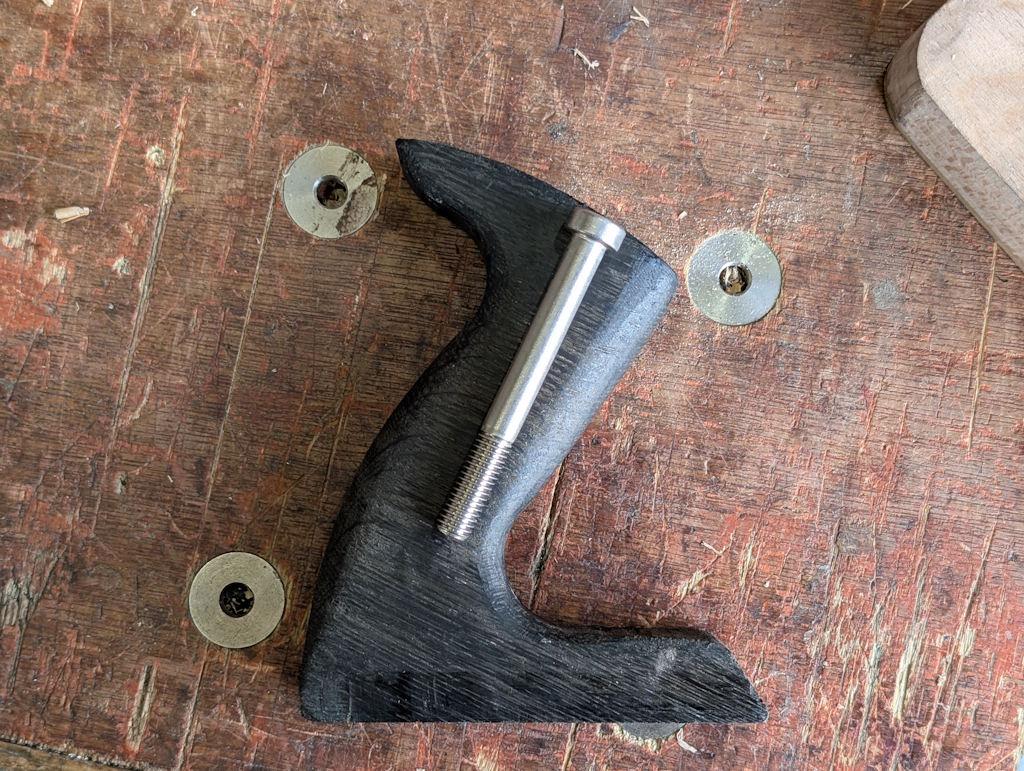
I've got a few options here. I could drill the hole a bit bigger from the underside and insert an intermediate 12 mm (say) diameter piece with a male M8 thread on the bottom end and a female M8 thread on the top. The cap screw would then screw into the extension piece and the extension piece into the brass piece. The downside of that is that it might become impossible to remove (if the upper screw comes undone before the lower one).
Another option is to make a completely custom screw. This would probably be the easiest option but I think it would be quite nice for the three screws to look the same. I've got a rotary broach so I could make a hex hole in the top of a home-made screw, but it would still look rather different to the other two. I could, of course, make all three screws.
Plan A, however, is to extend the screw I've got. I cut the threaded bit off and turned a 45° point on the end. I got a much larger (12.7 mm / 1/2") piece of 303 stainless steel and turned that to 45° but with a spot drilled centre mark (for the point turned on the end of the screw to go into). One got mounted in the lathe chuck; the other got mounted in the wood lathe chuck on a live chuck mount (i.e. one with bearings in so it can spin freely):
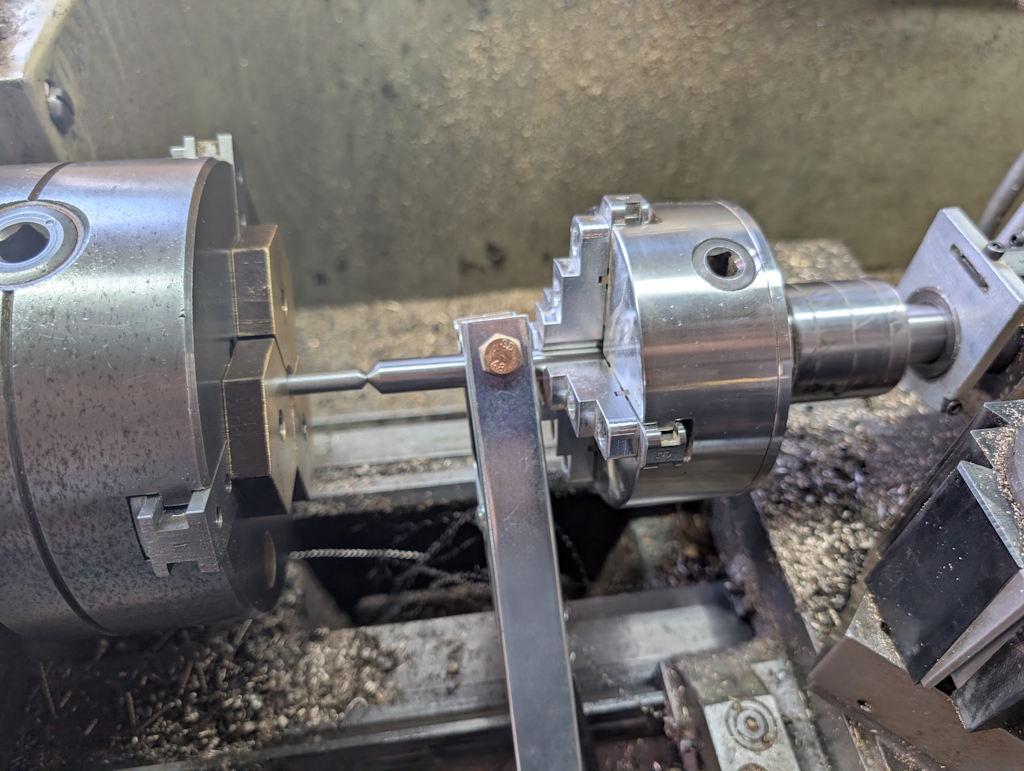
A bit of TIG welding later (with the lathe turning really slowly) and it looked like this:
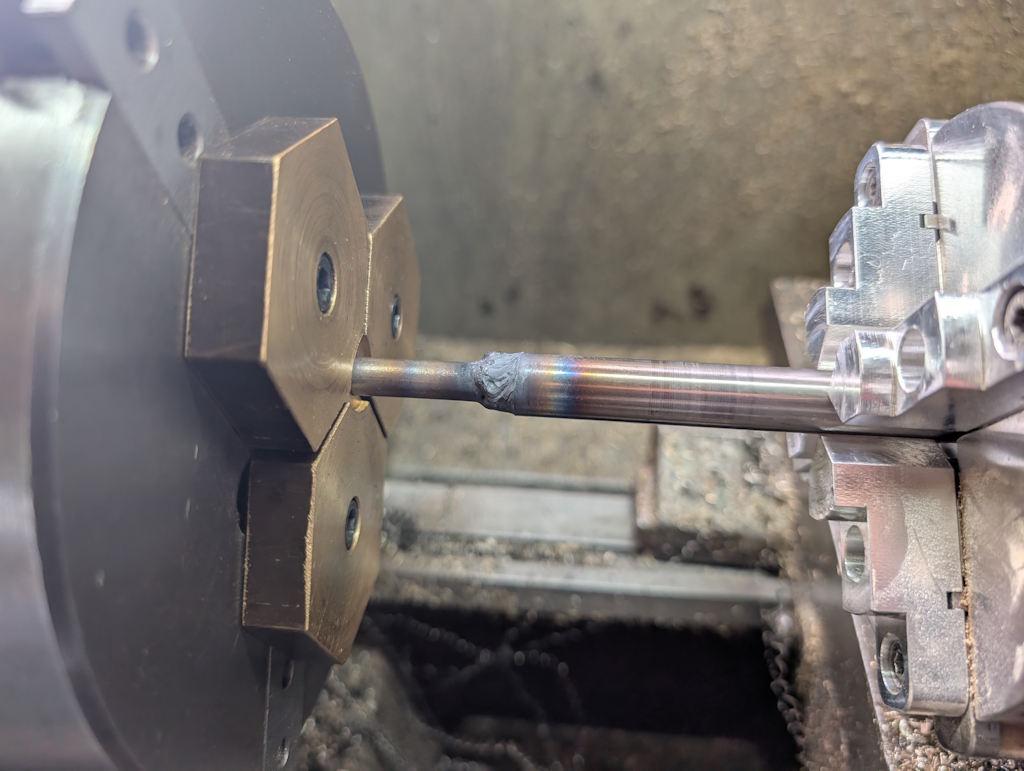
The reason I used a much bigger diameter bar here (12.7 mm rather than 8 mm) is that I was fairly sure that it would distort a bit while welding. The idea was that the 12.7 mm section would be a bit wonky and would be non-concentric at the end farthest from the head. As long as it wasn't too bad, a bigger diameter allows that non-concentricity to be turned away.
This is what it looked like once it had cooled down:
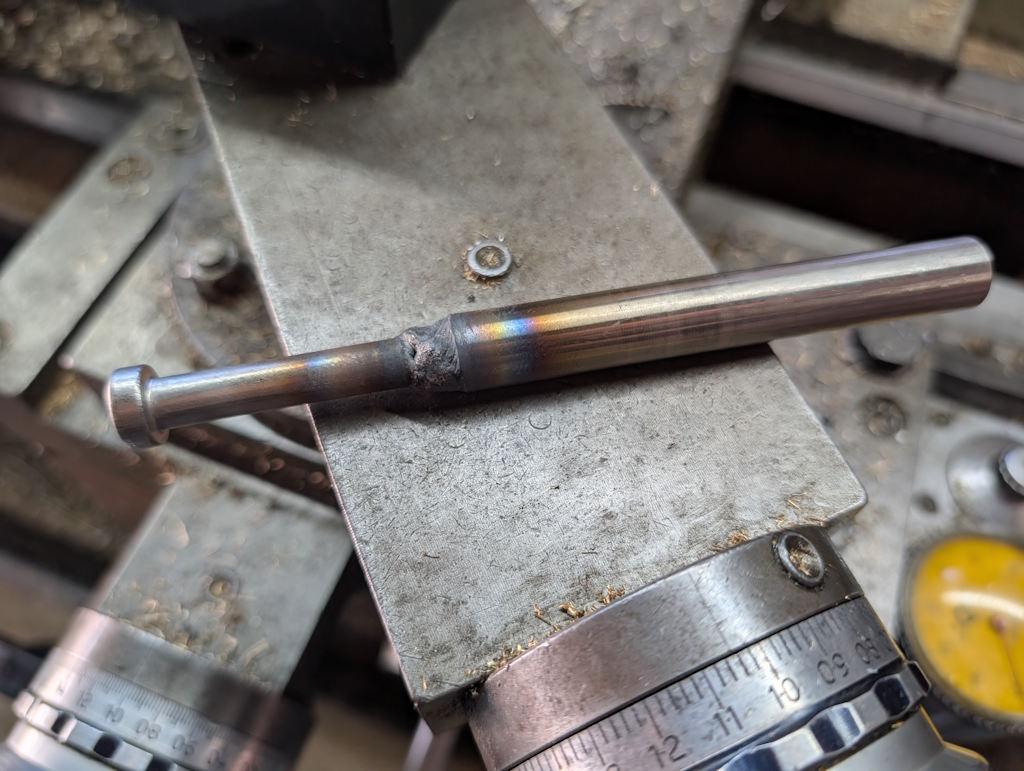
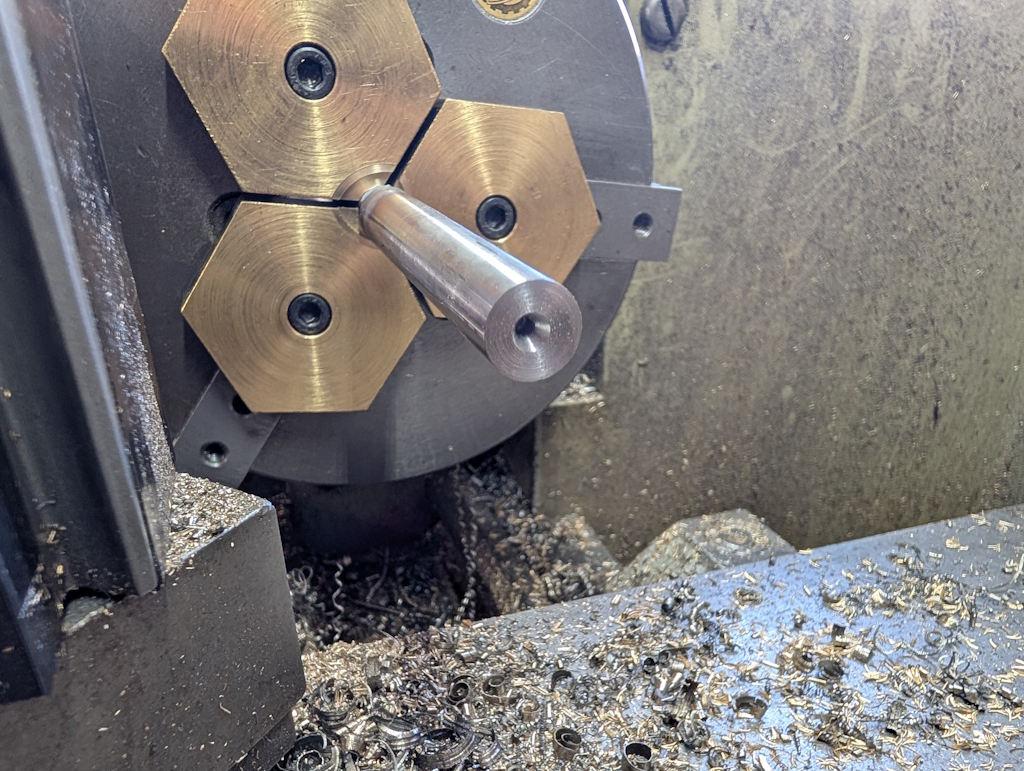
I noticed that little blemish after taking the photo so did an extra quick weld to fill in the hole in case it went deep. Next up, I held it in the soft jaws on the original shank section and spot drilled and then centre drilled a pip in the end. As you can see from this photo, it was close to the centre but (as expected) not quite central:
I could then support the end with a tailstock centre and start bringing the diameter down, roughing it out with a carbide tool:
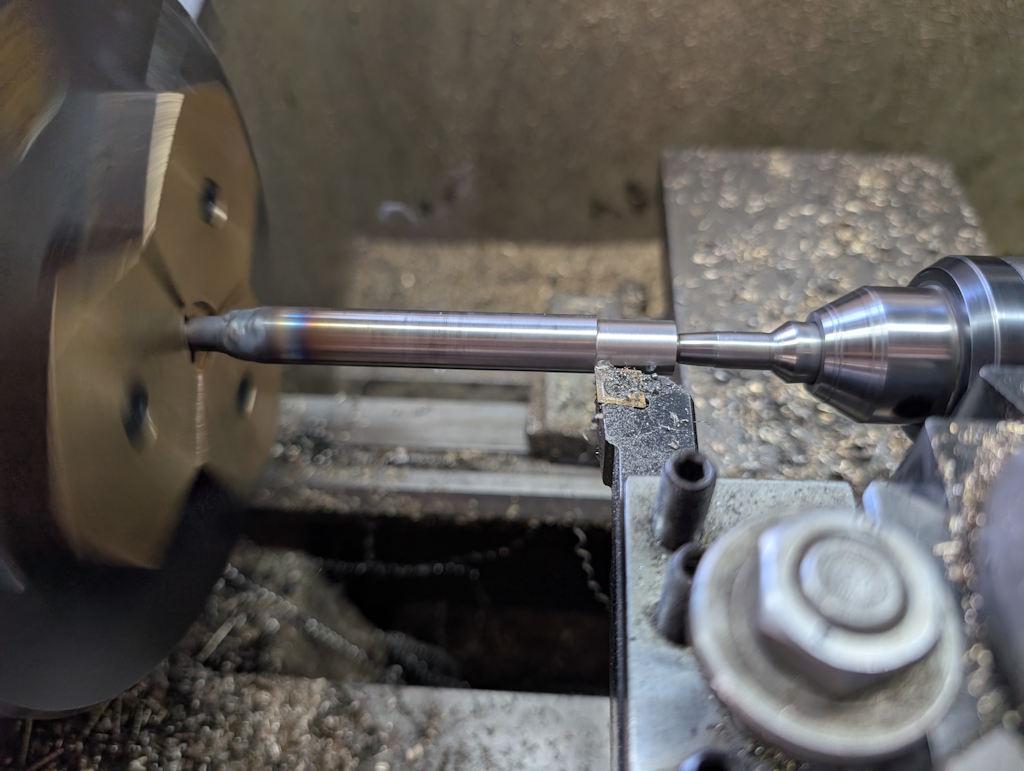
Surprisingly, the first pass (taking the diameter down 1 mm) was enough to get it running concentric, suggesting it hadn't distorted as much as I'd expected and I could have got away with 10 mm bar for the extension. After getting it down to about 8.5 mm, I swapped to a high-speed steel tool for the final passes:
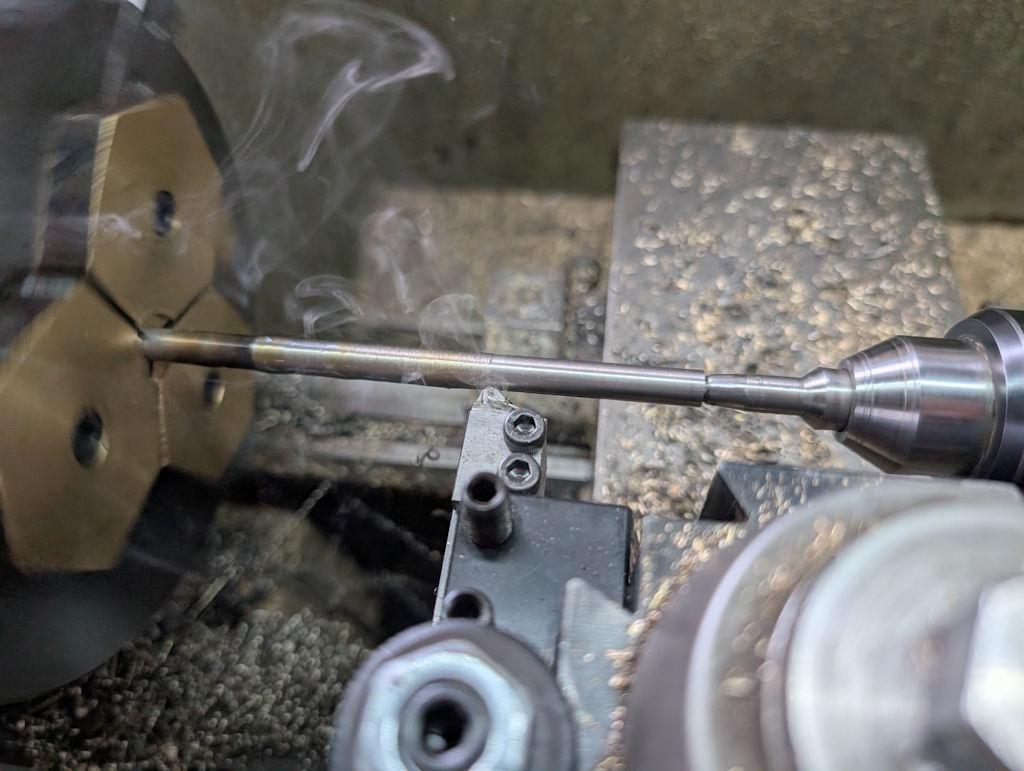
Done:
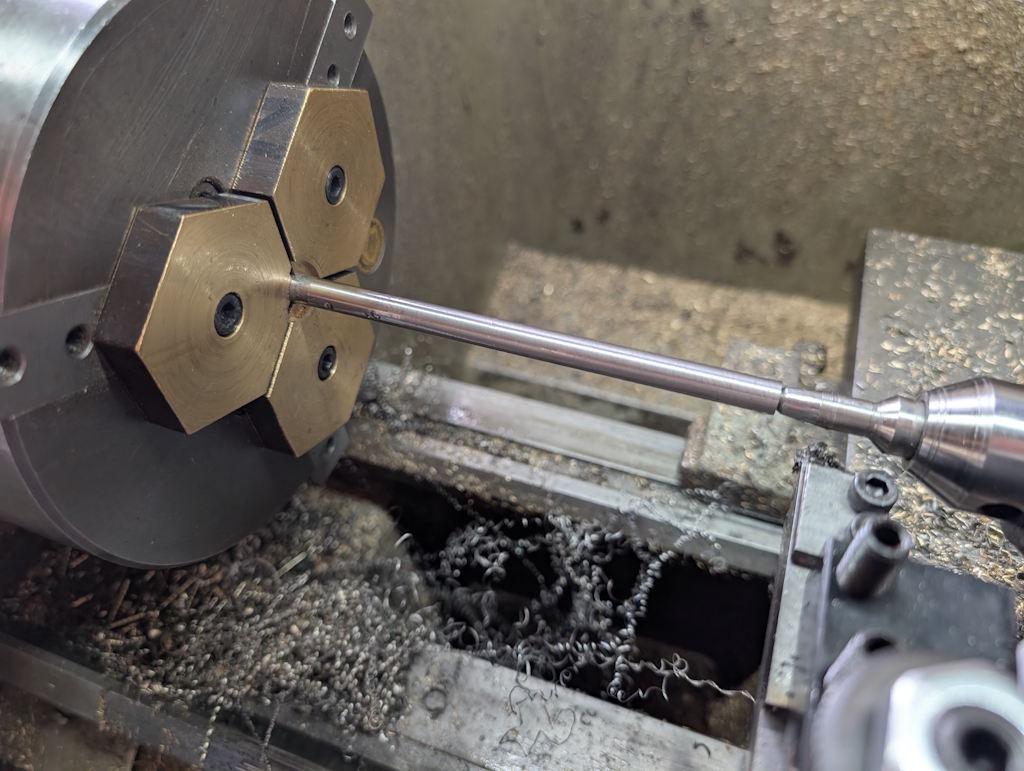
Here it is next to an unmodified one:
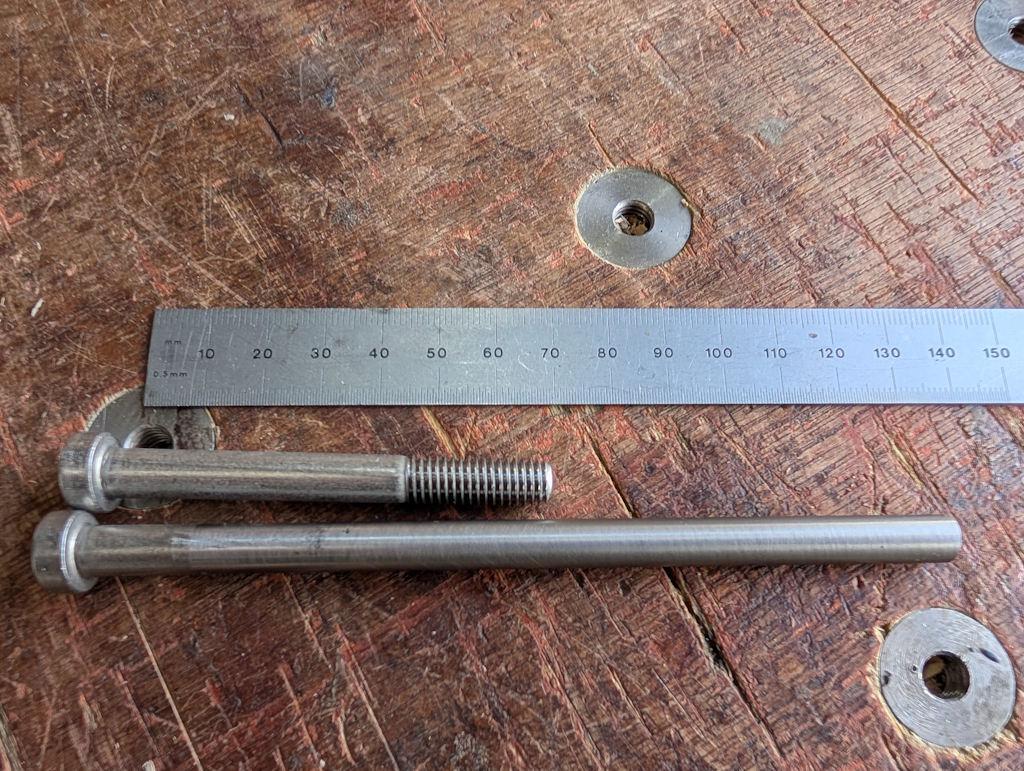
It's much too long at the moment. I knew I needed the tailstock support (and hence the centre drilled hole in the end) and so I erred on the side of much too long so I could shorten it later.
This is where I did something I slightly regret: I went with the lazy option and just ran a die onto the end of the shaft with a die stock:
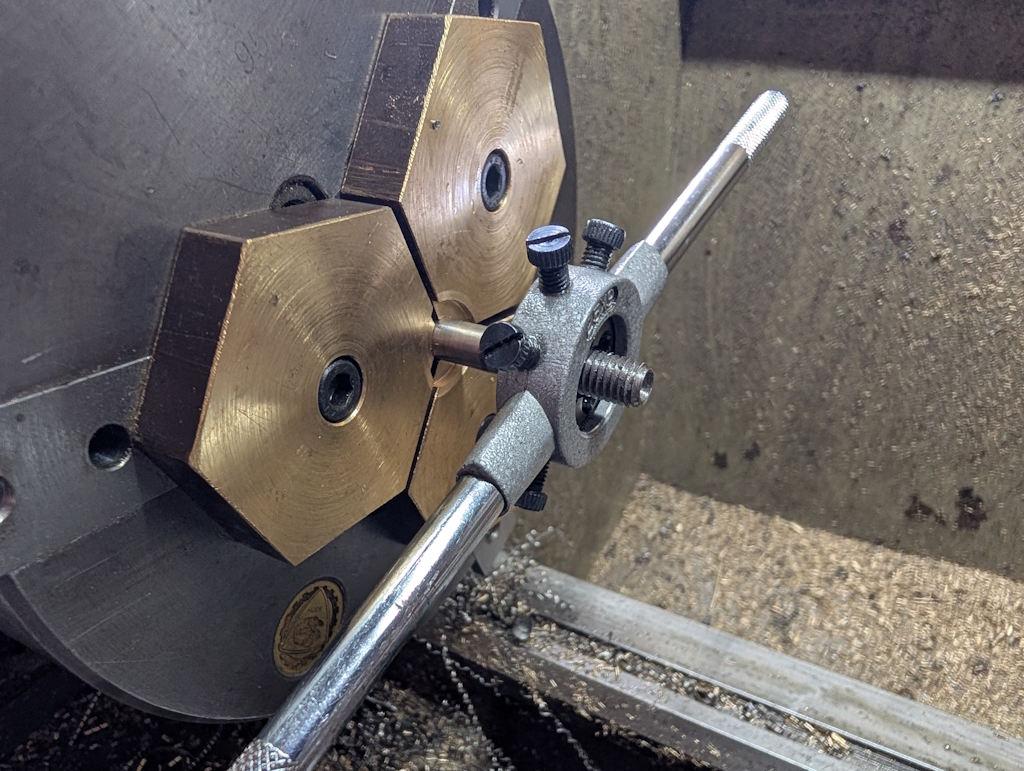
It worked and was quick, but the thread went a bit wonky. It would have been better to use my tailstock die holder (to keep the die concentric) or just thread it with the lathe directly but I was being lazy. Nevertheless, it did the job...
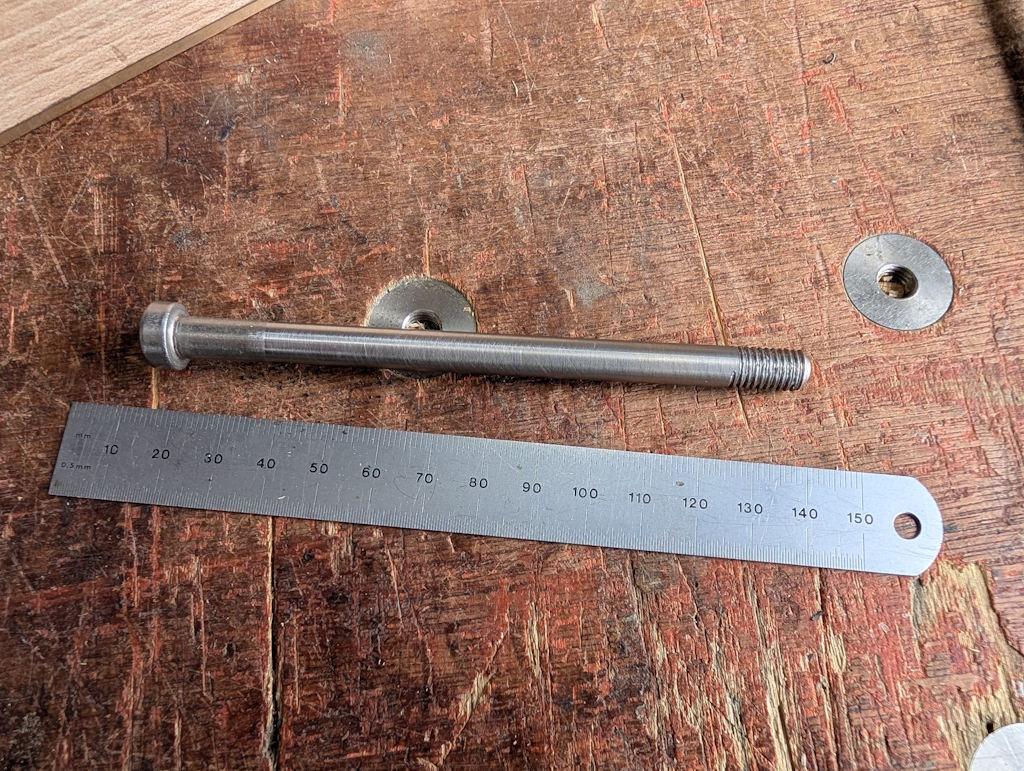
... and it does the job:
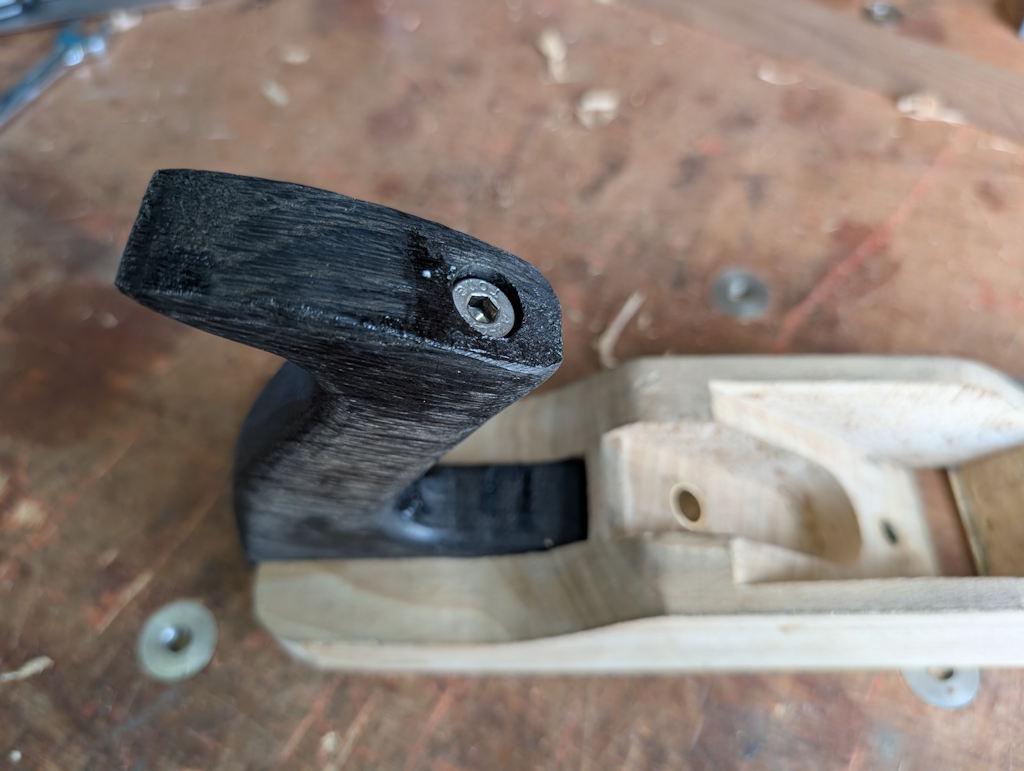
I may make a replacement at some point, but it'll do for now.
Next up is to make the front knob and then there will be loads and loads of card scraping and/or sanding to do to sort out all the wooden bits.
Page 19 of 25
This website is free and ad-free, but costs me money to run. If you'd like to support this site, please consider making a small donation or sending me a message to let me know what you liked or found useful.