
Bevel Up or Down Smoothing Plane Build Process
 Return to main project page
Page 2 of 25
Posted 27th March 2026
I had left the top surface of the plane body with a rough sawn finish but when I went back to it I decided it would be easier to plane it flat and parallel with the base and at about the right thickness for the widest part.
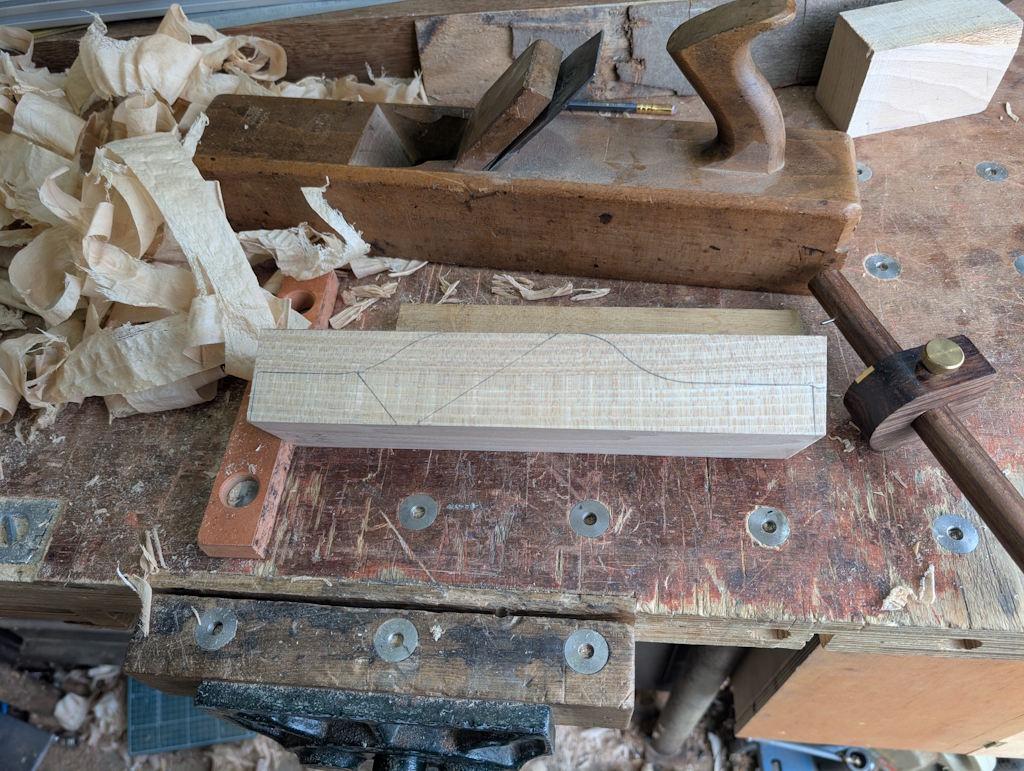
With the height reduced and the top surface smooth I could mark out the big mortice on the top:
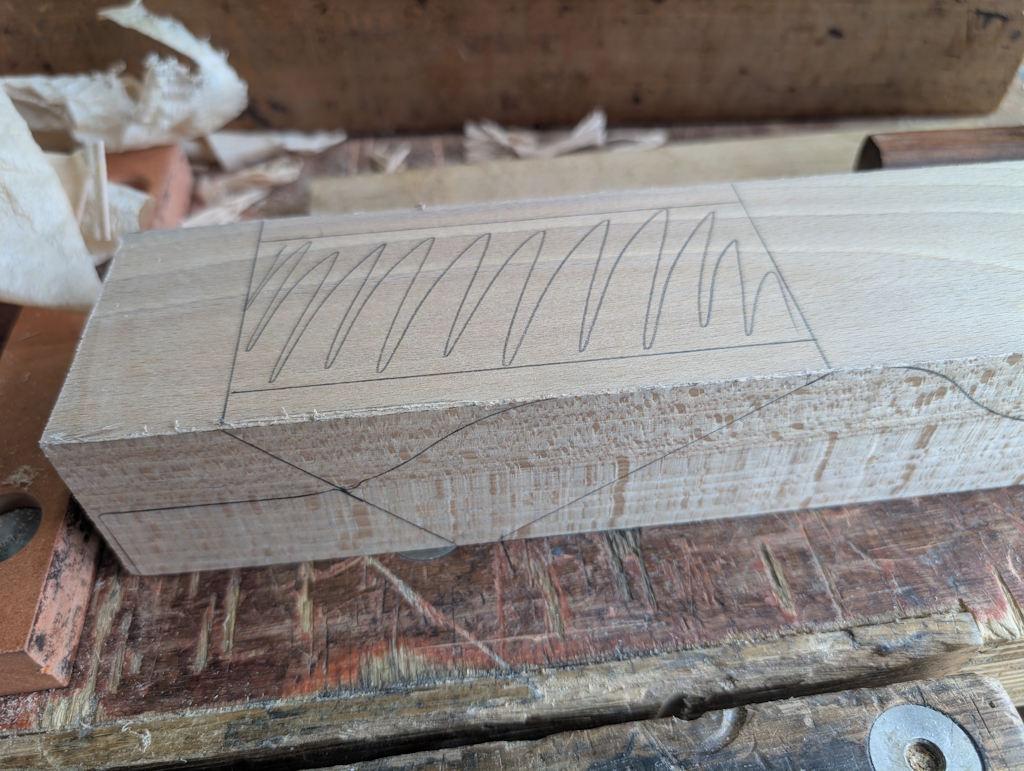
I'd wondered about cutting the profile into the top before starting the mortice, which would reduce the amount of material to remove and also reduce the risk of break-out when sawing the narrow side walls, but I decided that it was best to leave it solid for now and deal with the shaping later.
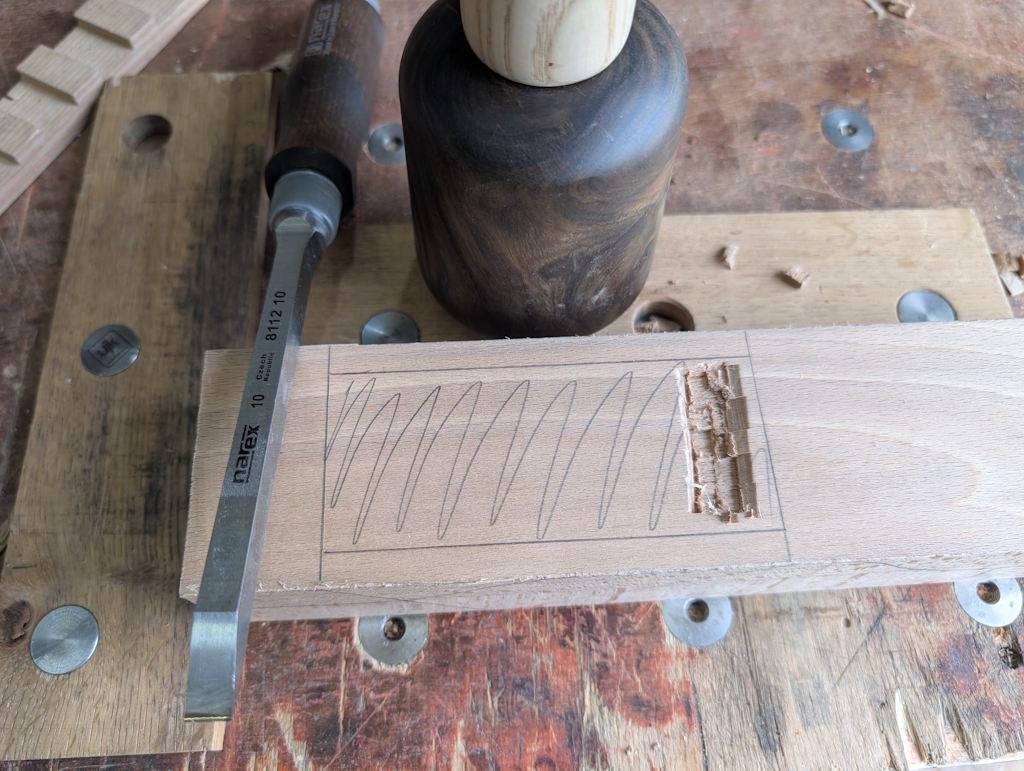
To cut the hole I used a 10 mm mortice chisel. After the first few whacks it looked like this:
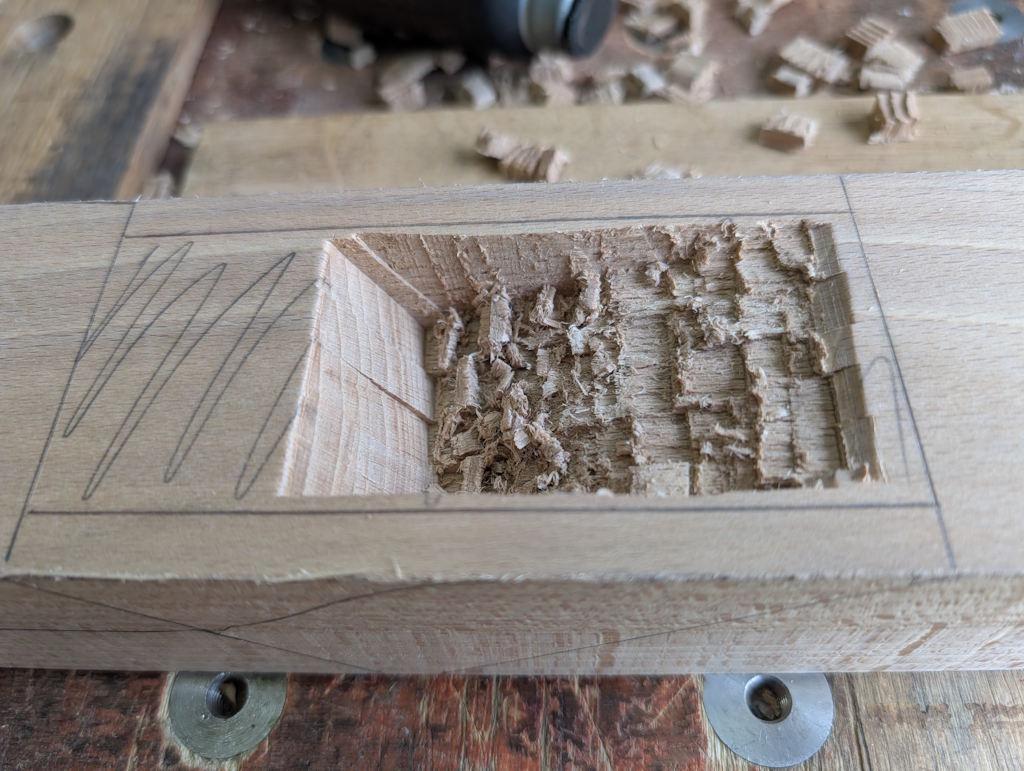
I went this far along before changing direction:
After coming back the other way the bottom surface was looking rough but it was getting quite deep (deeper than I realised in fact):
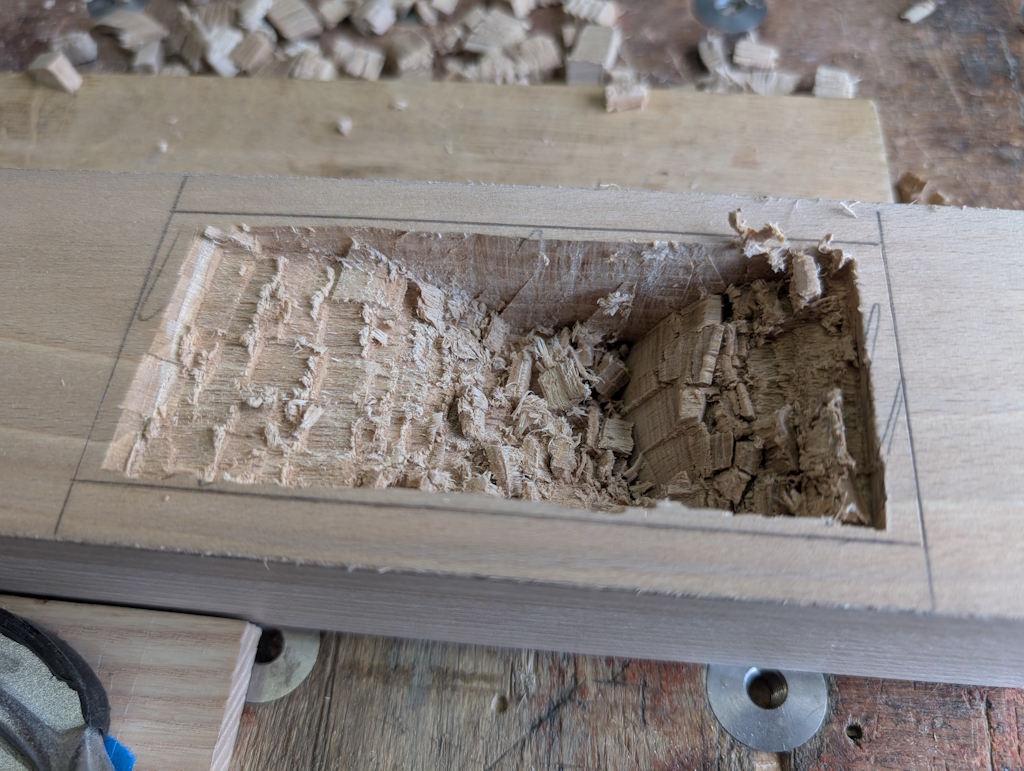
Rather than carrying on deepening it with vertical chops, I switched to working down the angled faces. After the first go it looked like this:
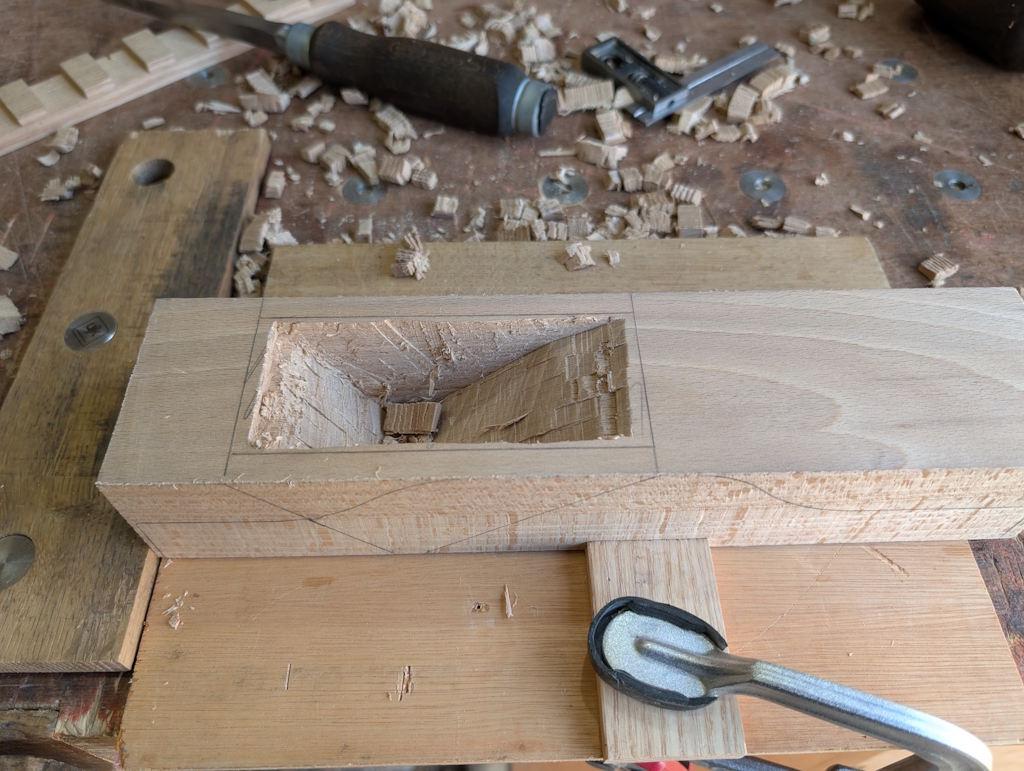
Unfortunately, I'd made two errors of judgement. The first was that I'd gone deeper than I'd realised. The second was that the front surface (the one the blade doesn't sit on) was steeper than I'd intended. As a result:
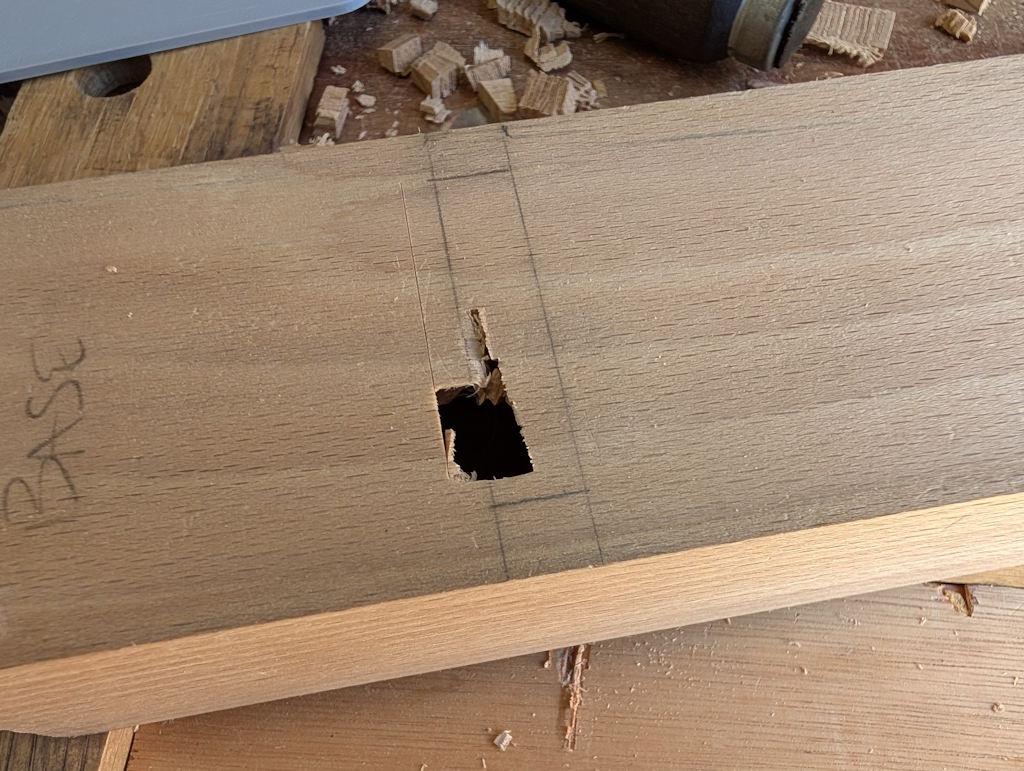
That's not where it should be! Thankfully, I'd marked out that gap on the very conservative side (in practice it'll need to open out more or the blade will hit the front edge) and also at this point it's not too big a deal to move the hole slightly further forward:
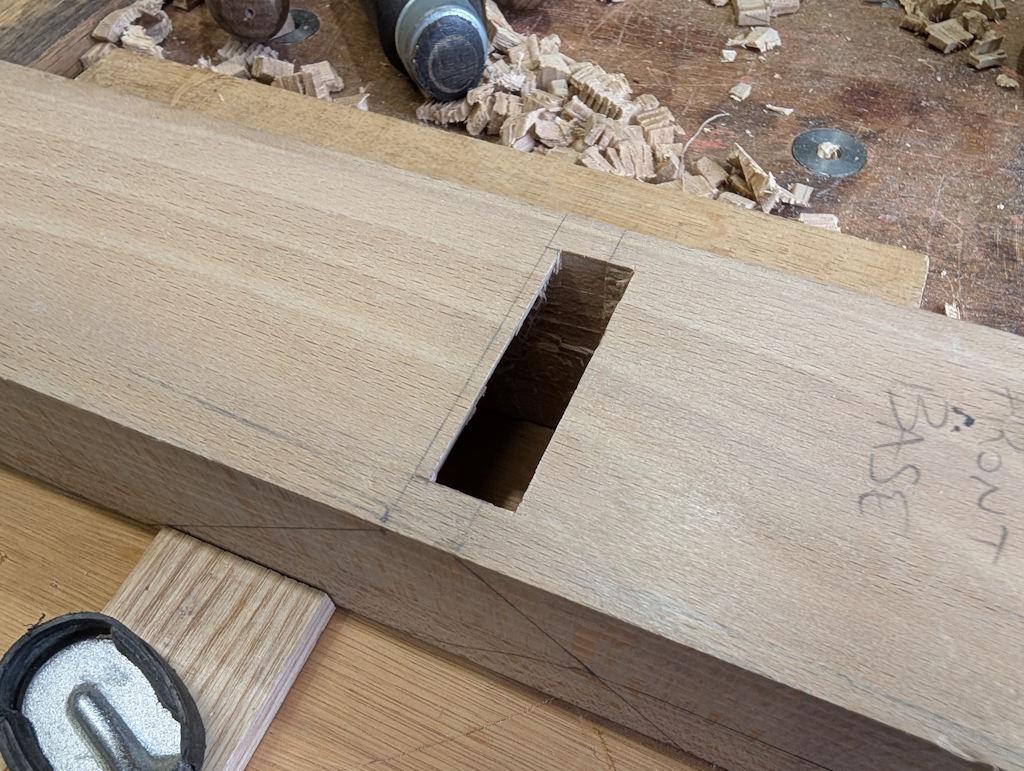
That probably looks like a big hole for anyone used to wooden planes, but remember there's an additional 3 mm of brass thickness to go on the bottom and that'll close it up quite a lot.
There's a reasonably high chance that the error will mean that that the front section of the plane base (ahead of the blade) will be a bit shorter than I'd intended, but I don't think it's a disaster as the difference will only be a couple of millimetres.
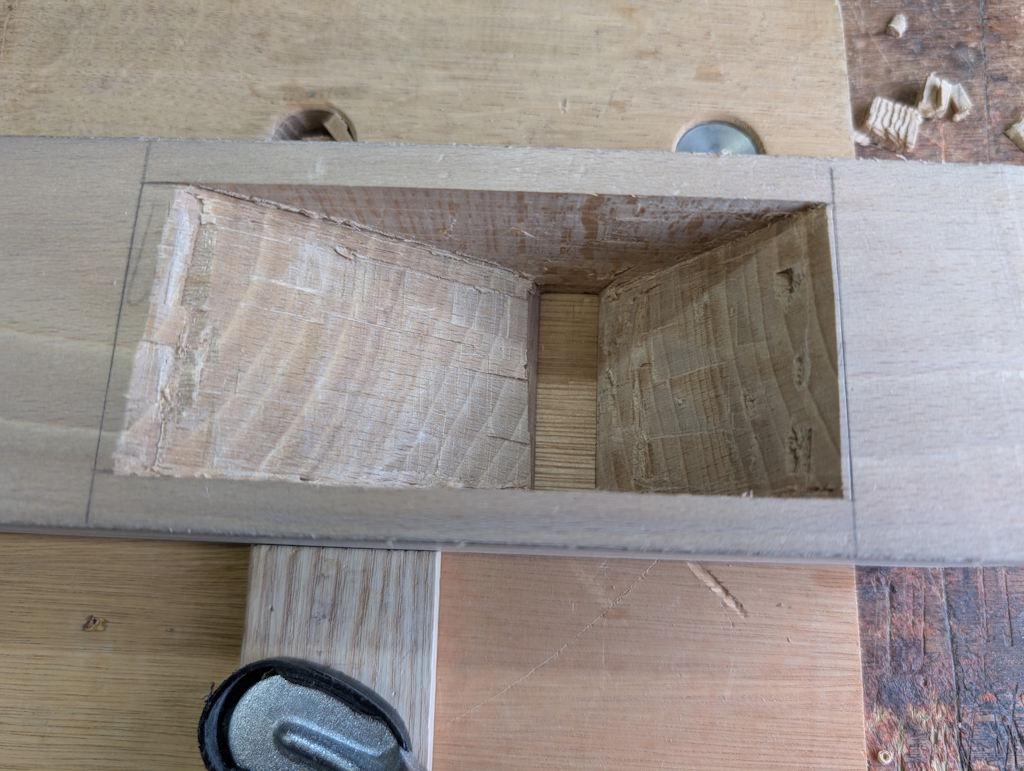
With the bottom hole cleaned up, I could turn it back over and do a bit more cleaning up of the mortice. I pared the sides to something close to final dimension (they're now a fairly snug fit around the steel bar that'll become the blade but I'll probably open them up slightly more to give a bit of blade adjustment room). I've done a bit more paring down the long faces (with a 30 mm chisel, which I don't use much), but there's quite a bit further to go, especially on the surface that the blade will run on:
Page 2 of 25
This website is free and ad-free, but costs me money to run. If you'd like to support this site, please consider making a small donation or sending me a message to let me know what you liked or found useful.