
Bevel Up or Down Smoothing Plane Build Process
 Return to main project page
Page 21 of 25
Posted 19th April 2026
Over the last few days (in parallel with the work on the handle) I've been working on the front knob. The thicker piece of bog oak had a few cracks visible on the surface and I thought it was worth trying to deal with them before turning. Spoiler alert: this didn't work.
My initial plan as to get some fairly thin (i.e. low viscosity) black epoxy and pour it into the ends of the cracks and then all over the edges and try to fill in as much as possible. To that end I bought some epoxy and some black dye and assembled this little kit:
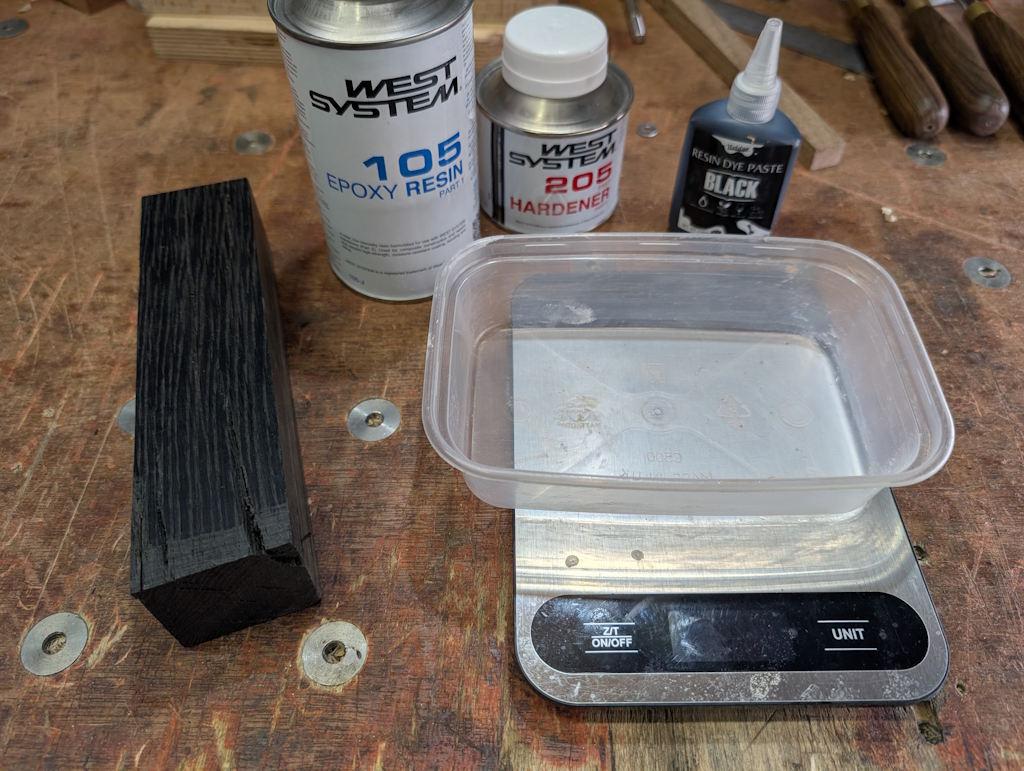
The resin, hardener and dye were mixed in a 5:1:0.1 ratio. I mixed up way more than I ended up needing. After pouring as much into the end grain as I could I daubed the outside in epoxy as well and then left it overnight to dry:
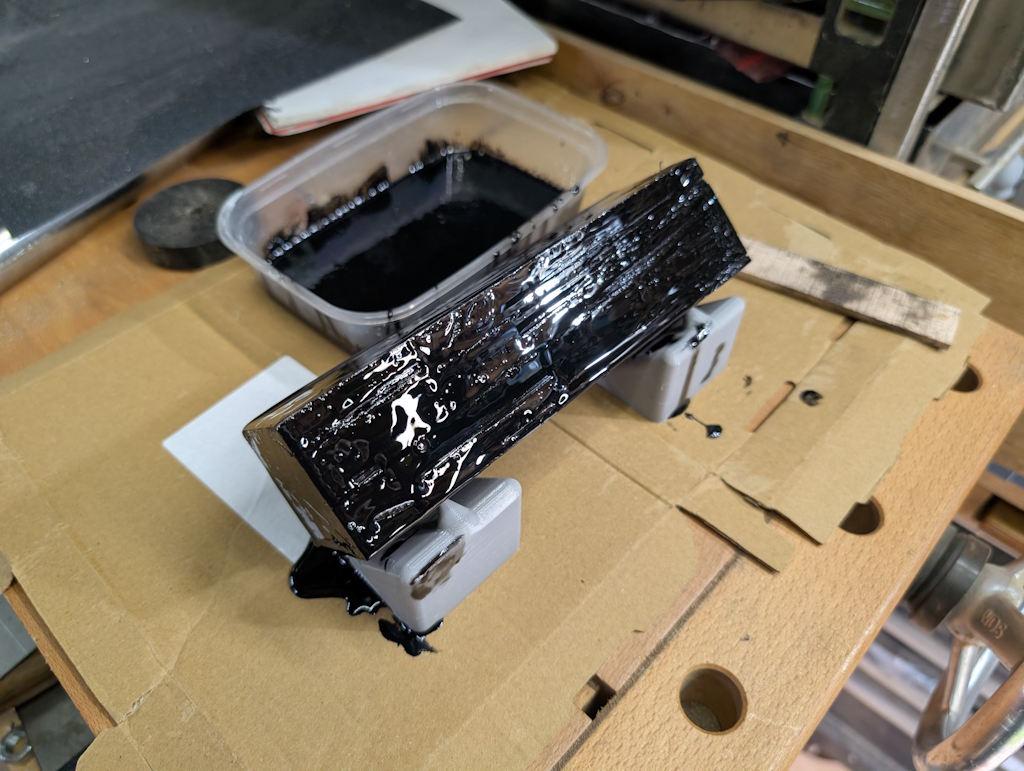
The next day I was left with something that looked more like plastic than wood:
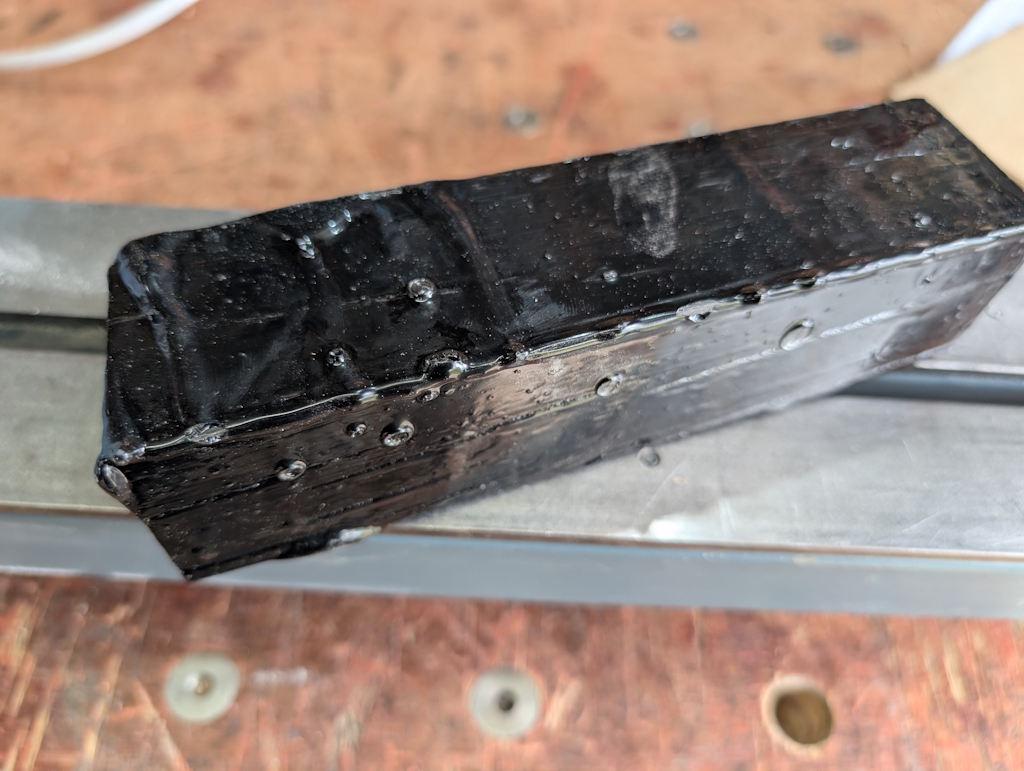
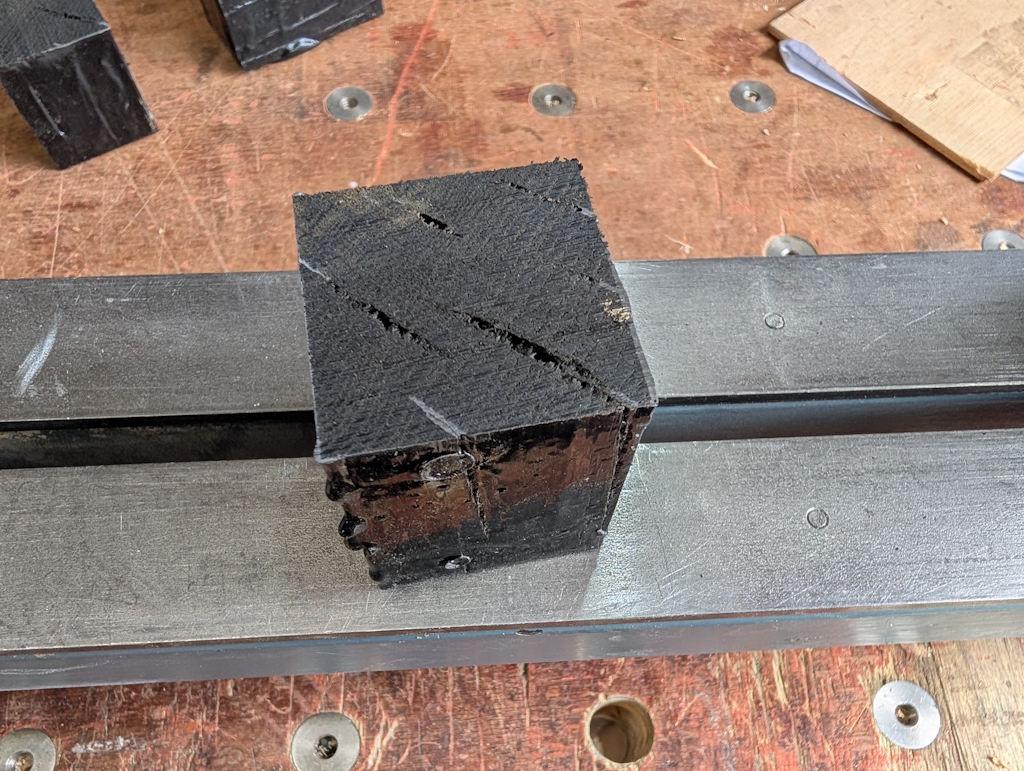
I chopped it into three pieces (partly to get the target length but also to give me more chances at a successful outcome) and it quickly became clear that the epoxy hadn't penetrated enough:
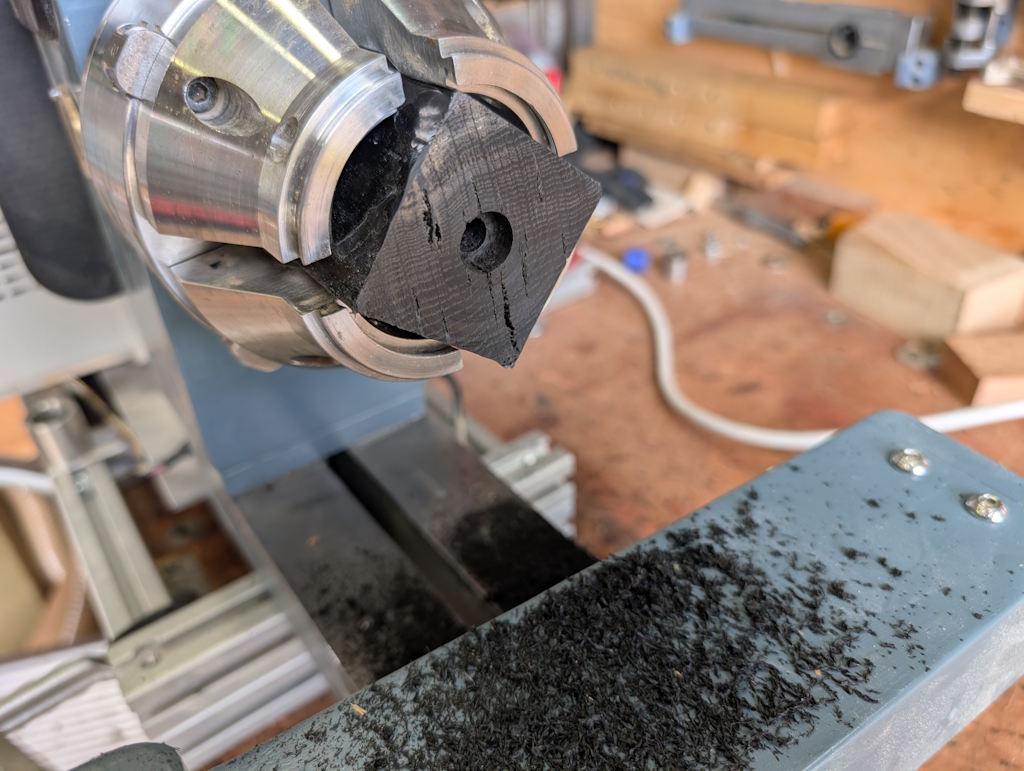
I decided the best thing to do was to rough it down to approximately the right shape and then have another go at filling in the cracks. I mounted the piece in a chuck on my home-made lathe and drilled it through 8 mm and counterbored for the head of the cap screw:
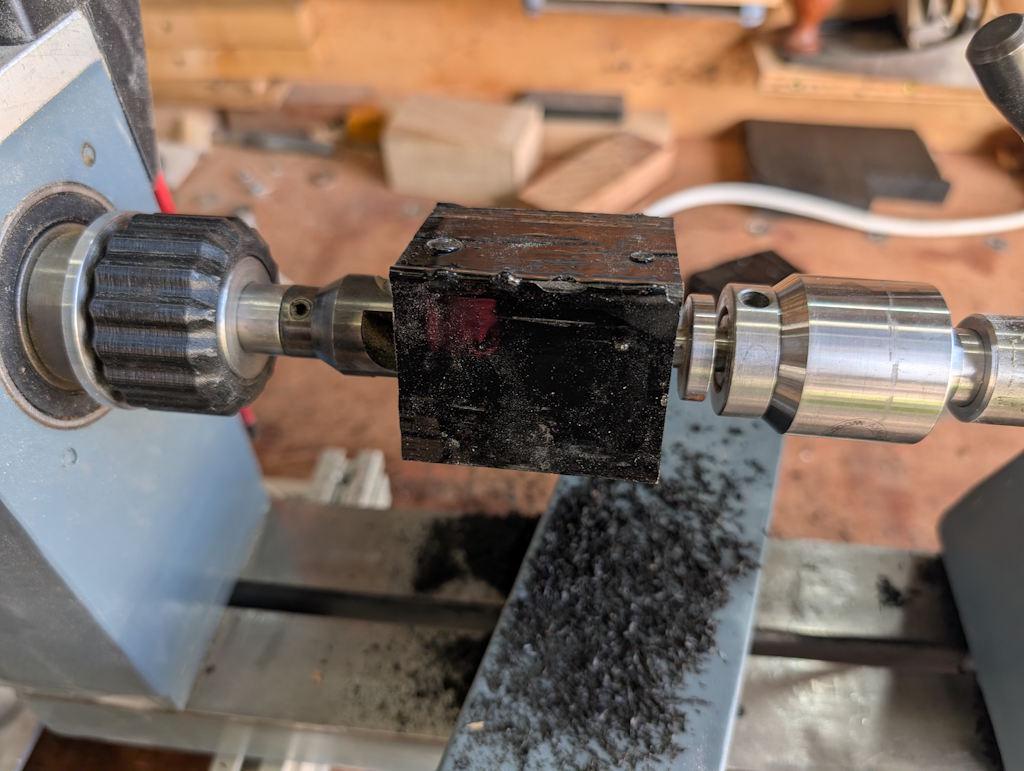
I've got a counterbore drive centre (one of these, although I got mine for about a quarter of that price from a second-hand tool shop) and it conveniently has an 8 mm stub, so I used that to support the blank:
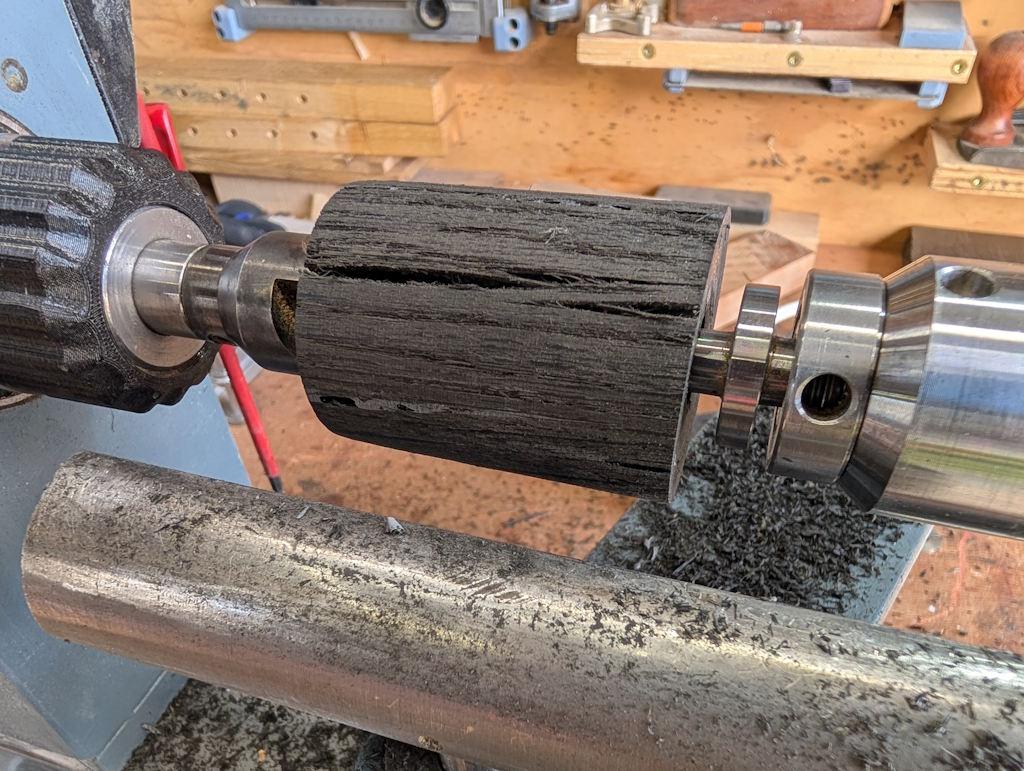
It got roughed round with a roughing gouge:
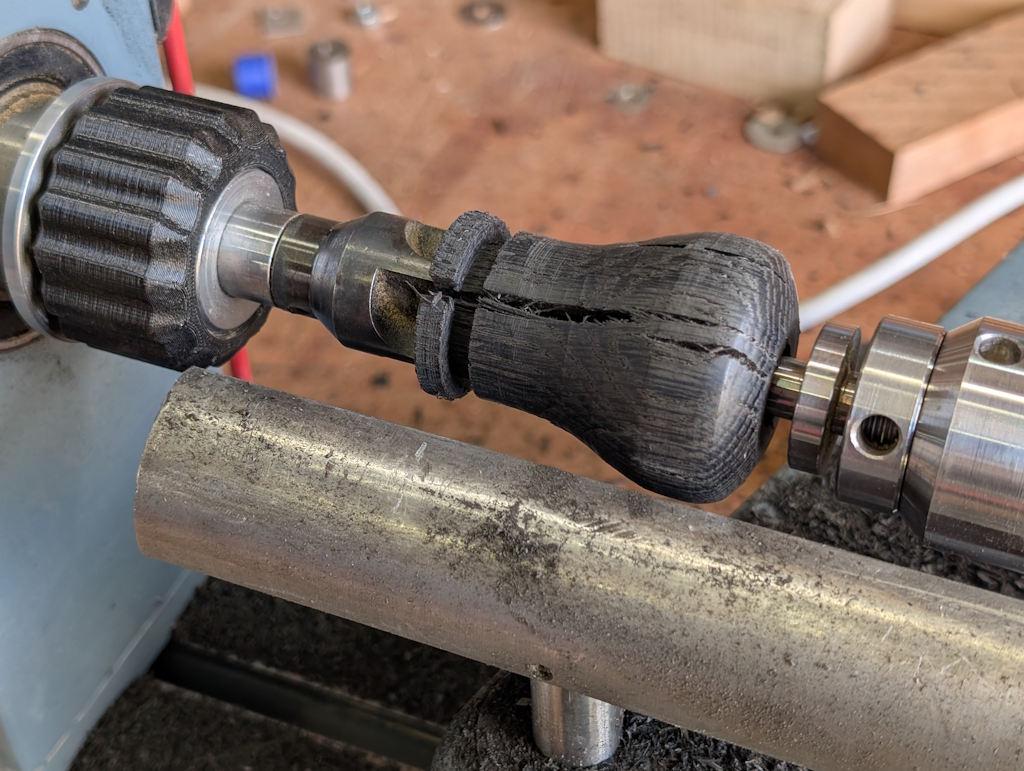
Then turned somewhere closer to final shape with spindle gouge (and parting tool as a gauge for the final length):
At that point it came off the lathe and it was time for more glue:
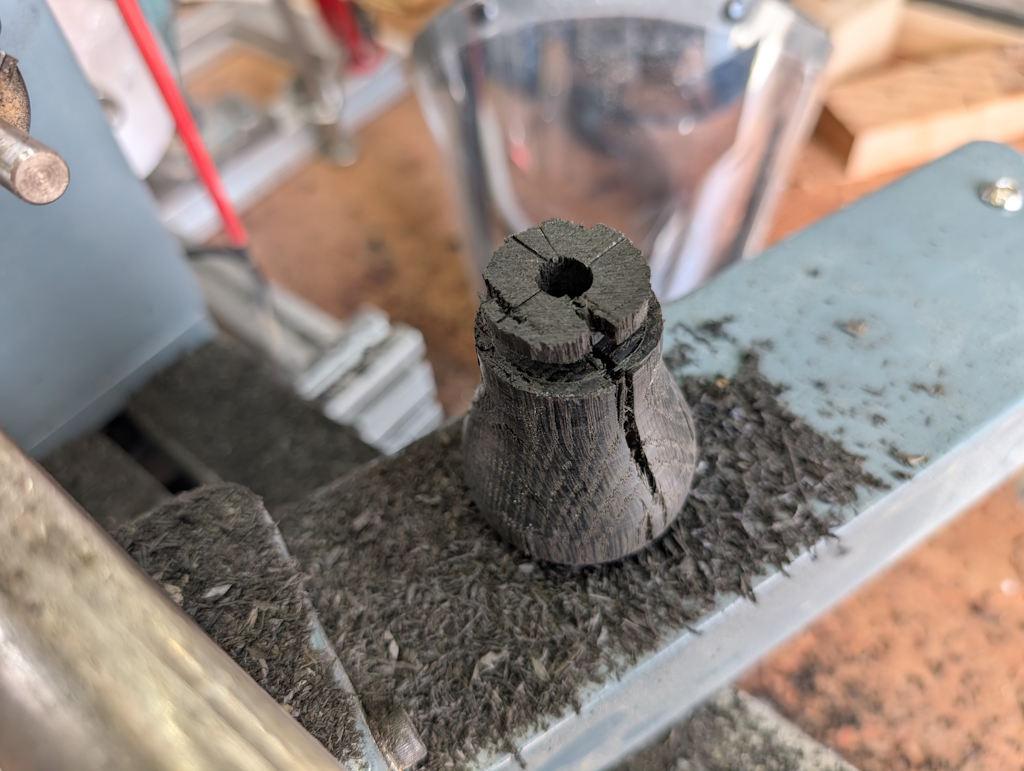
I decided to use wood rather than black dye to colour the epoxy. I didn't have any bog oak sanding dust so I thought I'd try using the little chips that had come off the spindle gouge. I mixed up 5:1 epoxy and hardener and then shoved in some black chips until it felt like a sensible mix. I then shoved as much into the cracks as I could. I'd also turned a second knob as a back-up (still leaving one untouched length of the bog oak as a spare) so that got filled with epoxy and shavings as well.
I didn't take any photos of the gluing process, but this is what it looked like this morning once the epoxy had cured and I'd mounted on the lathe again:
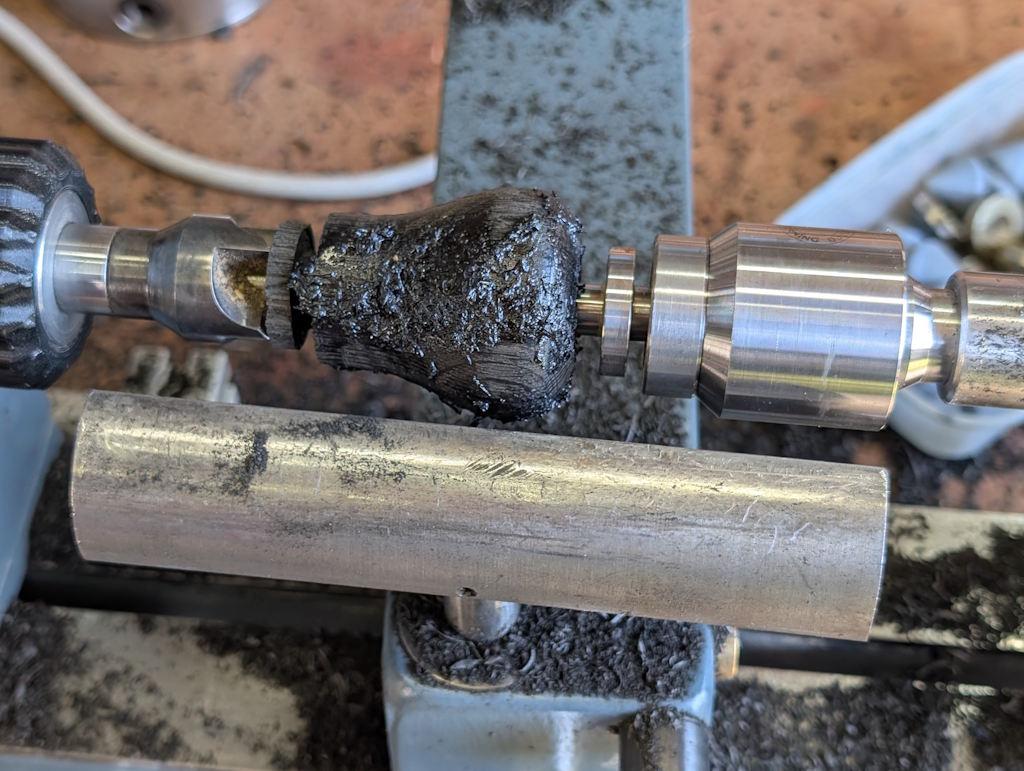
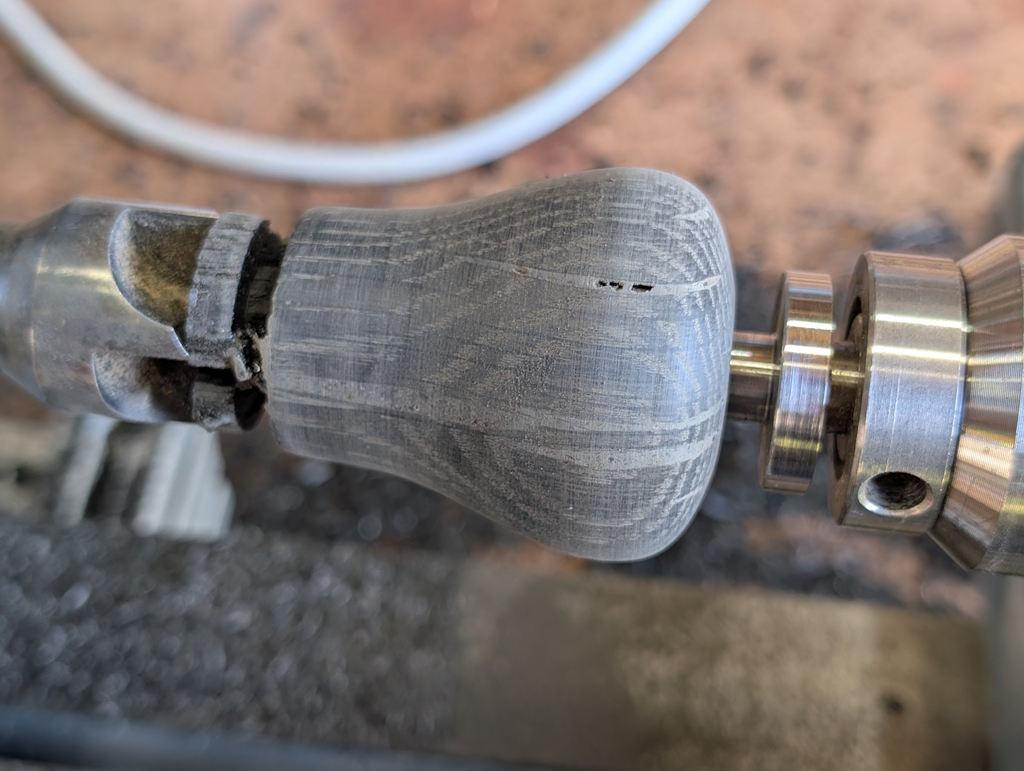
After turning with the spindle gouge and sanding it looked like this:
Here are the two knobs together:
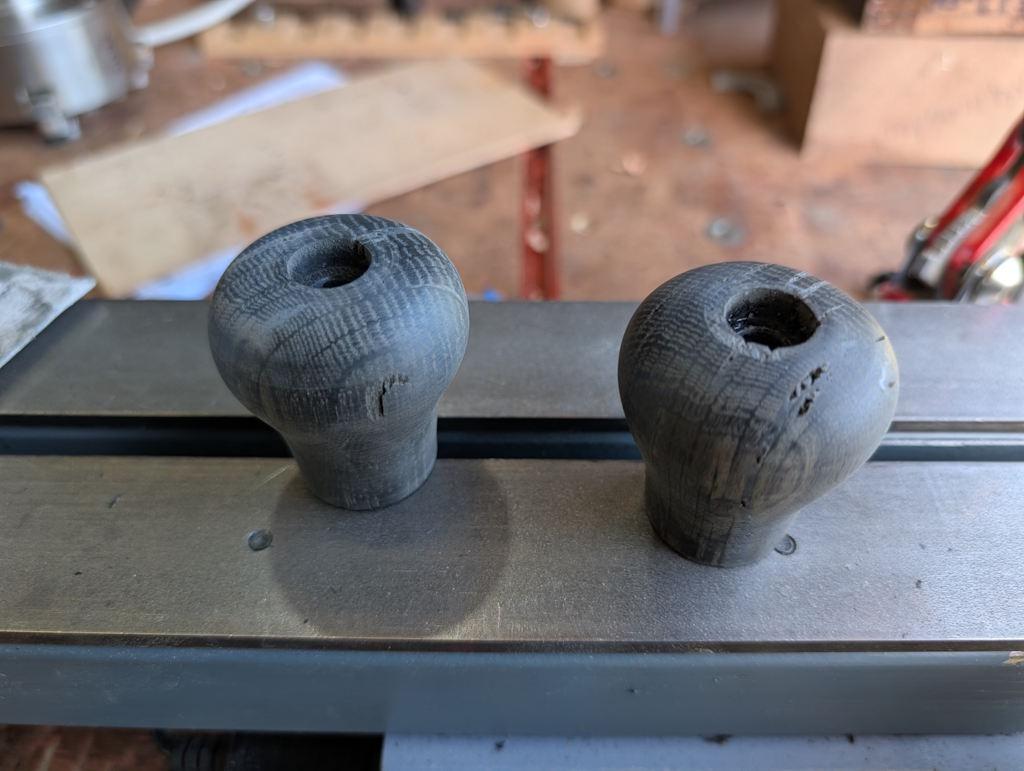
They're much better, but still have some gaps, so I thought I'd try filling them in with superglue and sawdust. For that I needed some sawdust, so I mounted my home-made sanding disc and table on the lathe...
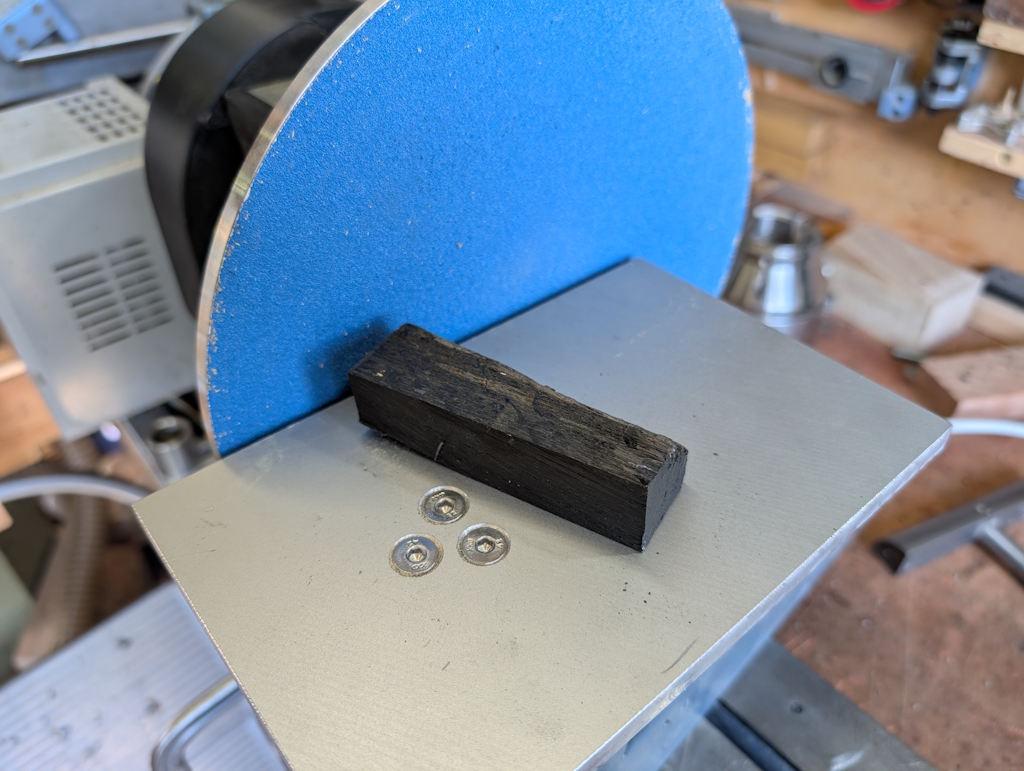
... and made an off-cut of bog oak a lot smaller:
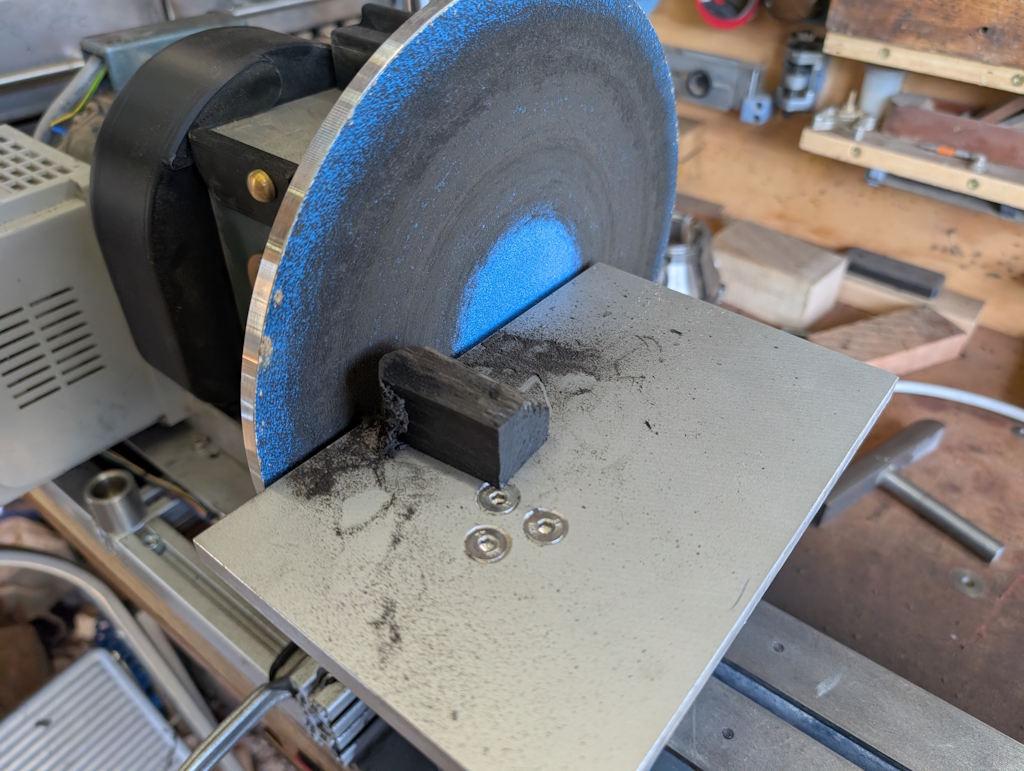
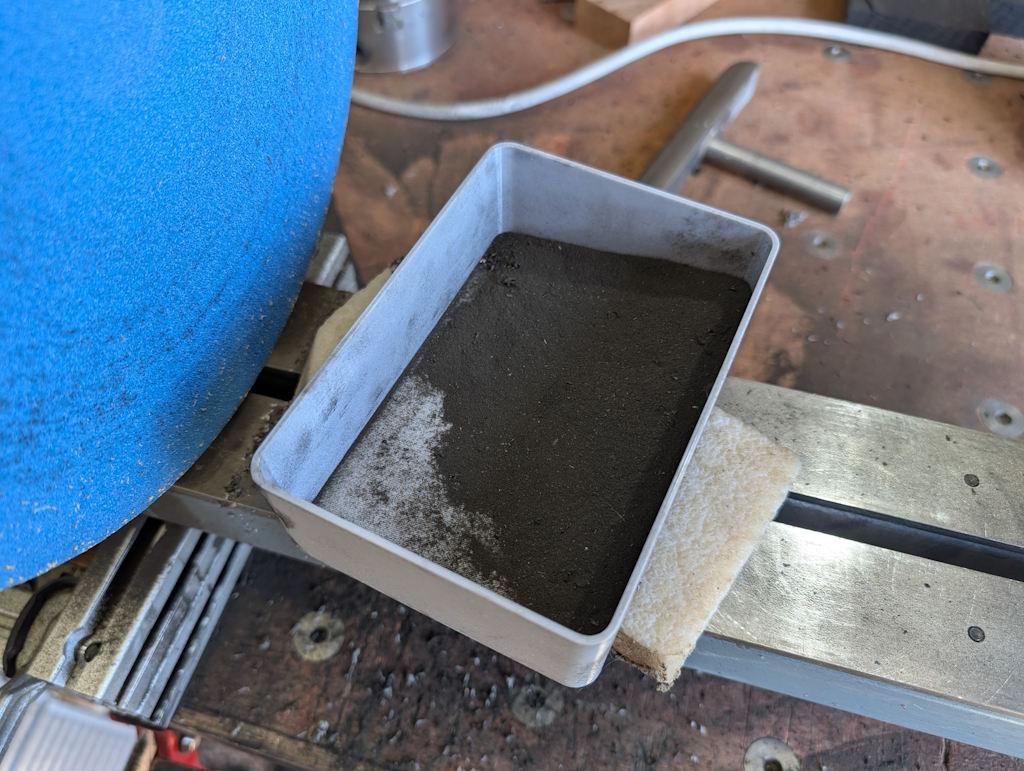
That gave me a little stash of bog oak dust:
To fill in the cracks, I poured thin superglue in, then sprinkled copious quantities of dust on top, patted the dust down hard with (gloved) fingers and then poured more superglue on top. That felt like an easier approach than trying to mix the two together before application as the superglue dries so quickly that mixing would feel a bit stressful.
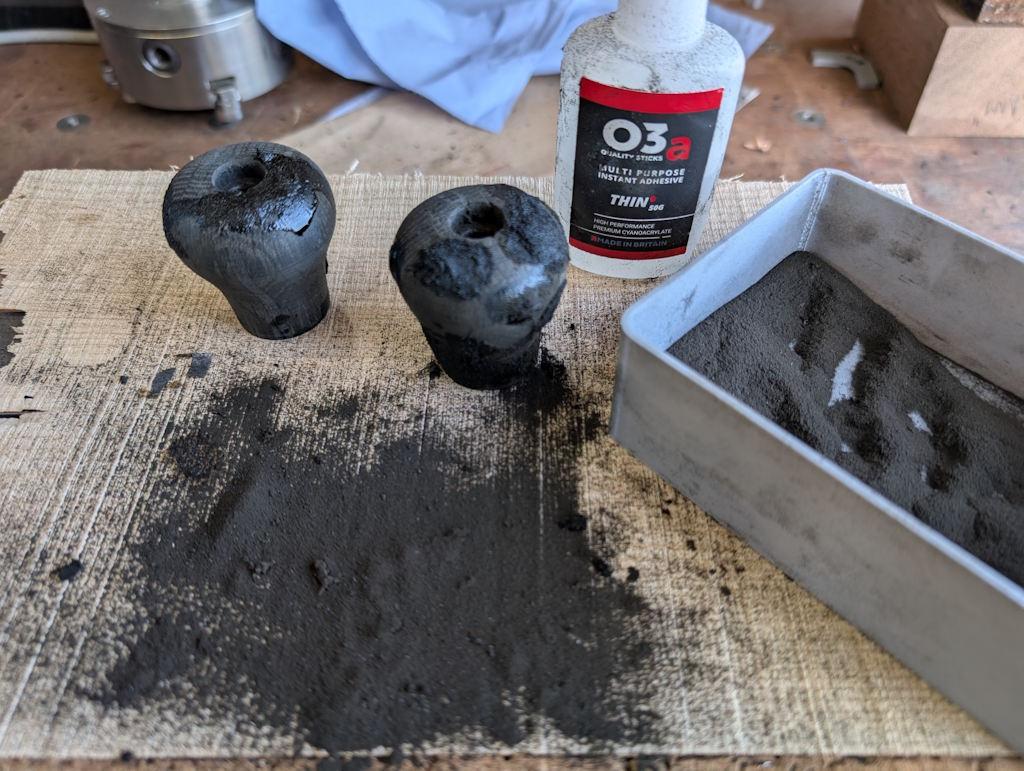
After turning again and sanding again it was looking better again, although still not perfect:
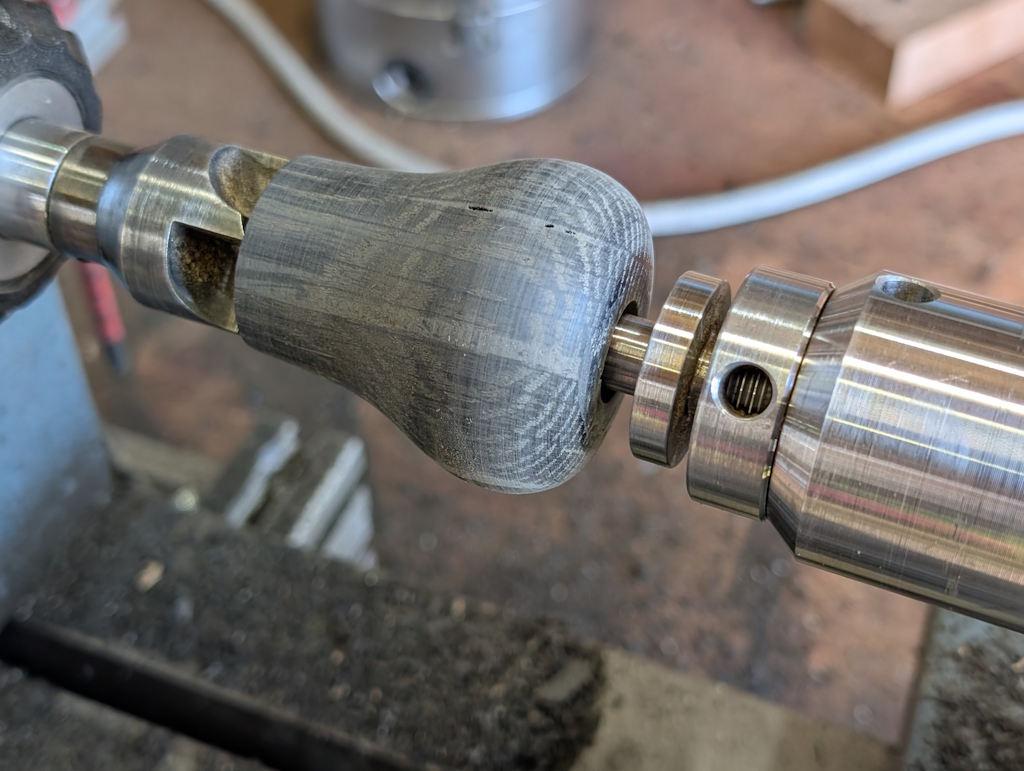
Nevertheless, I decided it was good enough. The finish will cover over those cracks a little anyway. While held between the counterbore drive and the tailstock centre it was hard to get the sandpaper to the very end of the knob. To sand that bit, I made a little jig on the metal lathe. I hesitate to call it a jig really: it was just a scrap of 12 mm mild steel bar, which I drilled and tapped M8. I've got an Axminster pen turning mandrel (no longer listed on their website), again from the second-hand tool shop. The mandrel consists of an ER20 collet chuck with a 6 mm collet and the various bits for holding pen bodies on a 6 mm shaft. I've also got a collection of ER20 collets, so I replaced the 6 mm one with a 12 mm one, fitted the little drilled and tapped bit of mild steel and then screwed the knob to the mandrel:
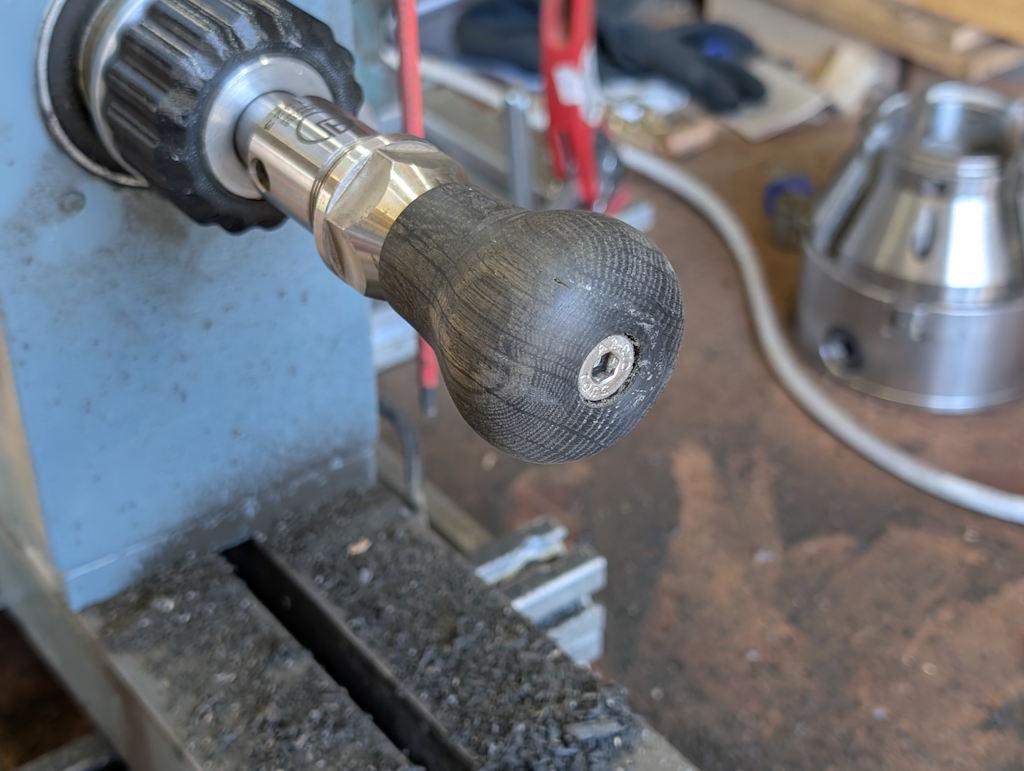
The two finished (apart from applying finish!) knobs:
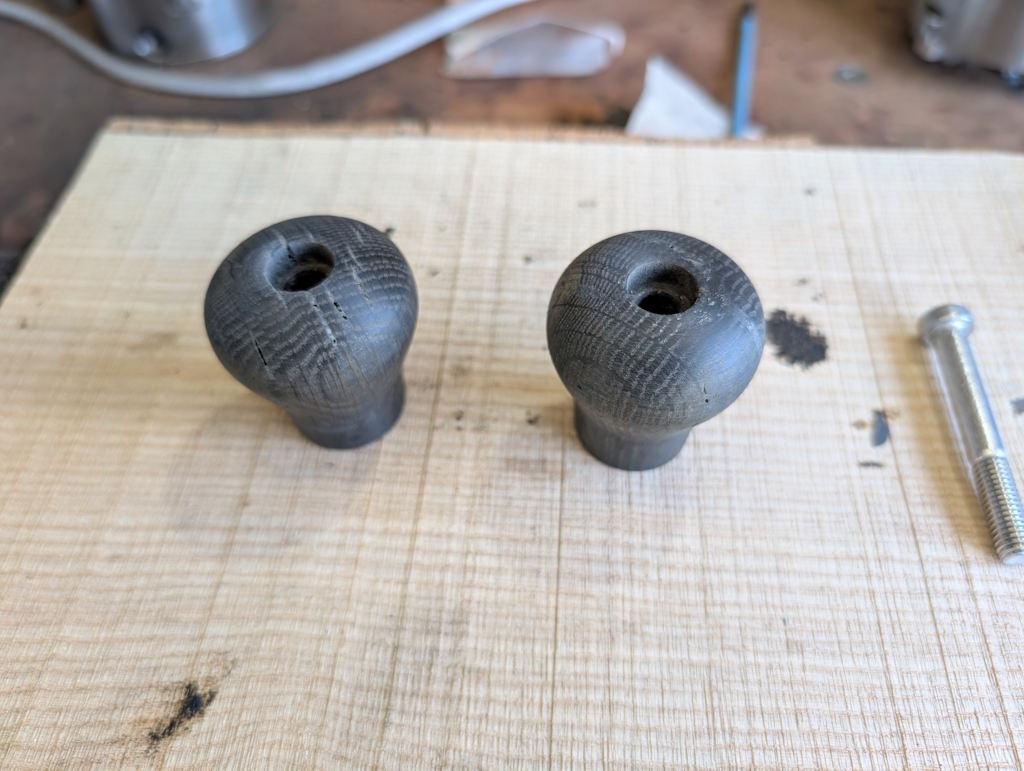
The one on the right looked a lot better (both in shape and in having less cracks remaining) than the one on the left, so that one got mounted on the plane for a test fit:
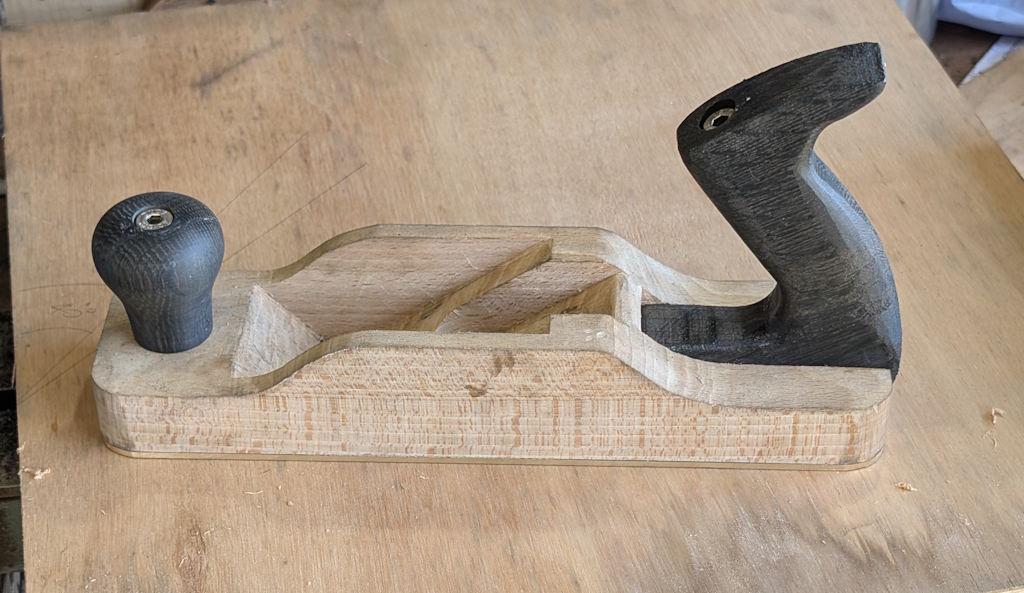
The next job (after heaving the lathe back onto its hanging hook on the ceiling) is, I think, to give the body and handle a lot more in the way of cleaning up: rounding sharp edges, card scraping and/or sanding rough surfaces etc.
Page 21 of 25
This website is free and ad-free, but costs me money to run. If you'd like to support this site, please consider making a small donation or sending me a message to let me know what you liked or found useful.