
Bevel Up or Down Smoothing Plane Build Process
 Return to main project page
Page 4 of 25
Posted 29th March 2026
These two little marking guides were very quick to design and only took about 10 minutes to print:
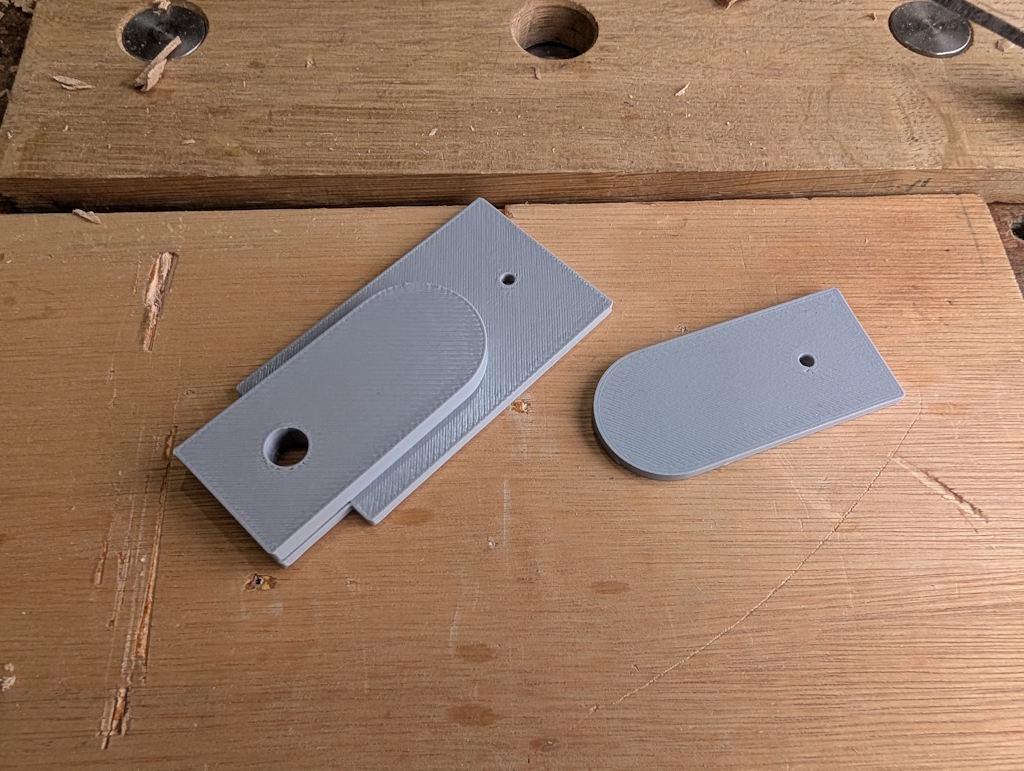
They line up with the pocket and allow marking of the hole for the threaded rod that will hold the blade down (via the lever cap)...
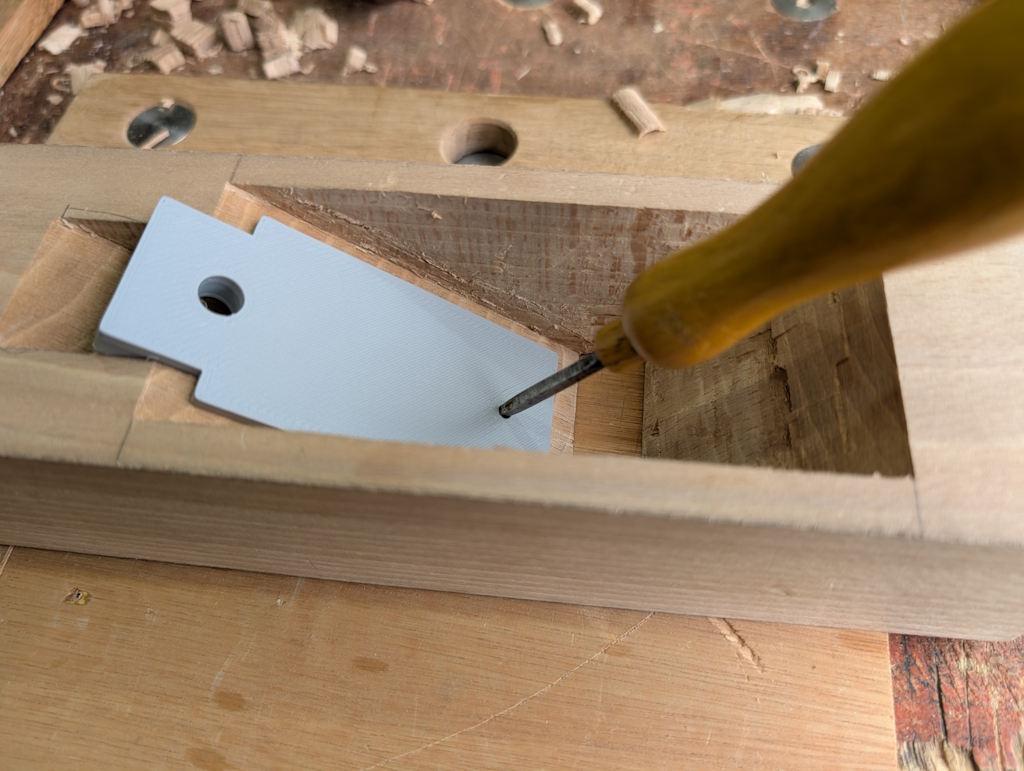
and the hole for the adjuster:
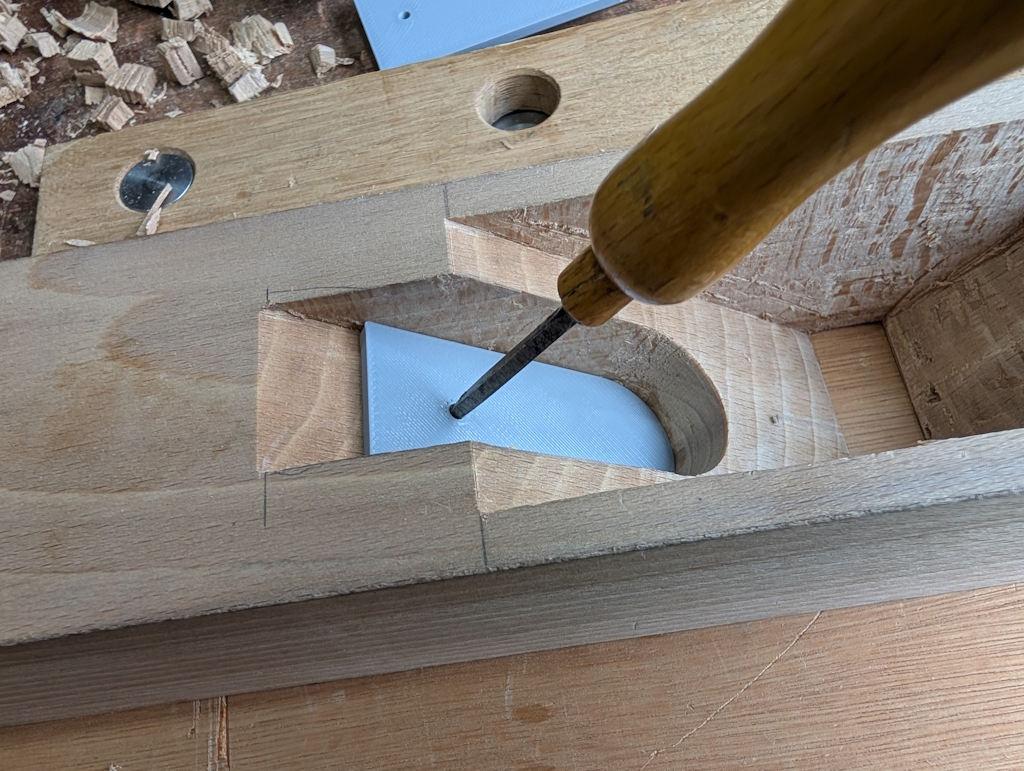
They got drilled in much the same way as before, with one difference on the lower hole, which I drilled through 6.8 mm...
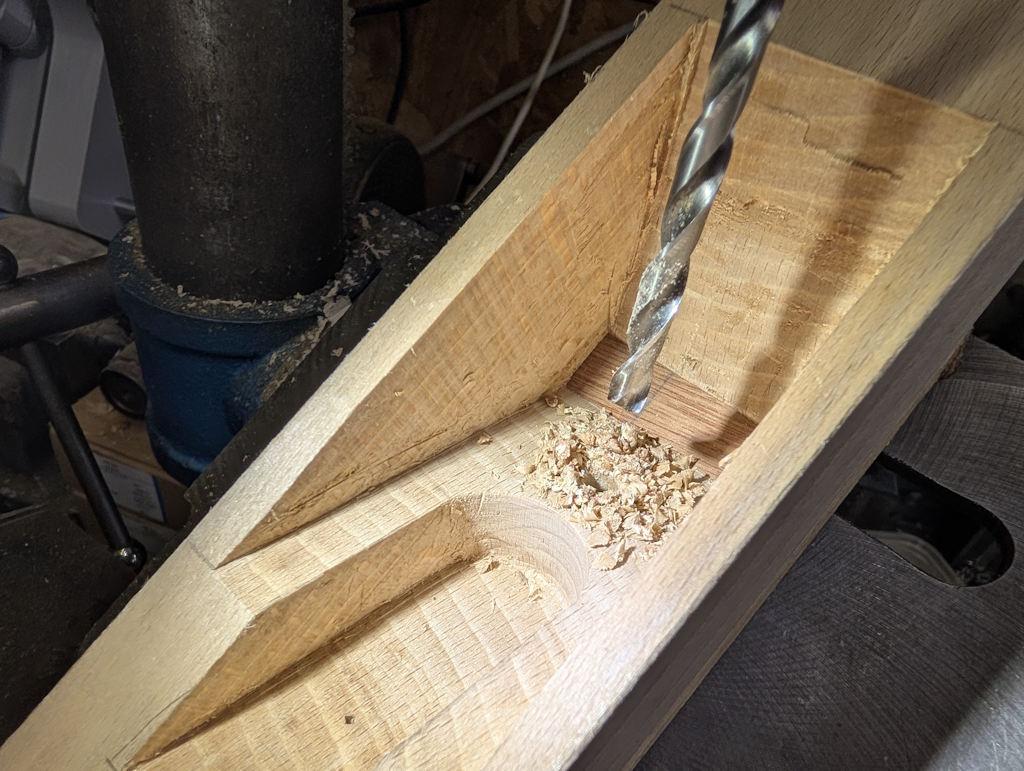
... and then flipped the plane over, lined the hole up again (using the drill which was still in the chuck) and plunged a 12 mm end mill into the bottom:
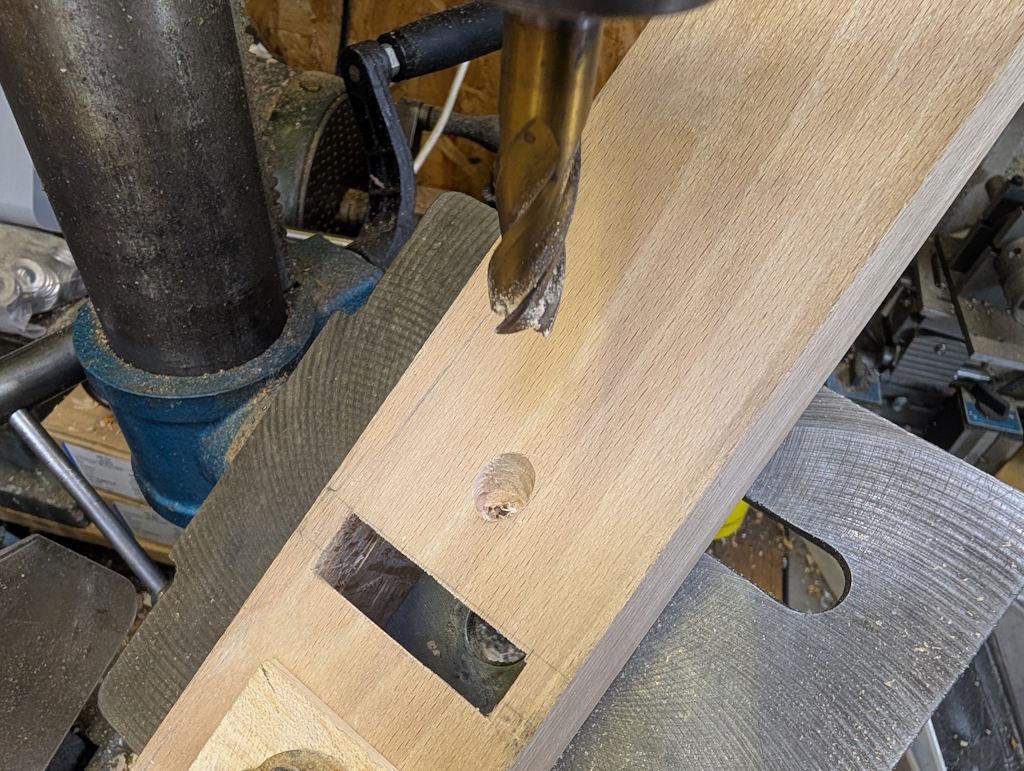
On the little block plane, I set a piece of threaded rod into the body with a hole tapped into the wood and some epoxy to permanently mate the threads. That has worked absolutely fine on the block plane but I thought it would be good to try something a little stronger on this one.
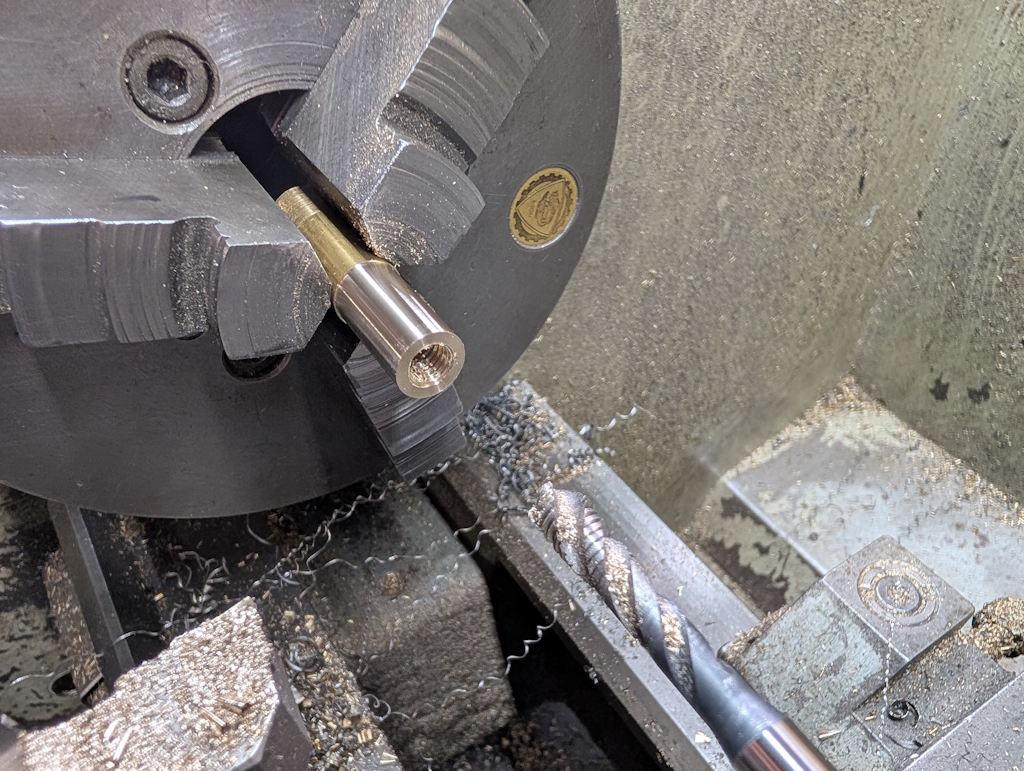
I put a bit of 12.7 mm brass in the chuck of the metal lathe, skimmed the outside down to 12 mm and drilled and tapped an M8 hole in the middle:
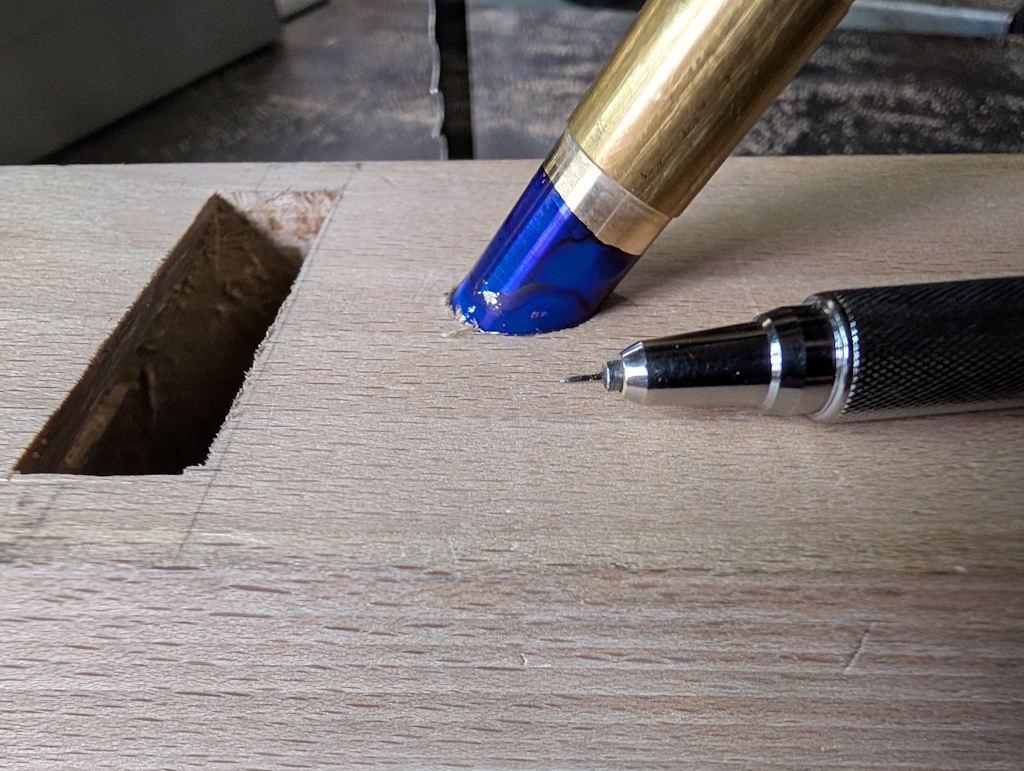
After coating the outside with some blue Dykem (and, as usual, not leaving it long enough to fully dry), I popped the brass bit into the hole in the bottom of the plane body and used my retractable scriber to mark around the level of the base of the beech block:
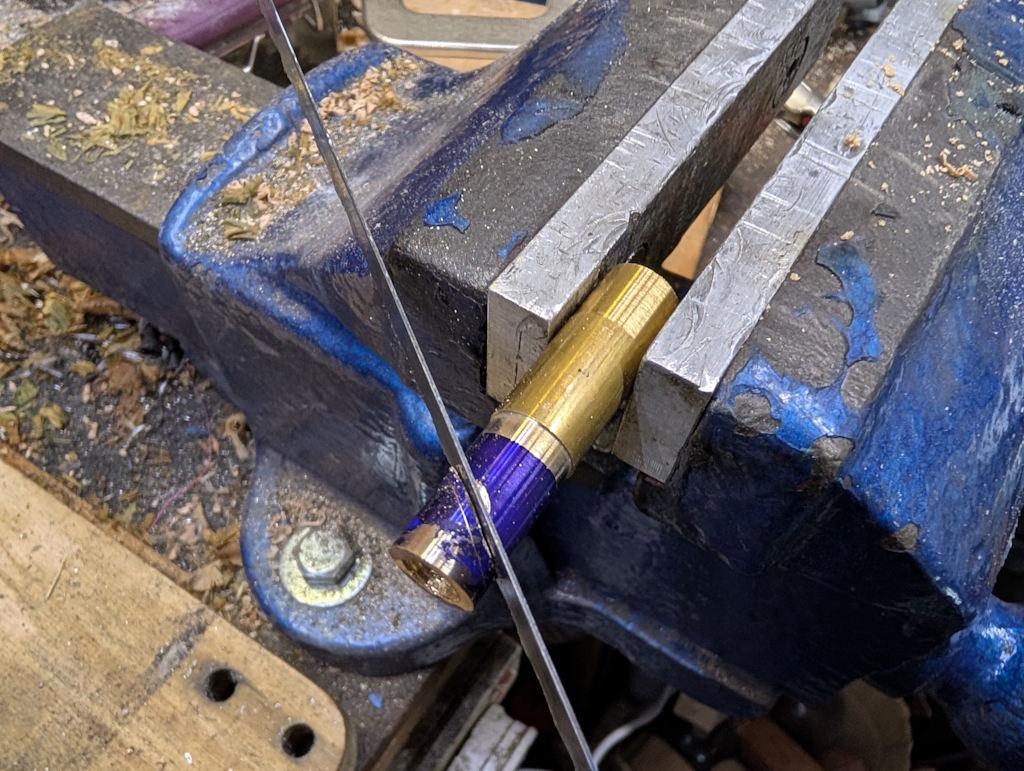
The end then got sawn off with a hacksaw:
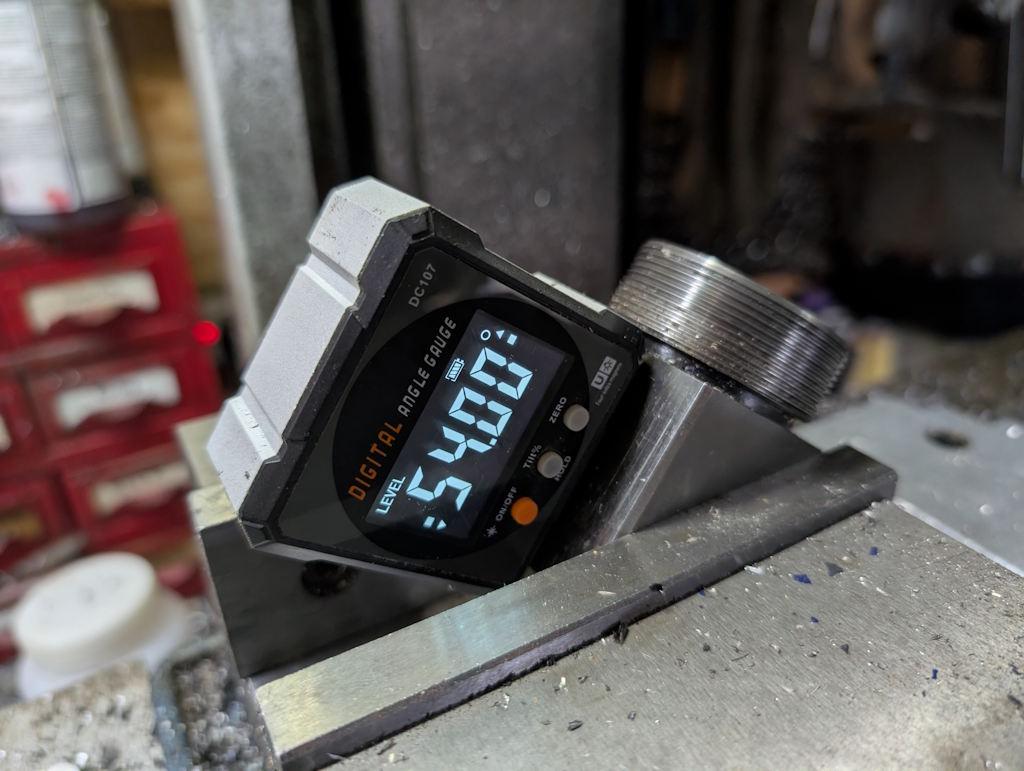
I used a digital angle gauge to set a collet block up in the milling machine's vice at the right angle...
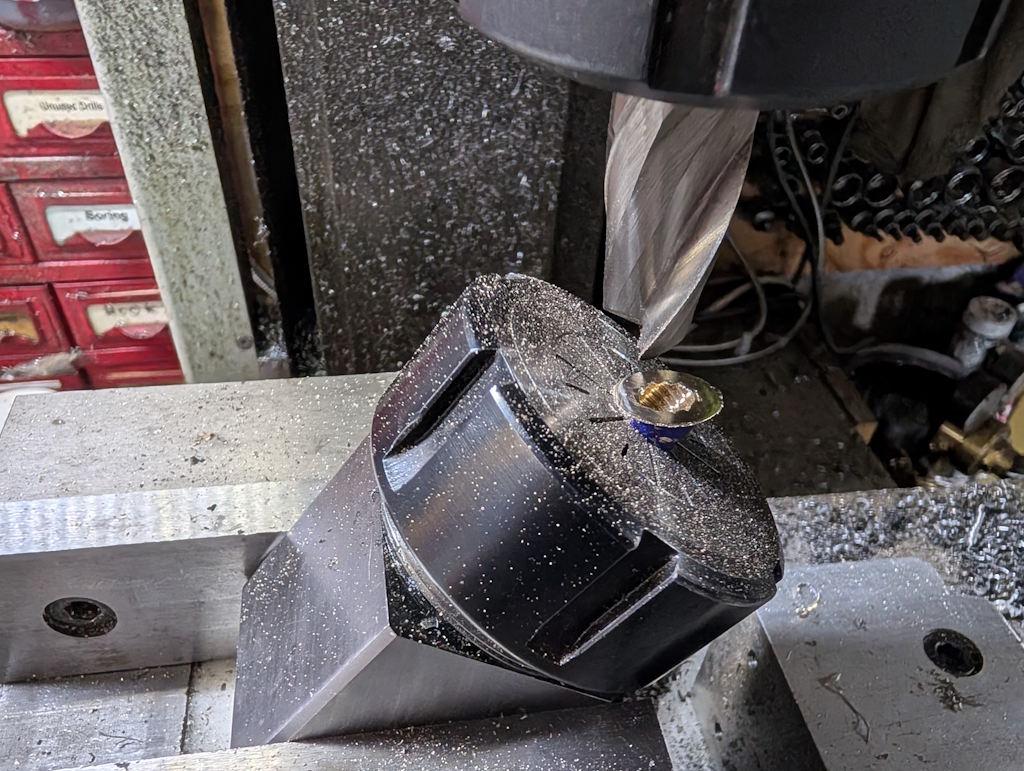
... and then milled down to the scribed line:
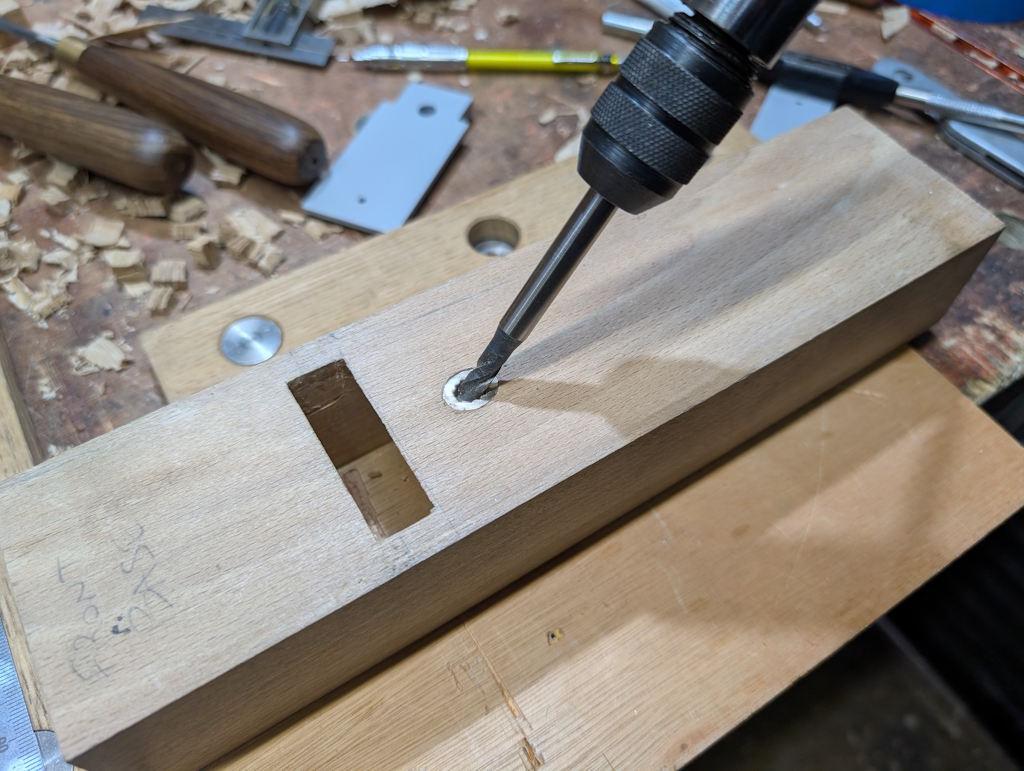
After deburring and washing off the Dykem with acetone, I held the part in the pocket in the bottom of the beech block (fingernail pressure was enough to hold it in place) and ran the M8 tap all the way through:
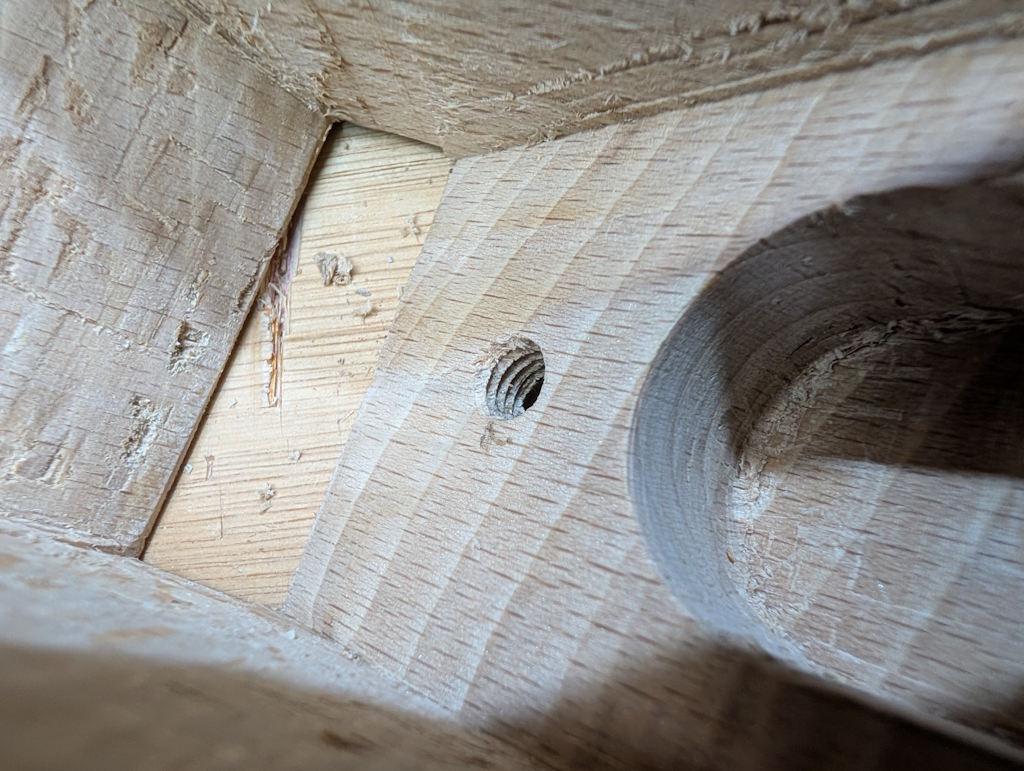
That transferred the threads (nicely aligned) into the wood:
Next up was to attach the angled nut to the brass base. This was the set-up I used for that:
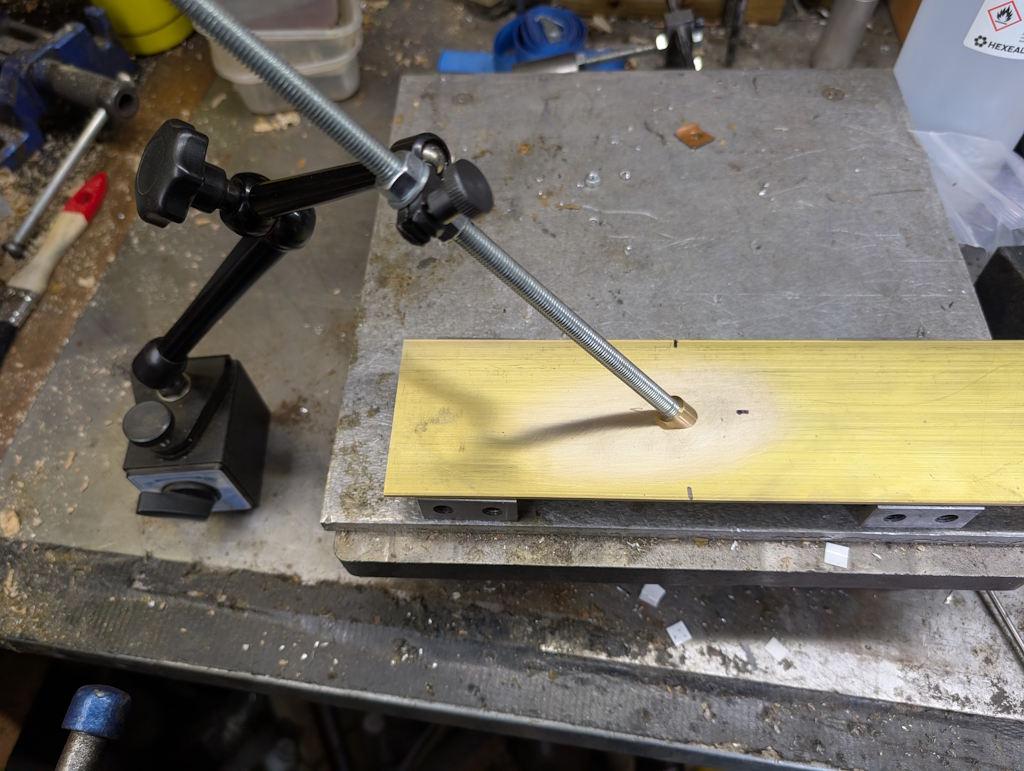
The dial indicator stand is holding onto a bit of M8 threaded rod, which is long enough that I can sight along it's length and make sure the nut is pointing the right way. It's pressing it down fairly firmly to the brass plate (which has been scrubbed with Scotchbrite around the joint area) but I could slide the plate around underneath to tweak the position.
Flux was applied in the joint and some little bis of what I think is silver solder (it was found in an unlabelled tube in my father-in-law's shed) were dropped in three places around the joint:
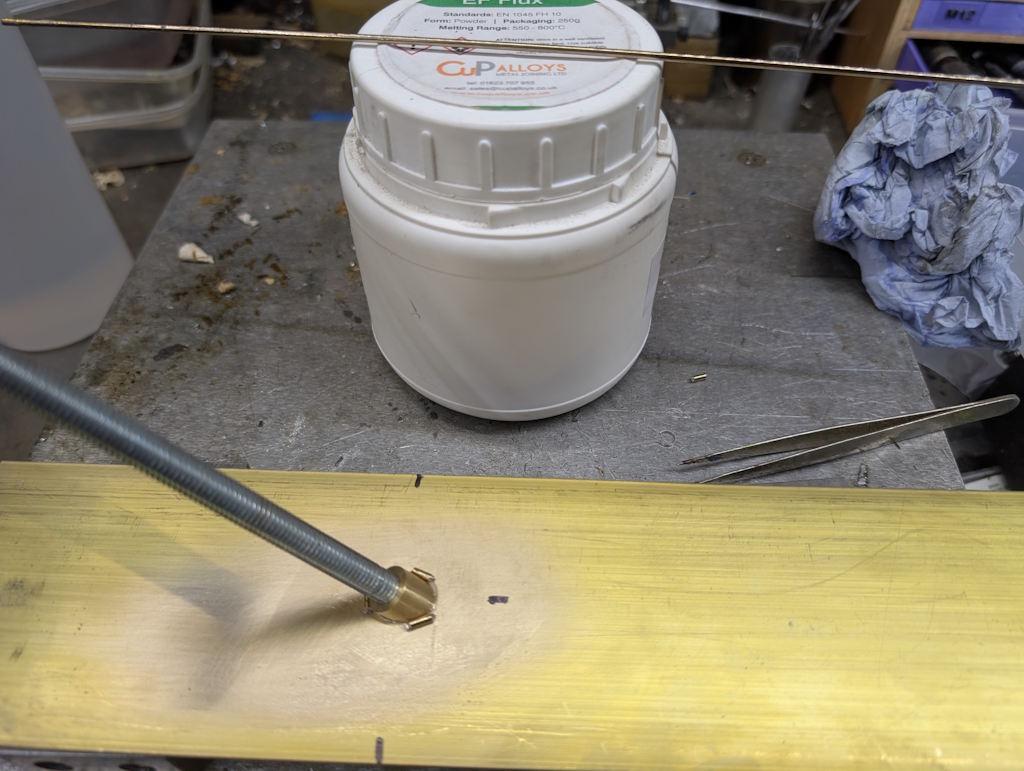
Lots of heat was applied with a MAPP gas torch until it all melted:
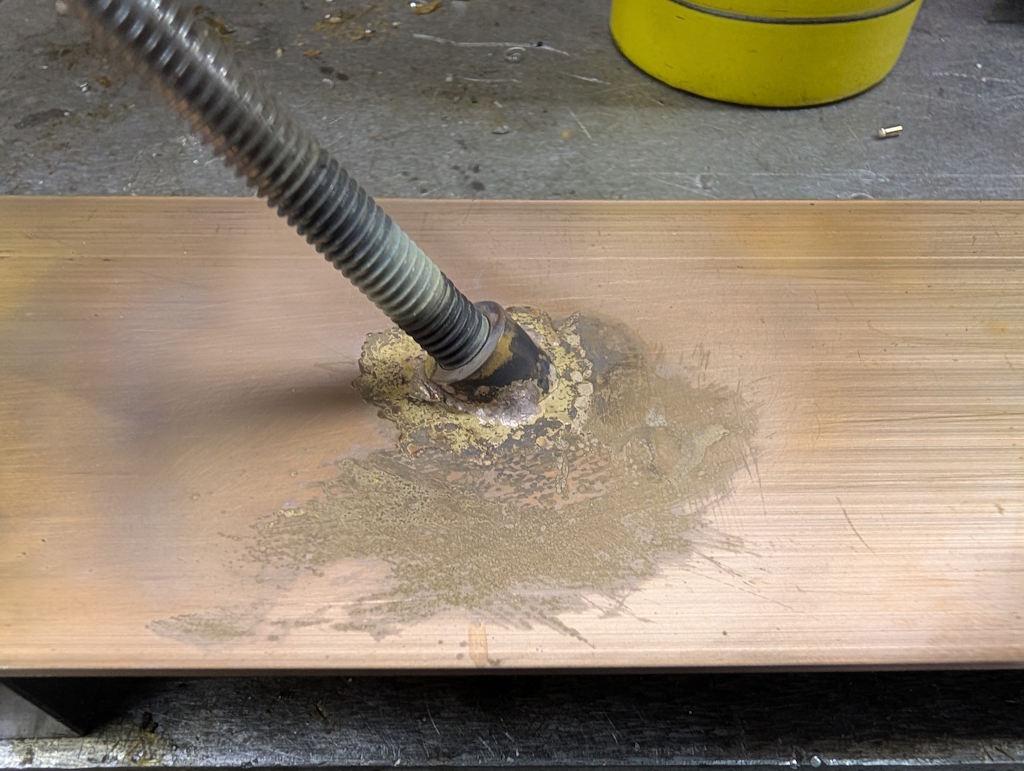
It's not pretty, but no-one (apart from you, dear reader) will ever see it.
While that cooled down, I used a gouge to chamfer the hole in the bottom of the beech block (to give space for the melted solder bead to go). You can see the effect of not having waited for the Dykem to dry before putting the brass bit in for marking up:
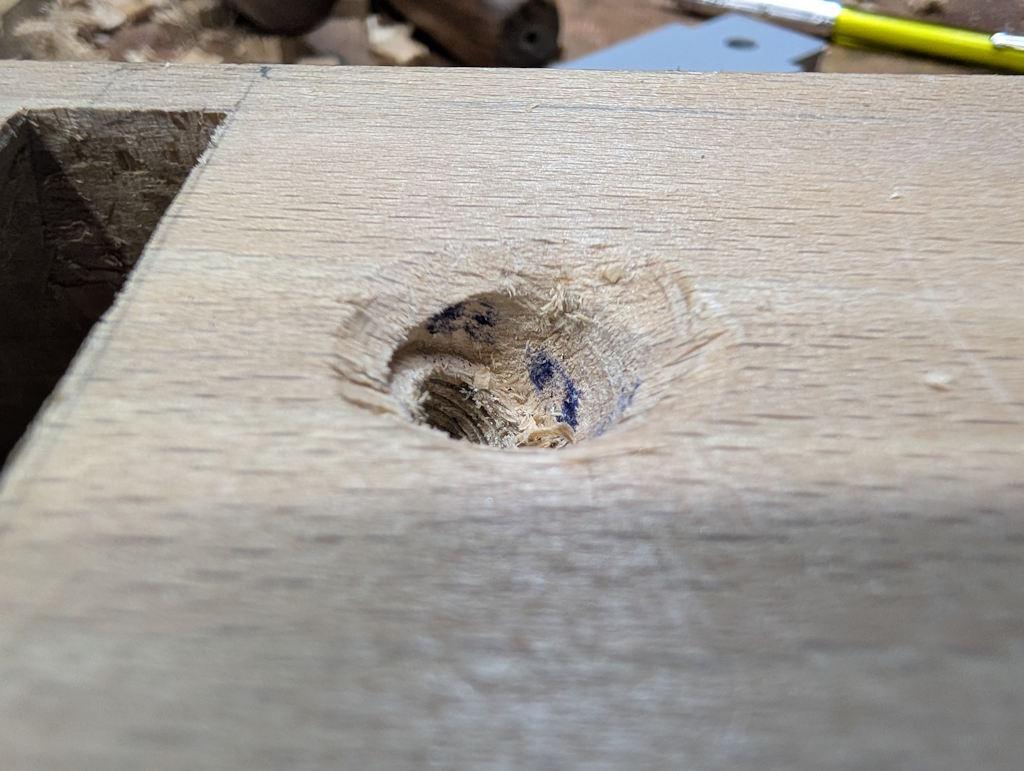
Finally, I could clamp the body down onto the brass plate and do a test fit with a handy cap screw:
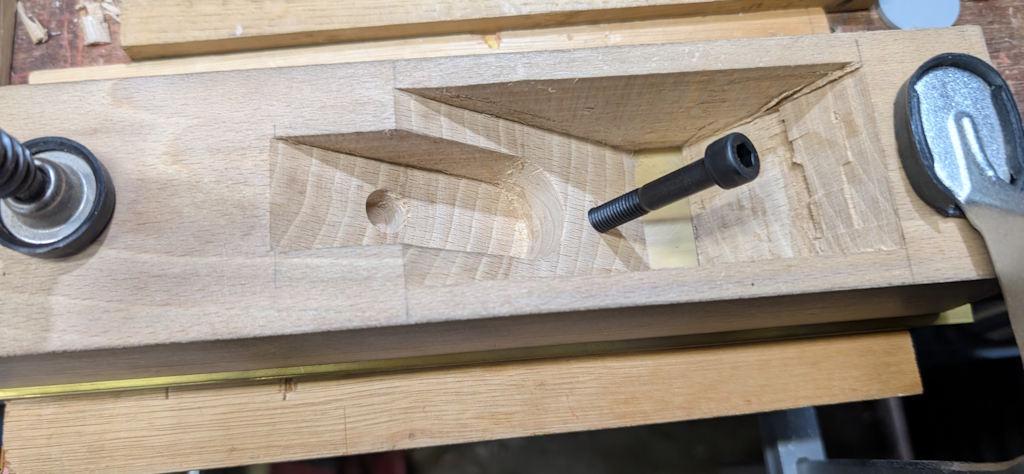
I was really pleased with how that came out. Being the only thing on the over-size plate, the alignment wasn't super critical. As on the block plane, I'll epoxy a bit of threaded rod into the hole when I get to final assembly, but the brass threaded bit at the bottom should be much stronger than just glue into threaded wood.
I haven't decided yet whether to do something similar with the front knob attachment or even the rear handle attachment. At the moment I'm leaning toward just attaching them from above (which will mean I don't have to worry about alignment relative to the existing parts) but we'll see.
Page 4 of 25
This website is free and ad-free, but costs me money to run. If you'd like to support this site, please consider making a small donation or sending me a message to let me know what you liked or found useful.