
Bevel Up or Down Smoothing Plane Build Process
 Return to main project page
Page 5 of 25
Posted 4th April 2026
I spent most of yesterday blade making. This is the material I'm using:
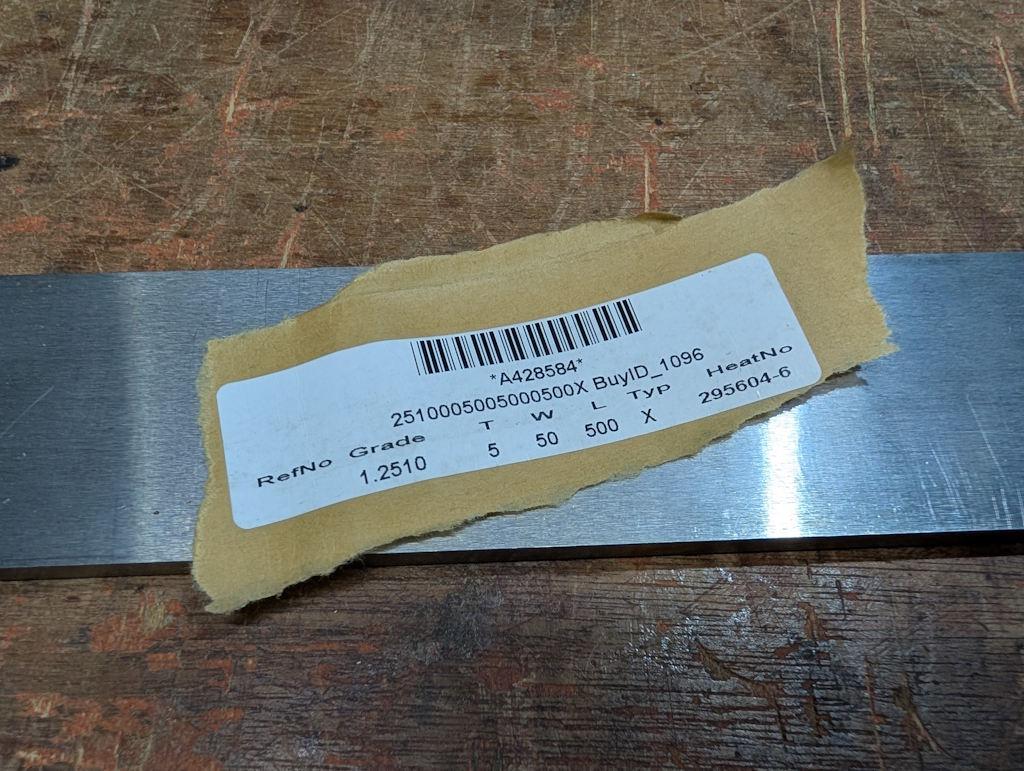
It's what's commonly known as gauge plate or O1 tool steel but more formally as Werkstoff 1.2510 and is an oil hardening (i.e. quenched in oil) steel supplied ground to size.
After chopping it up with the horizontal bandsaw, I used a little 3D-printed marking guide to help punch a series of evenly spaced marks along the middle of the blank:
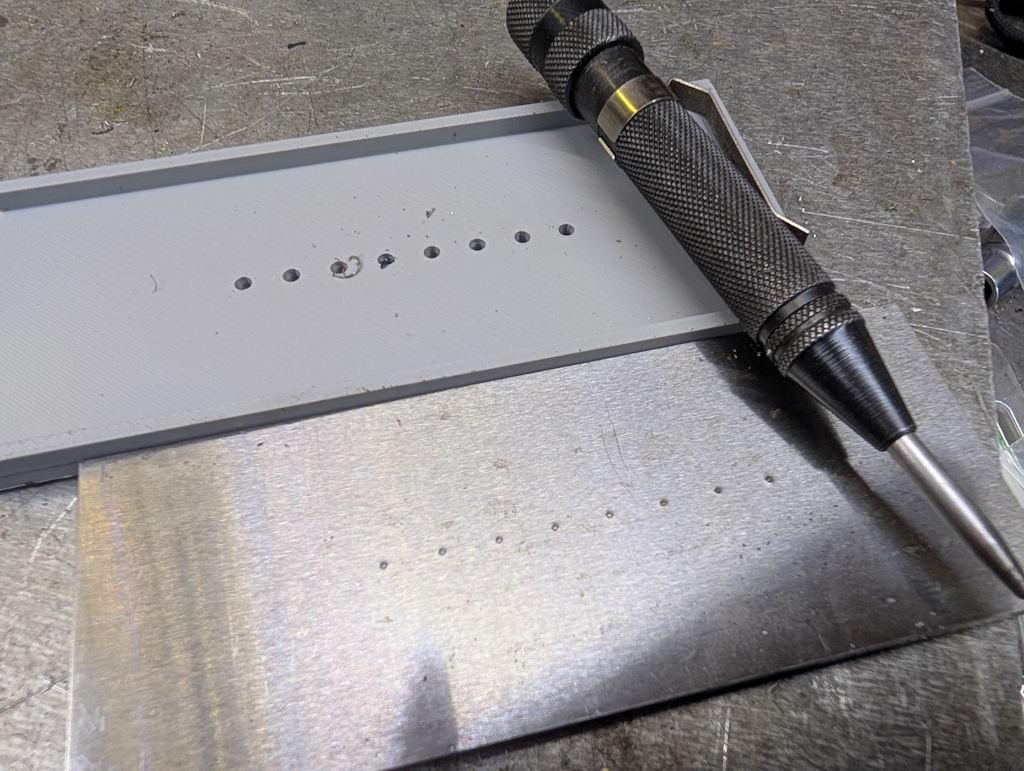
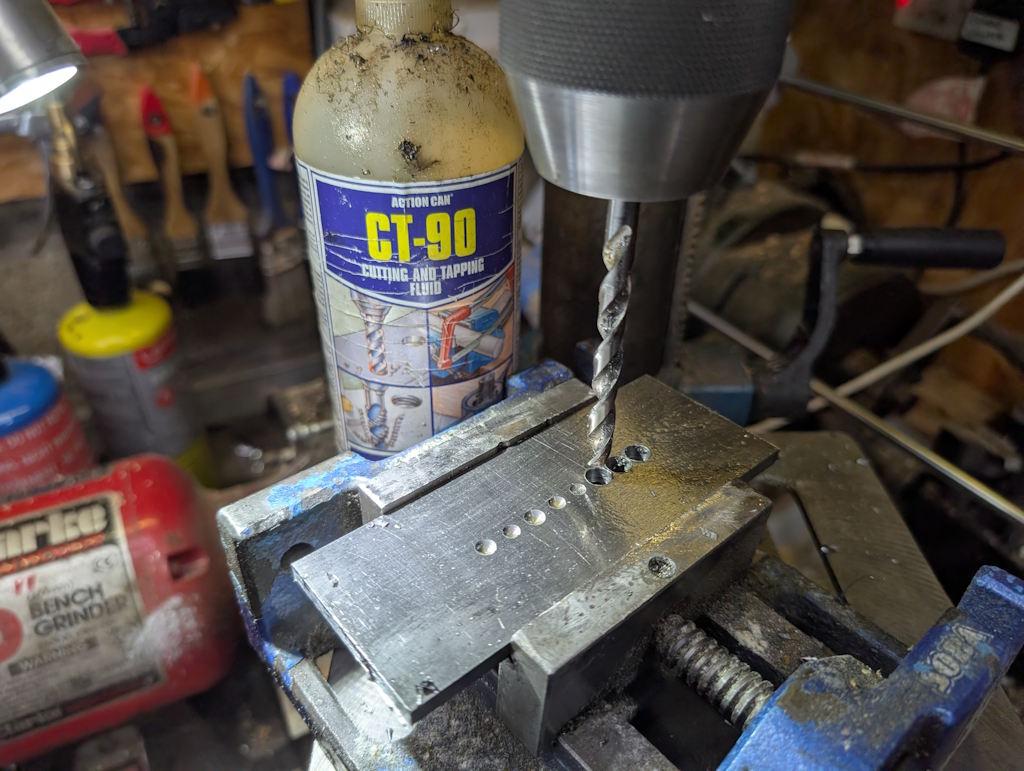
Those made it easy to use the pillar drill to spot drill and drill through 7 mm with all the holes centred and without any risk of the holes joining and deflecting the drill bit:
It then went over to the milling machine and I used a 7 mm end mill to join the holes together...
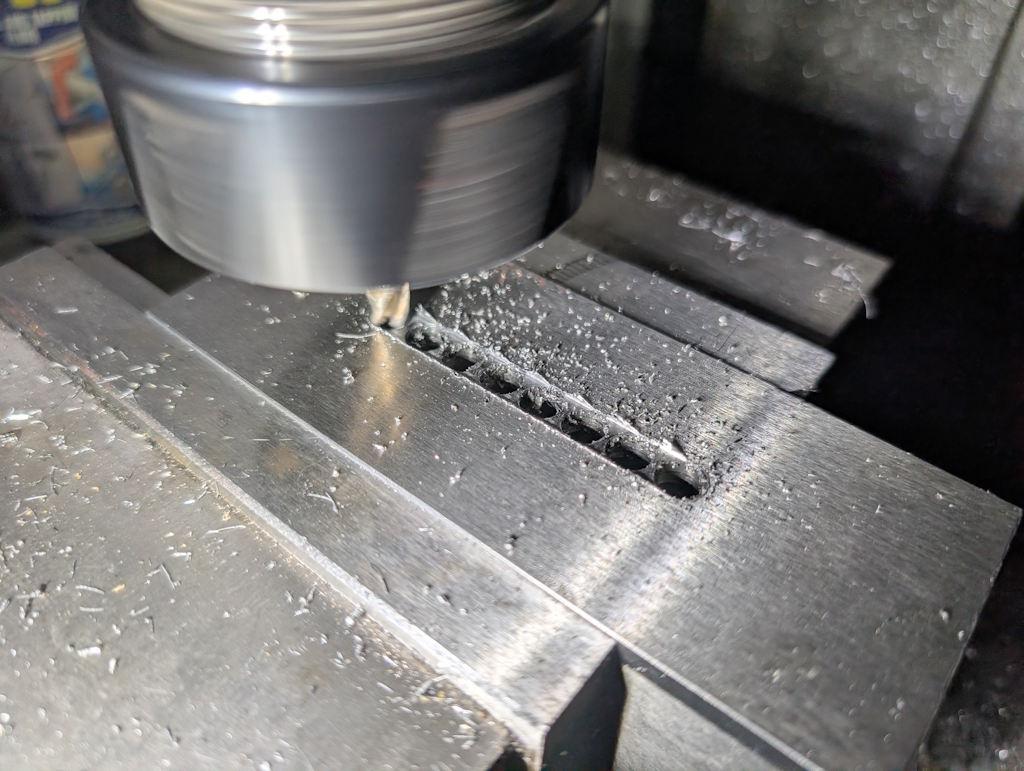
... before swapping to an 8 mm end mill for a couple of final passes, opening the slot out to 8.5 mm width:
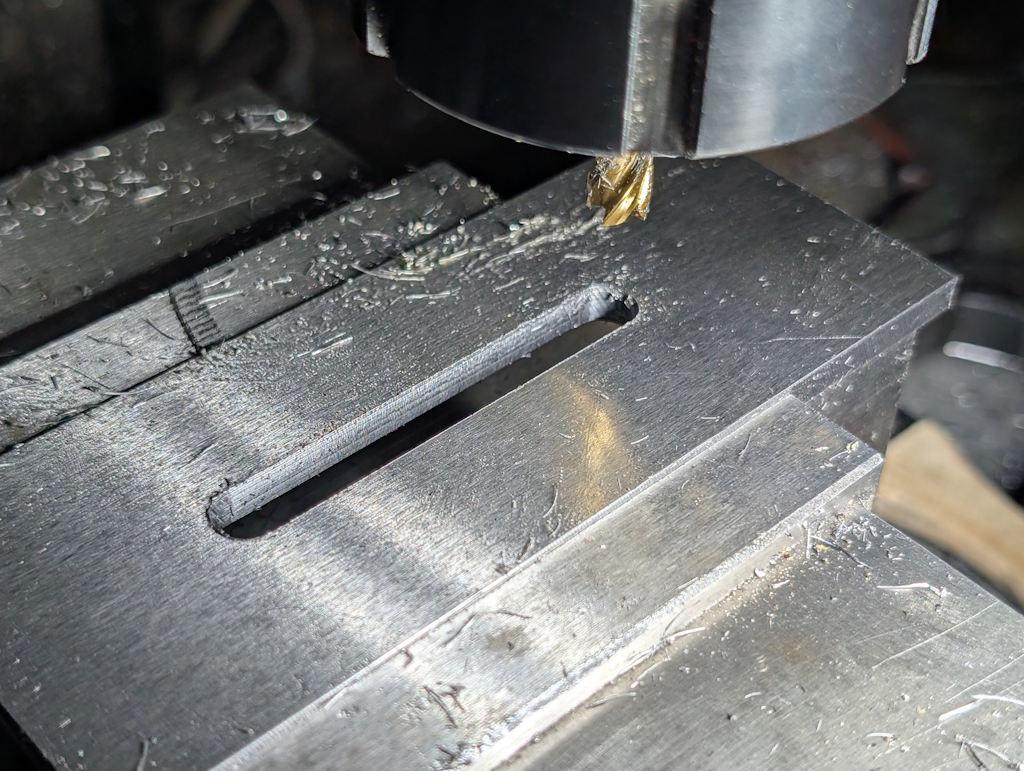
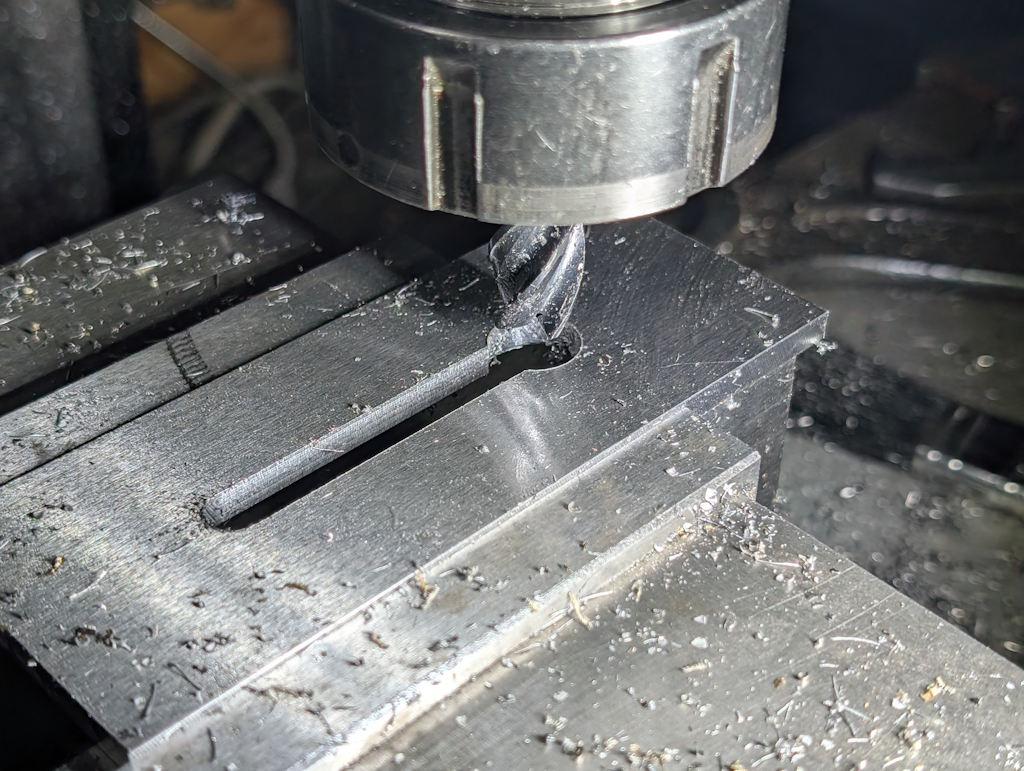
One end got opened up with a 12 mm end mill and then a 14 mm one:
Next I mounted the blade in the milling vice at an angle:
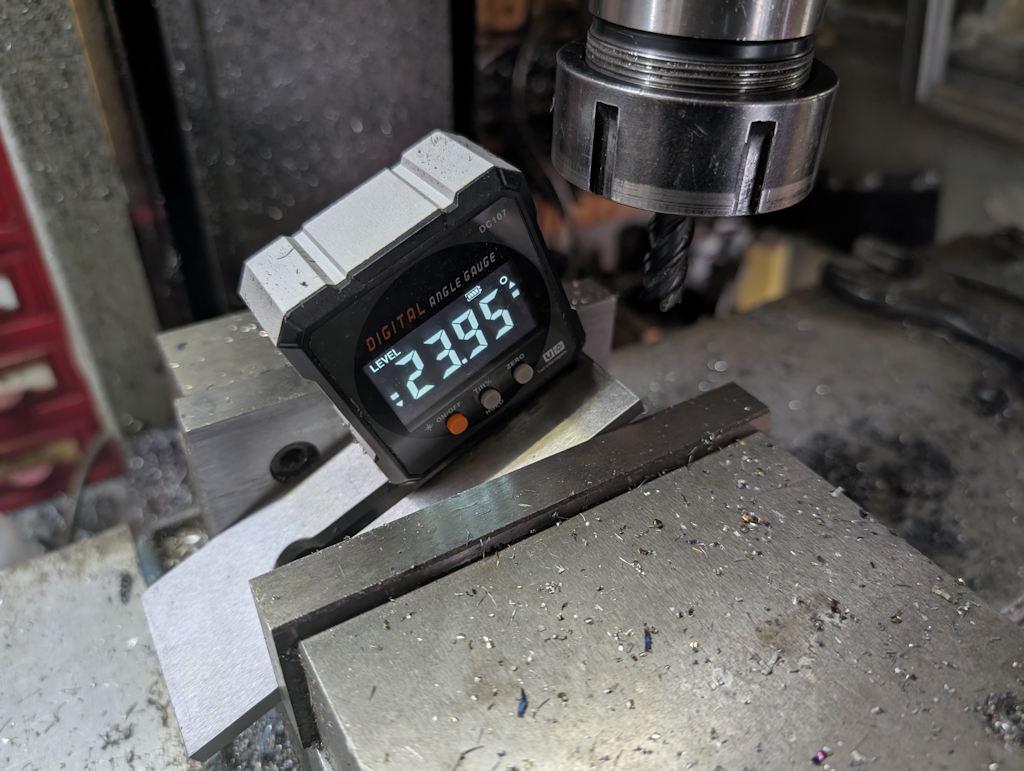
The bed angle is 36° and (if I understand correctly) on a bevel down plane it doesn't really matter what the bevel angle is as long as it's a few degrees less than the bed angle (for clearance). The bed angle dictates the cutting action. I've milled it at 24°; I'll probably grind a primary bevel at 25° and then put a secondary bevel on at 30° which will make the tip a little stronger but still leave 6° of clearance.
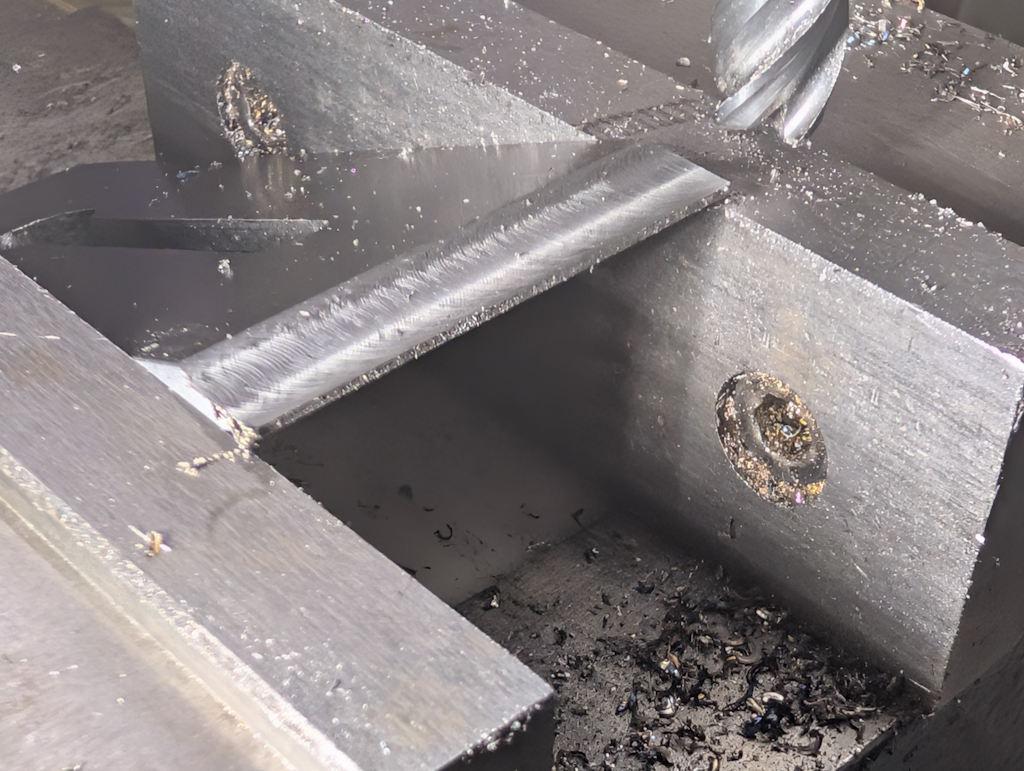
With it mounted at the chosen angle, I milled it down until there was a bit under a millimetre left at the end. I think there's a higher risk of distortion if you heat treat it with a razor edge, but milling most of it off saves a lot of post-hardening grinding work.
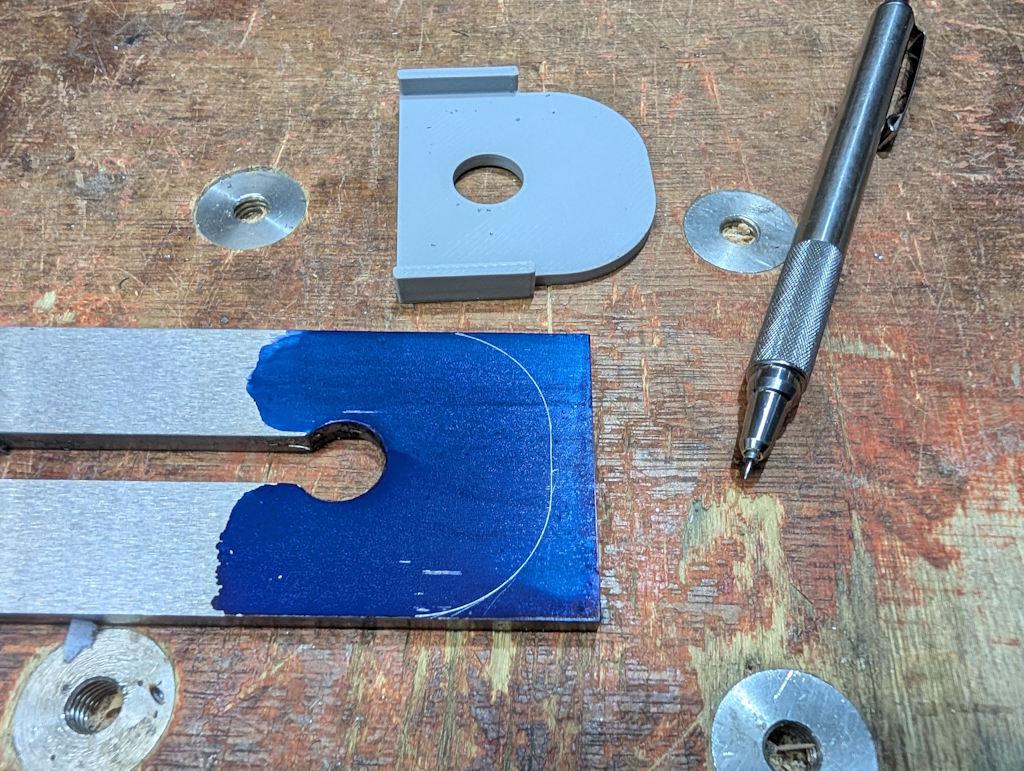
The shape of the rear end of the blade isn't that critical but I drew something that looked okay to me in CAD and 3D-printed a little marking guide and used that and my home-made retractable scriber to mark a desired shape:
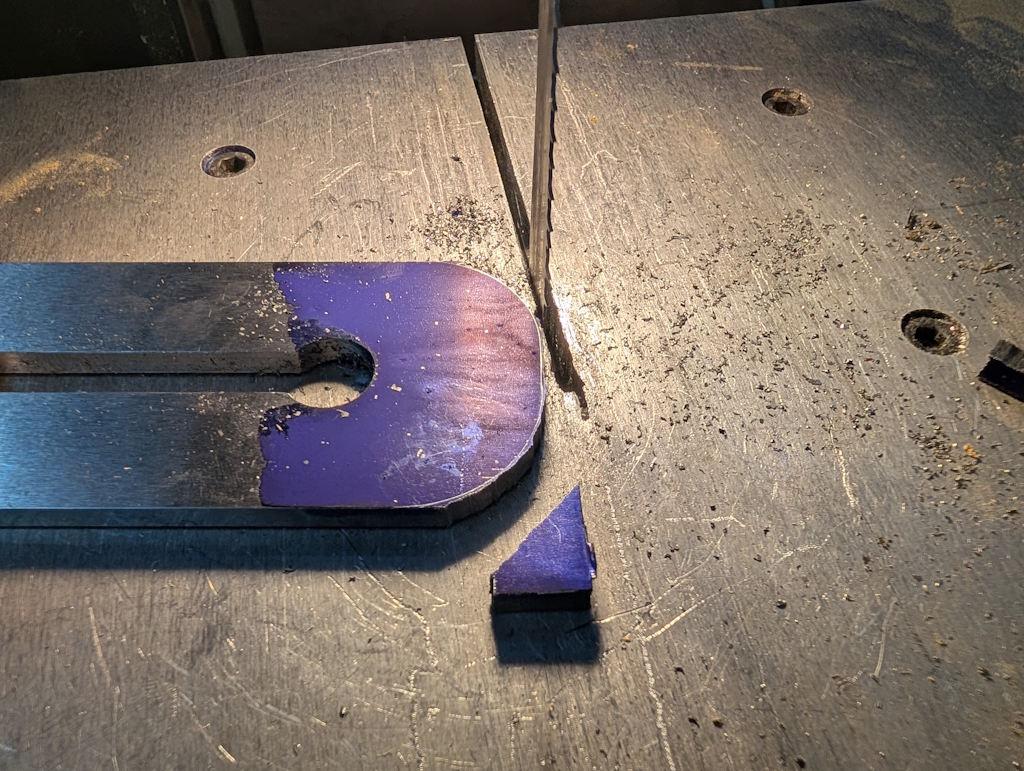
I used my home-made table for the metalwork bandsaw to remove most of the waste:
Then filed down to somewhere near the line, starting off with this bastard cut file...
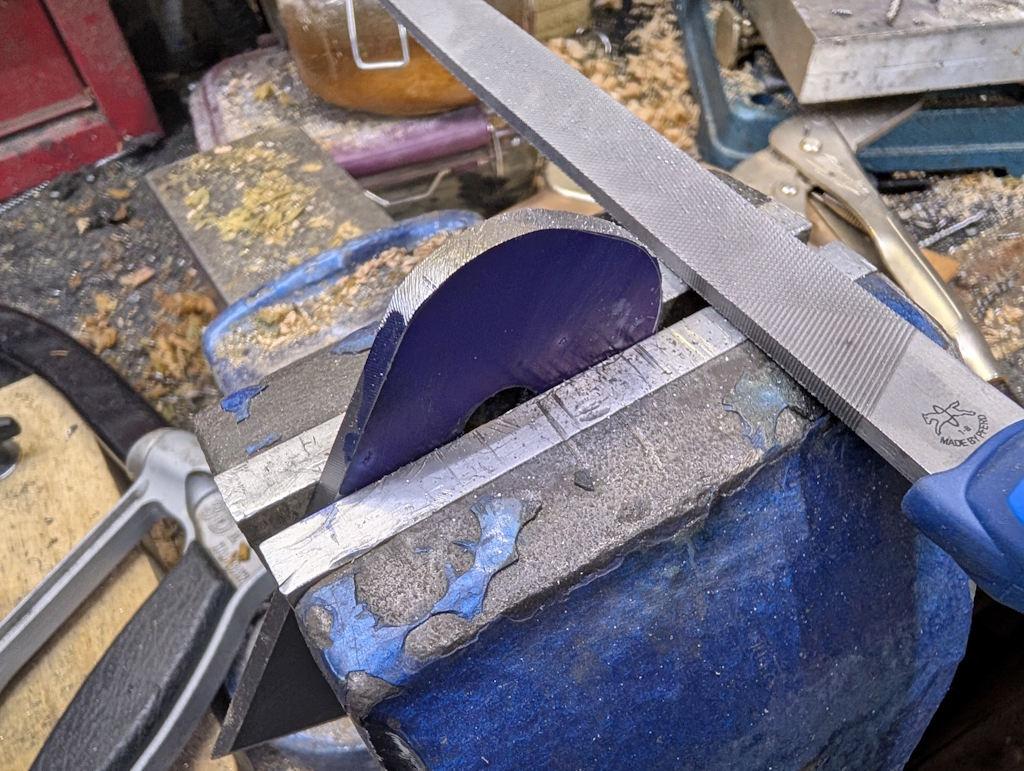
... and then finishing with a 2nd cut and then a smooth cut one.
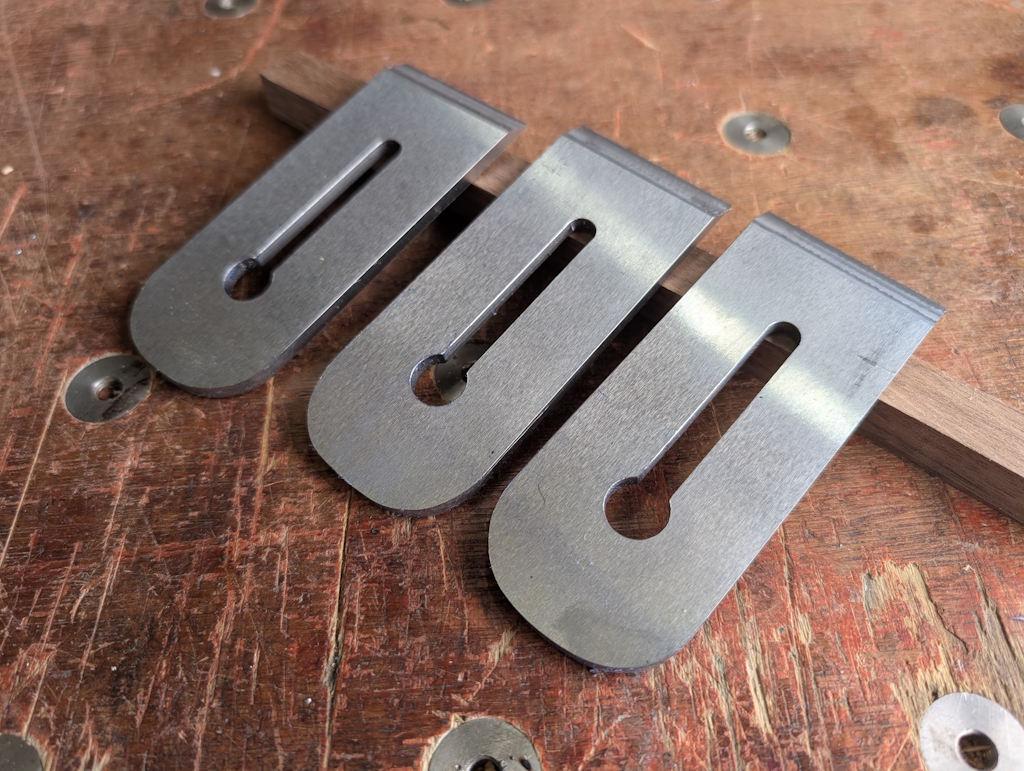
The blade ready for heat treatment (and probably the last time it will look this shiny):
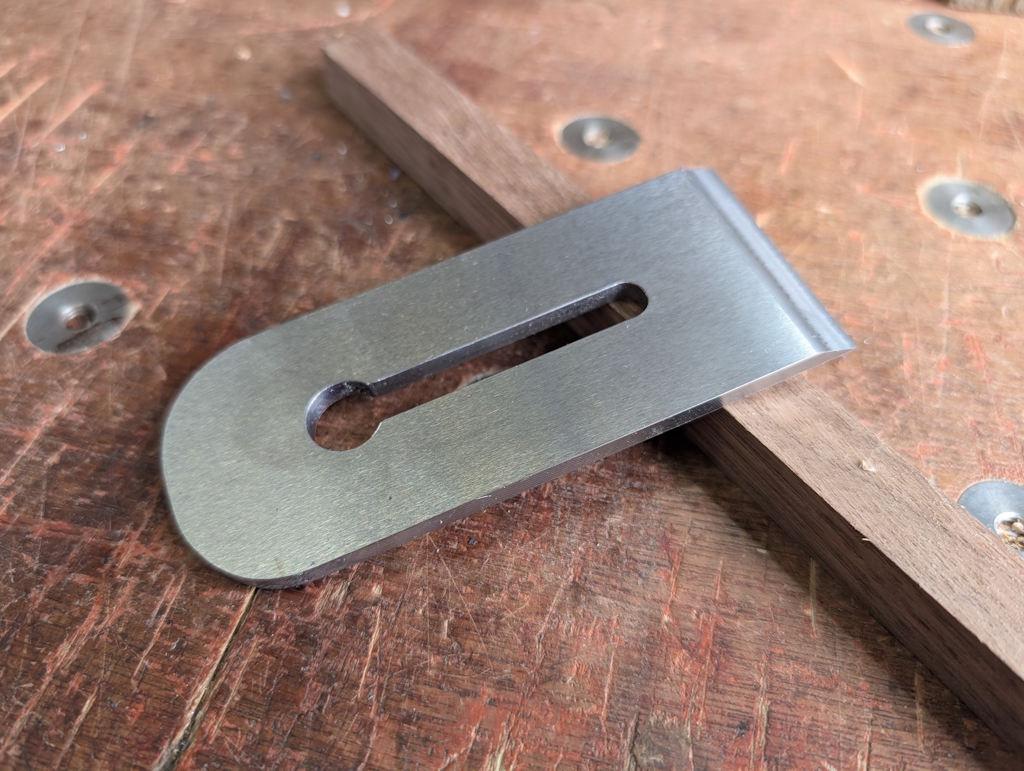
Ctrl-C, Ctrl-V, Ctrl-V:
When heating steel to red hot in air, it develops some scale on the surface and that can be very hard to remove. To avoid that I tend to bury the parts in boric acid powder, which protects them from scaling and coats them in a glassy substance that can be easily removed with boiling water. I'd previously used a small welded tray to hold the parts and the boric acid but it wasn't big enough to put all three blades in, so I grabbed a handy bit of sheet steel and cut it into a pattern:
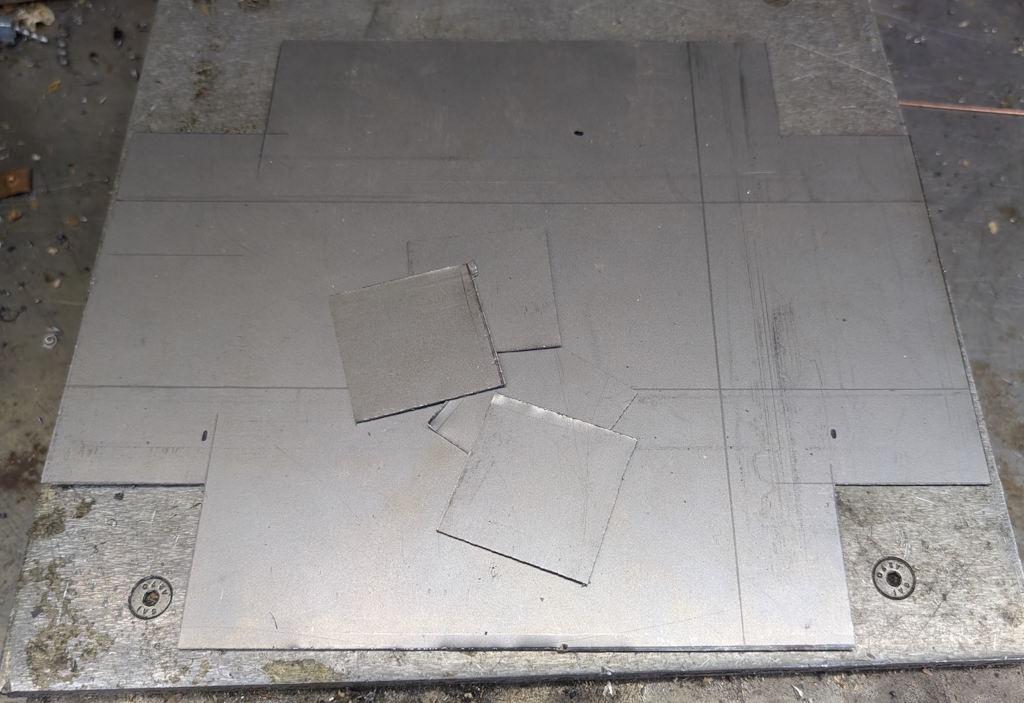
The pattern got folded with my home-made sheet metal bender:
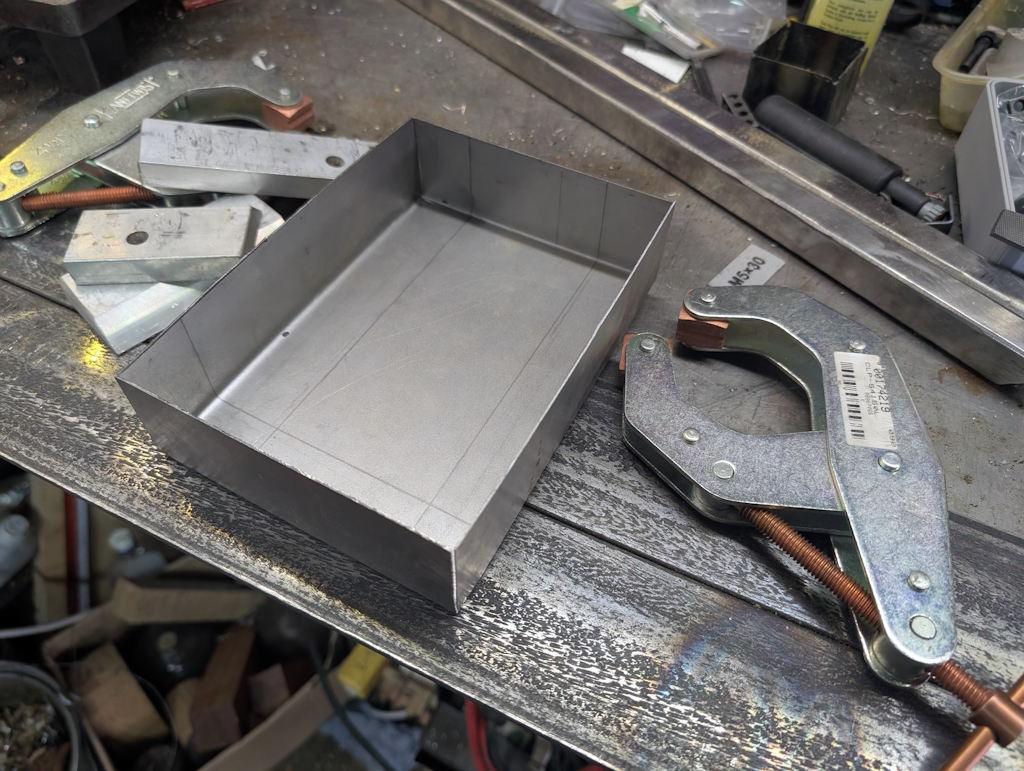
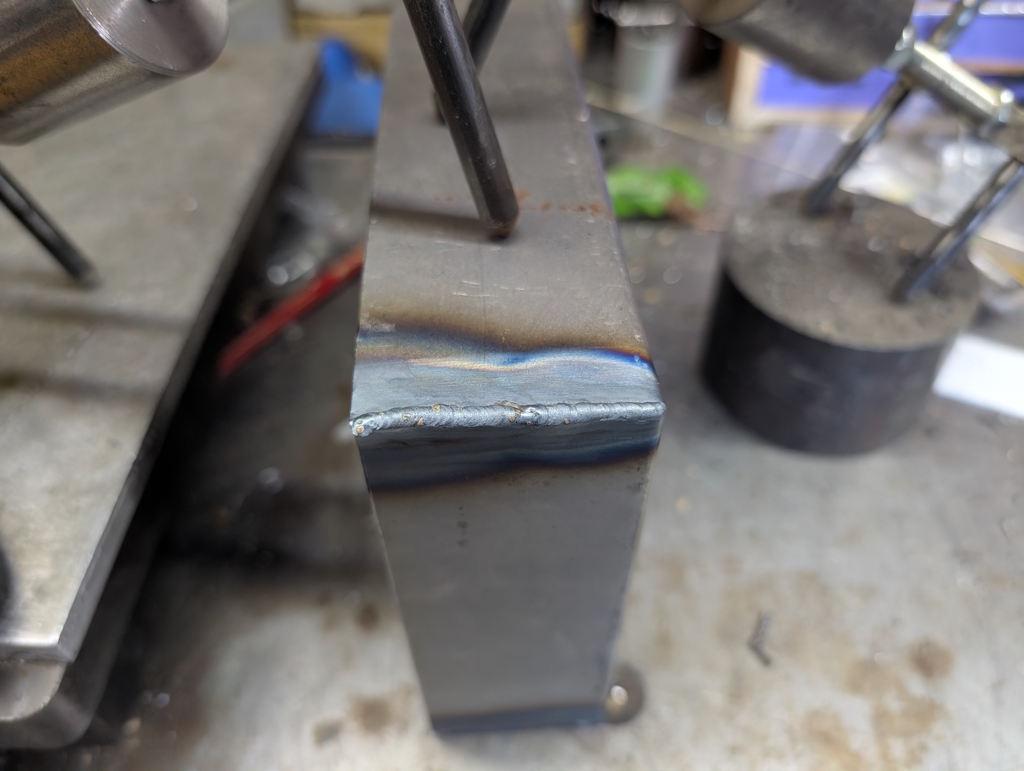
Four short TIG welds later it was ready for use:
I'd made that little tray before retrieving my home-made heat treatment oven from storage. Having got it back I realised it was a very close fit in the cavity:
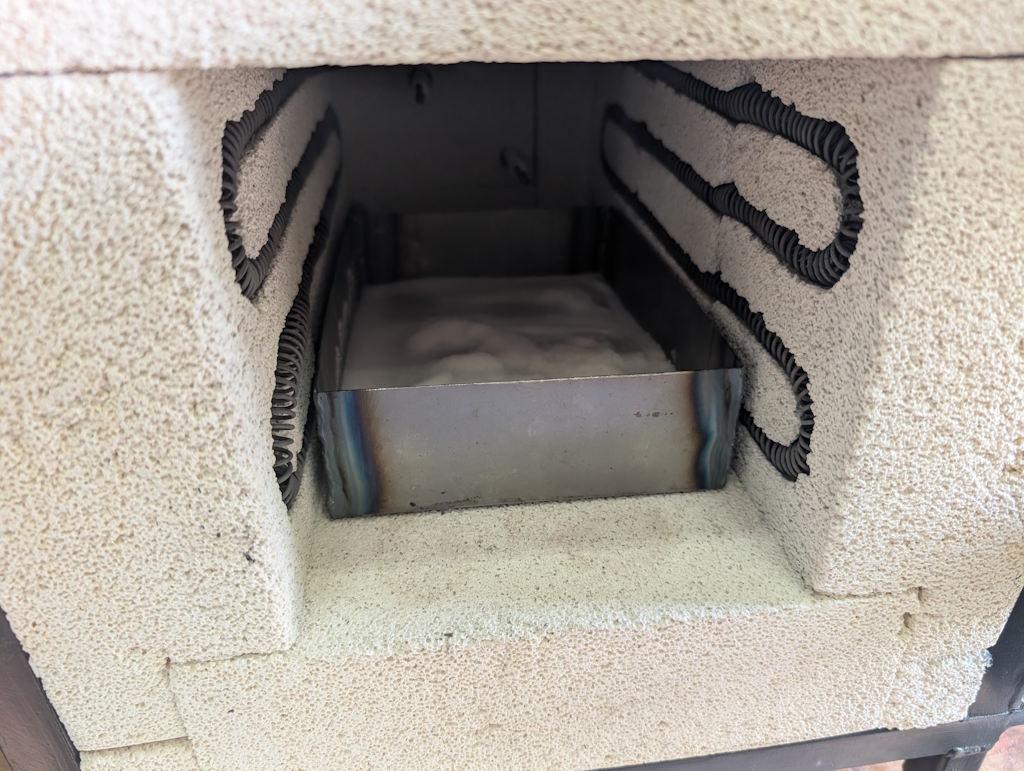
At that point I felt grateful that there's an interlock on the door so the power is automatically removed from the elements when you open it! In the photo above, you can see the boric acid in the tray, covering the three blades. A bit later, it looked like this:
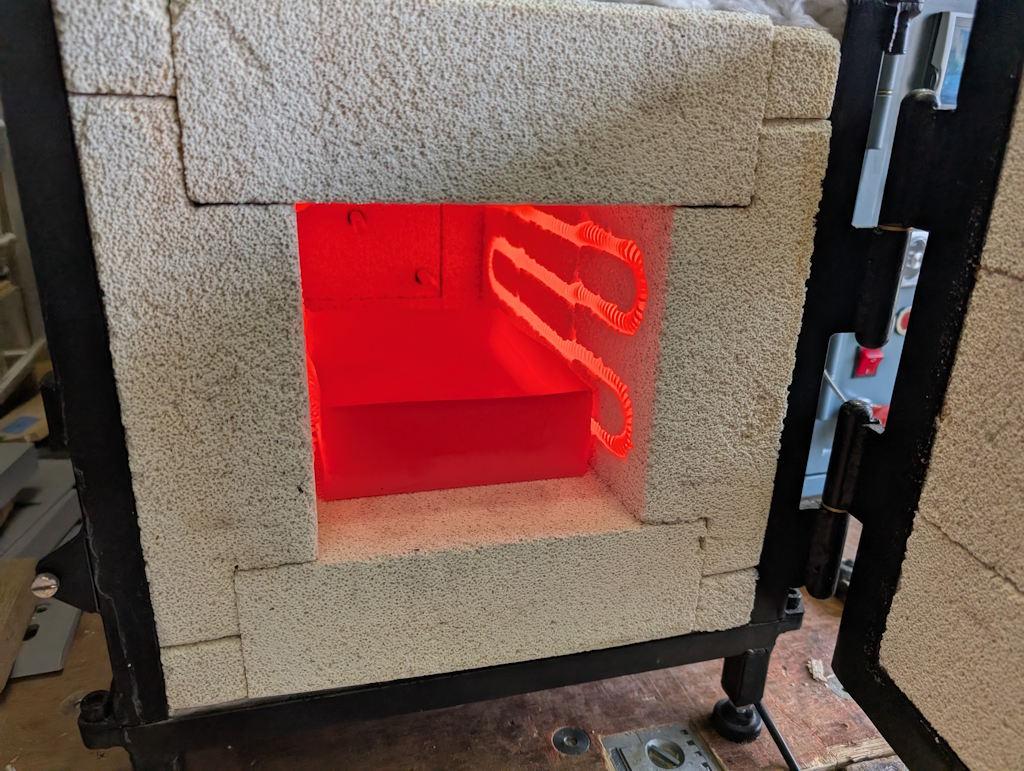
One-by-one, the blades were removed from the oven and quenched in a tall Kilner jar (something like this) full of vegetable oil. After cleaning the boric acid off with boiling water, they then went in the kitchen oven at 200°C for an hour or so to temper.
They don't look as shiny now:
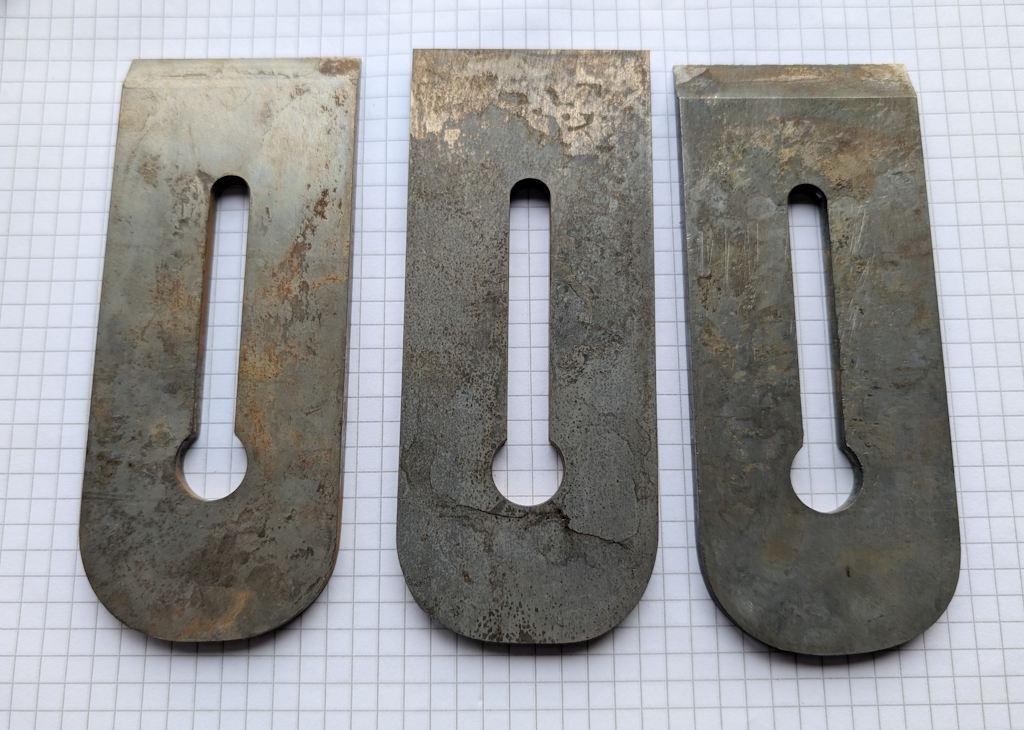
The next job is lots of deeply dull work with wet-and-dry paper to clean them up.
Page 5 of 25
This website is free and ad-free, but costs me money to run. If you'd like to support this site, please consider making a small donation or sending me a message to let me know what you liked or found useful.