
Bevel Up or Down Smoothing Plane Build Process
 Return to main project page
Page 9 of 25
Posted 5th April 2026
Before cutting the slot in the brass, I thought I'd do a little 5:1 pencil sketch to work out the size of the slot at the bottom and also how far ahead of the bottom of the beech slot the hole needs to be. I did the calculations based on 3 mm thick brass (rather than 3.2 mm) to allow for any reduction in thickness from the flattening process.
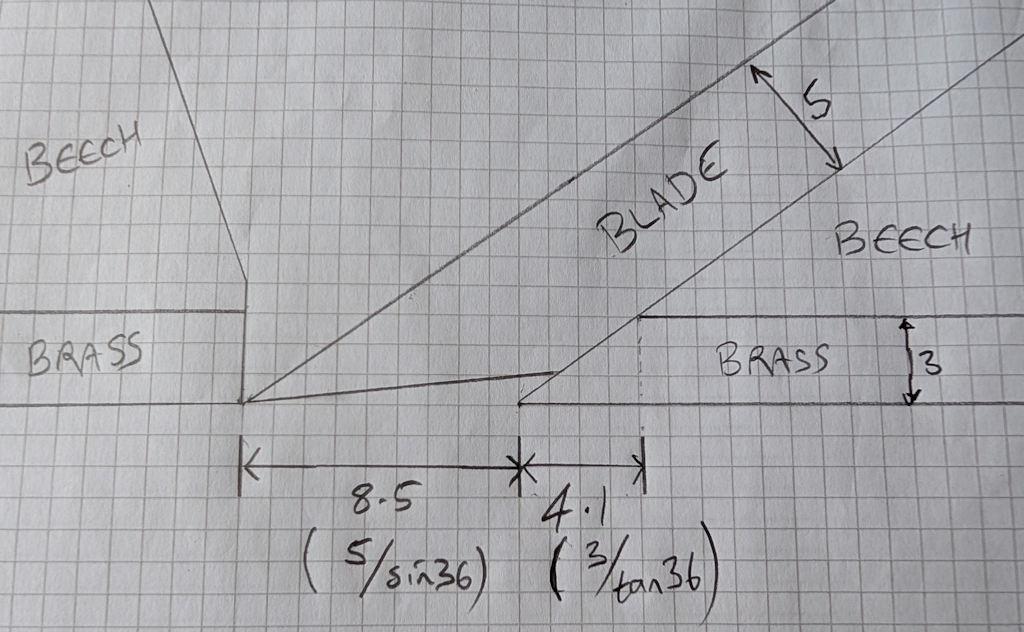
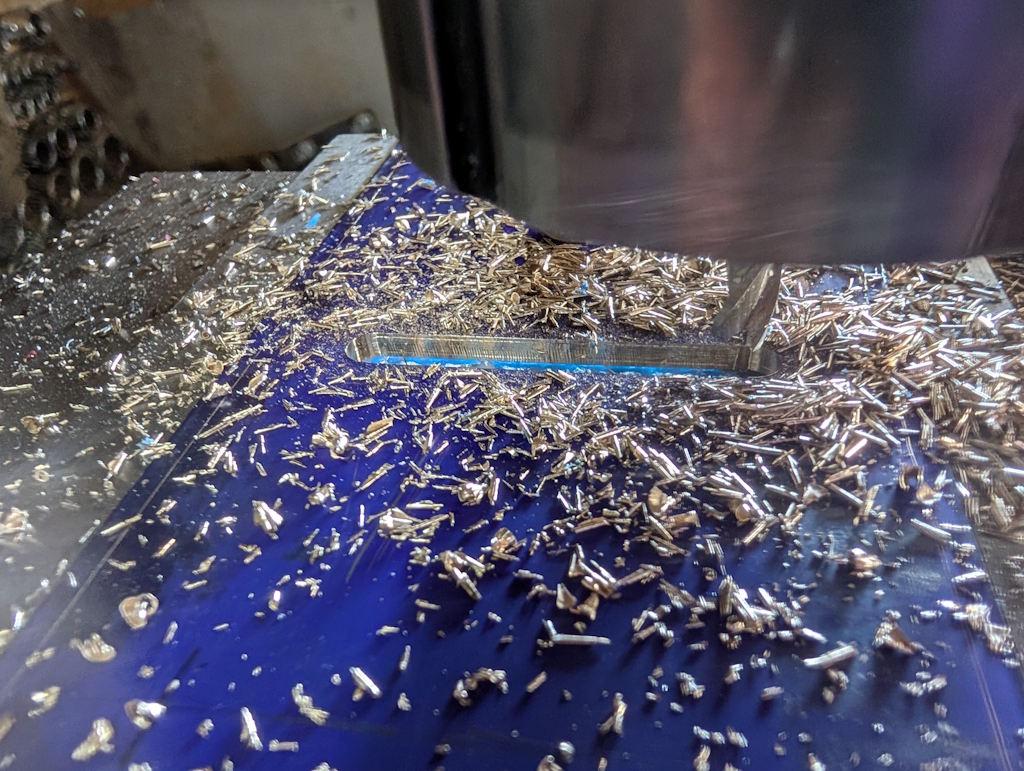
That told me that the slot would be 8.5 mm wide (plus any allowance for shavings) so it's safe to mill a 6 mm slot:
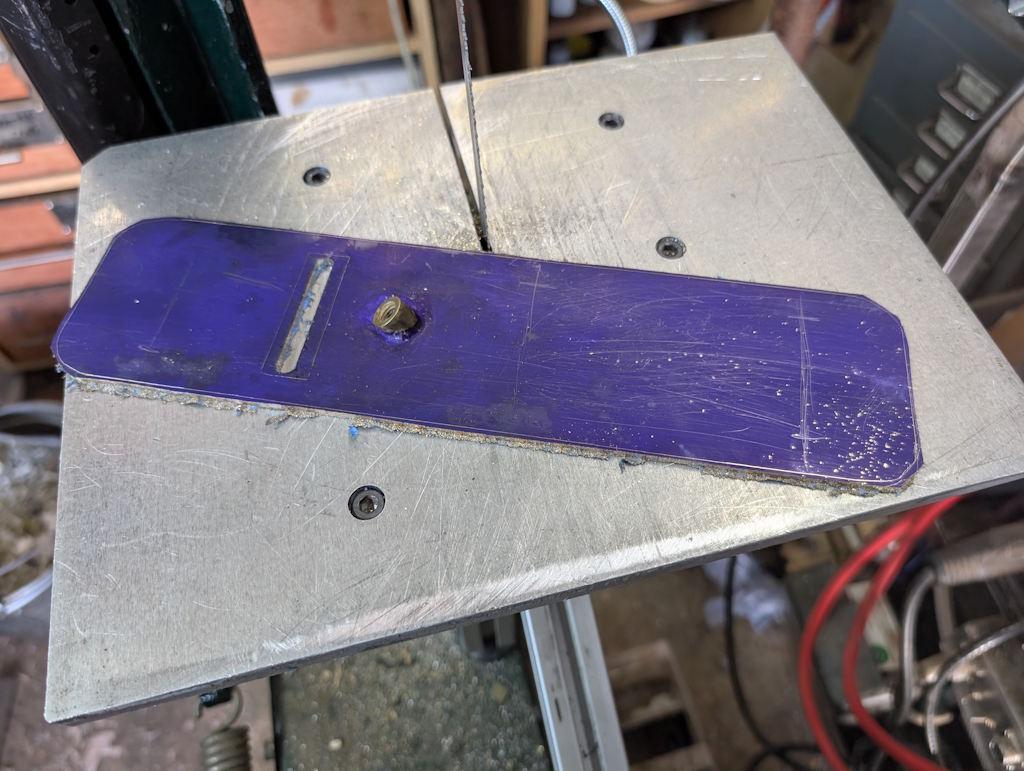
I then covered the bottom surface in masking tape (to minimise the risk of brass chips gouging the underside) and used the bandsaw to bring the brass piece closer to the final size:
Six holes were made in the brass plate, starting with a 6 mm spotting drill to get a shallow countersink:
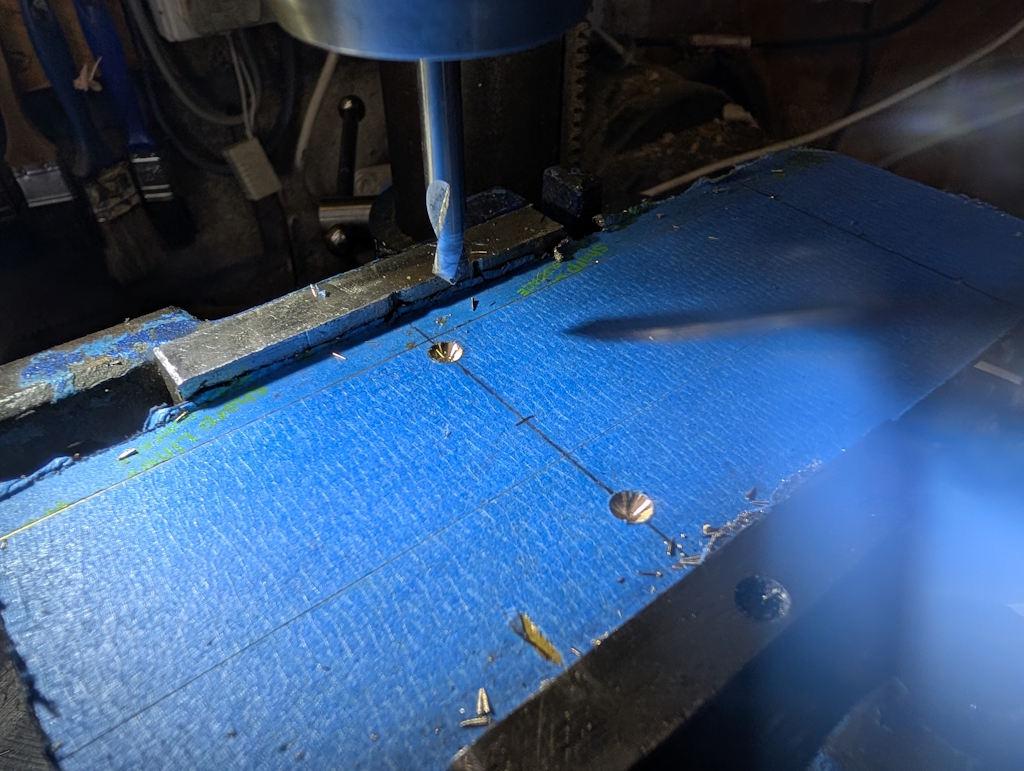
Sorry about the weird effect on the right-hand side of that photo. After taking the photo I checked the lens of my phone camera for dirt and realised there was a massive crack covering most of it. Thankfully I've got a screen protector thing on it and it was only the protector that was cracked but the rest of the photos in this post were taken before replacing the protector, so you might see some weird effects in later photos where I haven't cropped it out.
After using the spotting drill, I switched to a 4.1 mm drill bit and drilled through:
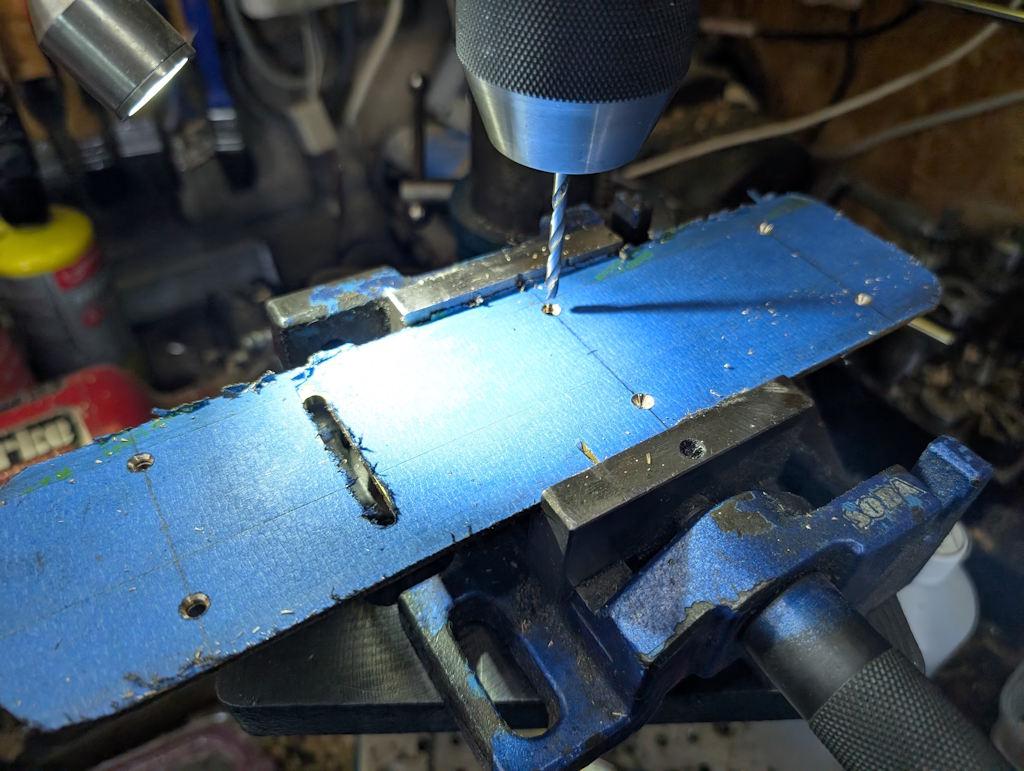
A 4 mm transfer punch was used to transfer the marks onto the beech body...
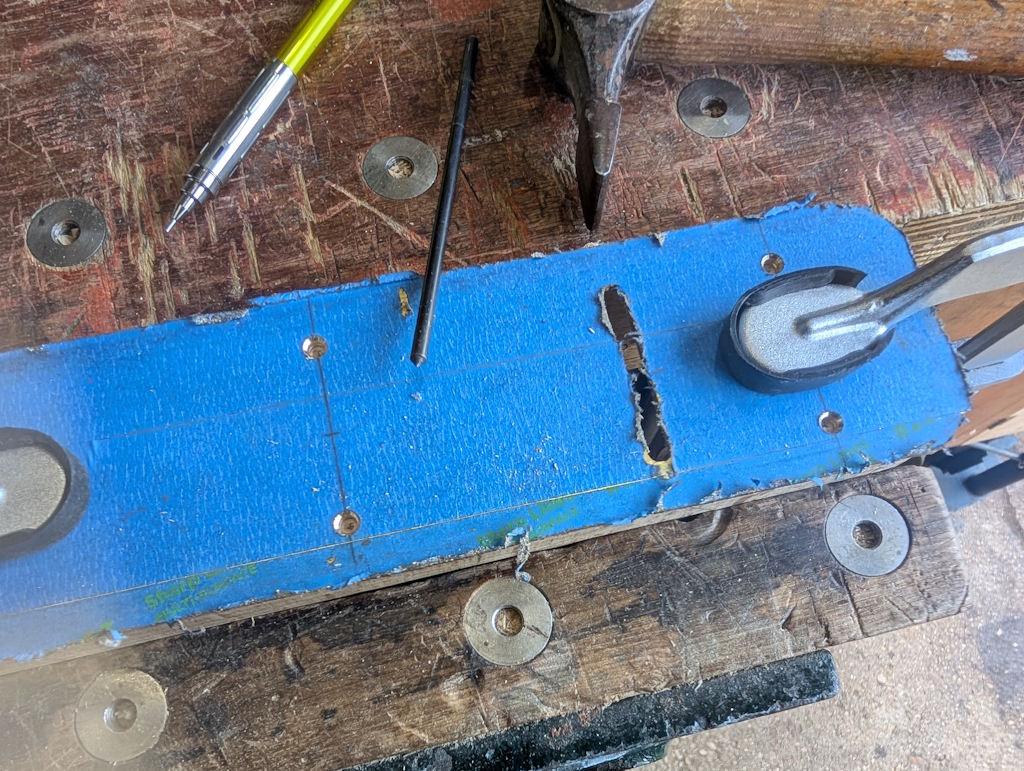
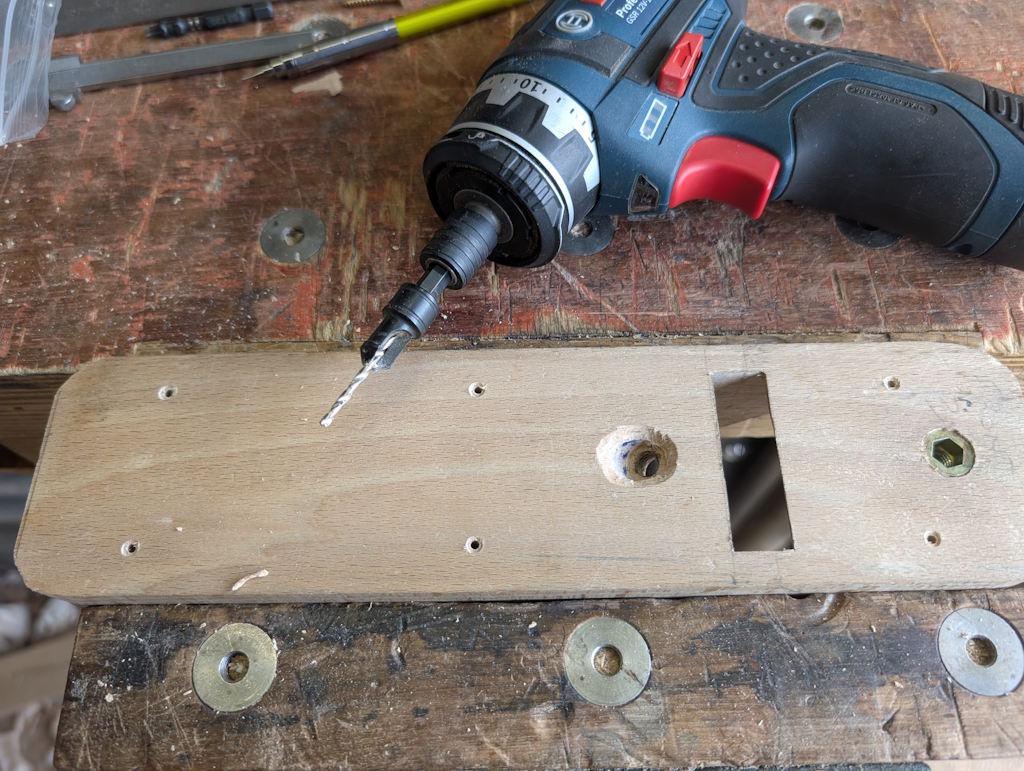
... and then a pilot drill prepared the holes for their screws:
After cleaning off all the Dykem with acetone, I roughed up the surface with some 150 grit sandpaper to give the epoxy something to stick to:
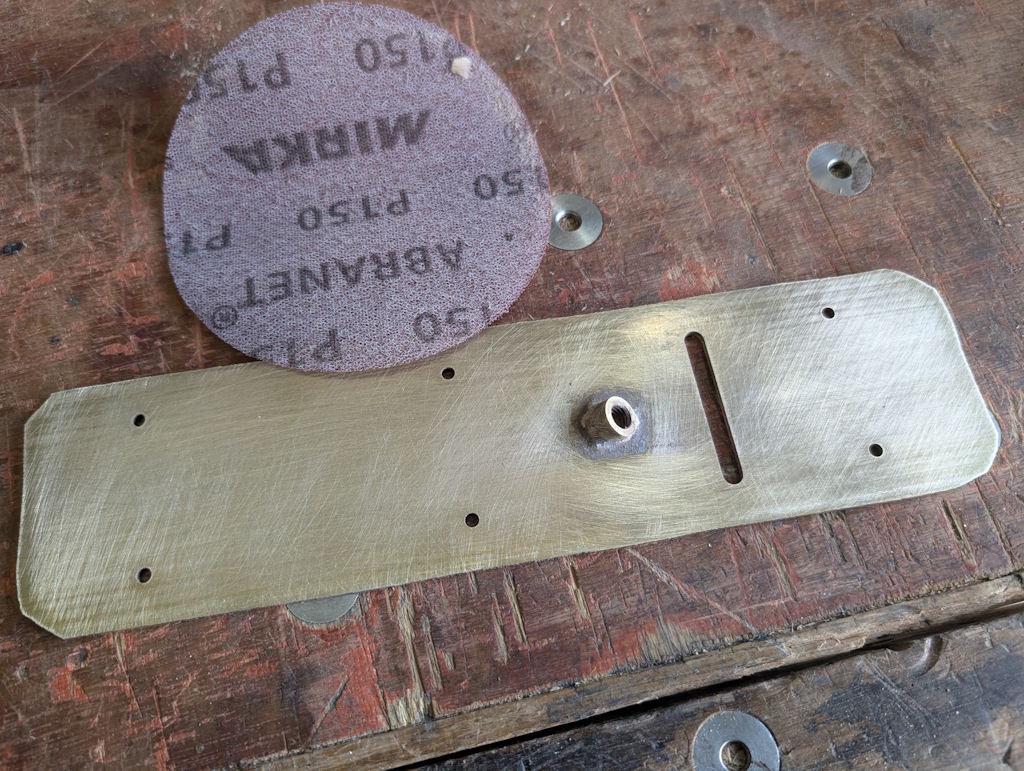
Everything prepared and ready to glue:
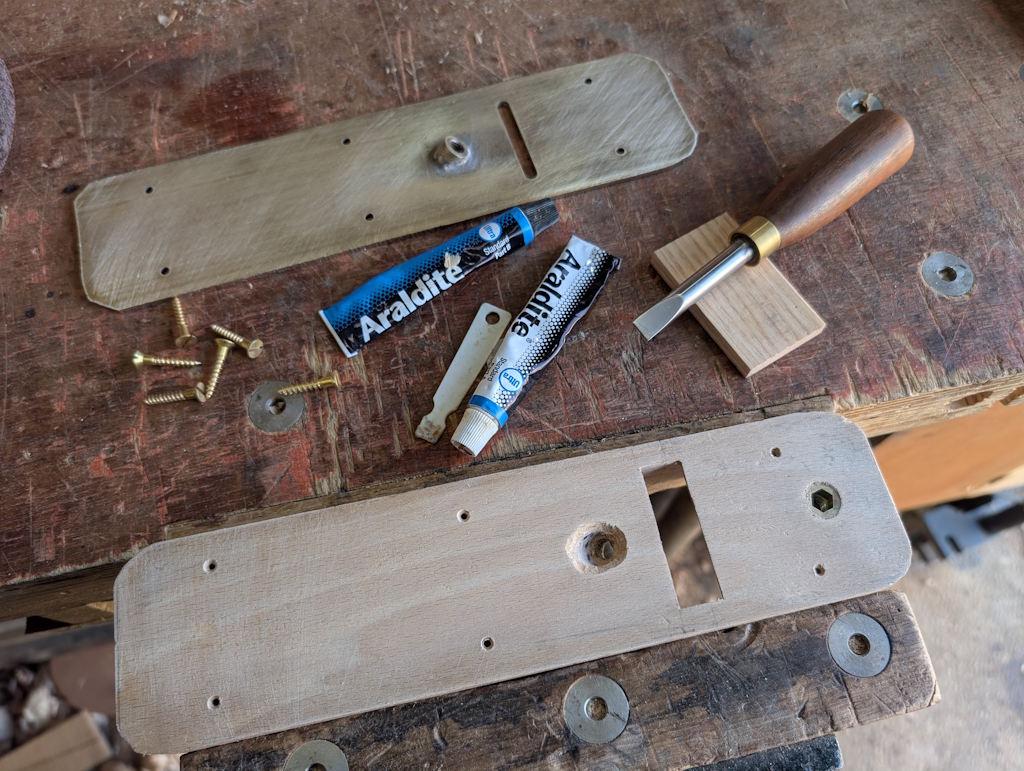
I'm using off-the-shelf brass wood screws which seem to always come with horrid slotted heads. On the up-side though, that means I can use my home-made screwdriver to tighten them up. The beech got daubed in epoxy, keeping the pocket for the brazed-on nut thing clear. There was a bit left-over so I spread it round the outer rim on the brass as I figured it couldn't hurt.
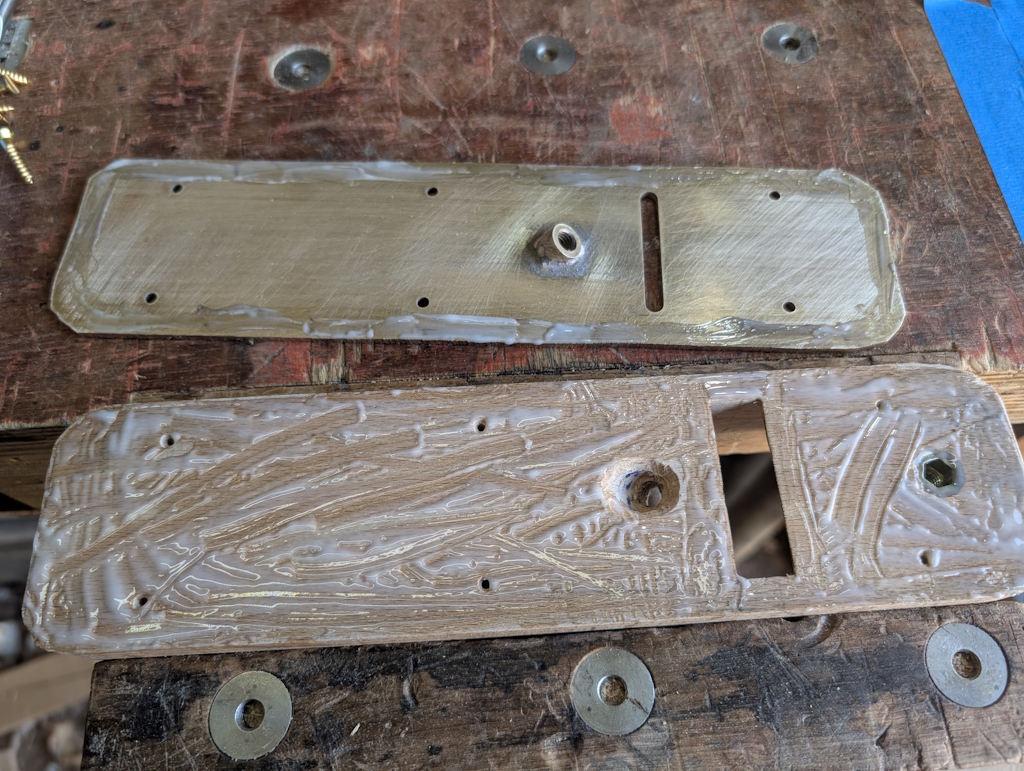
The six brass screws then got tightened into the holes. Five of them went well. The other not so much:
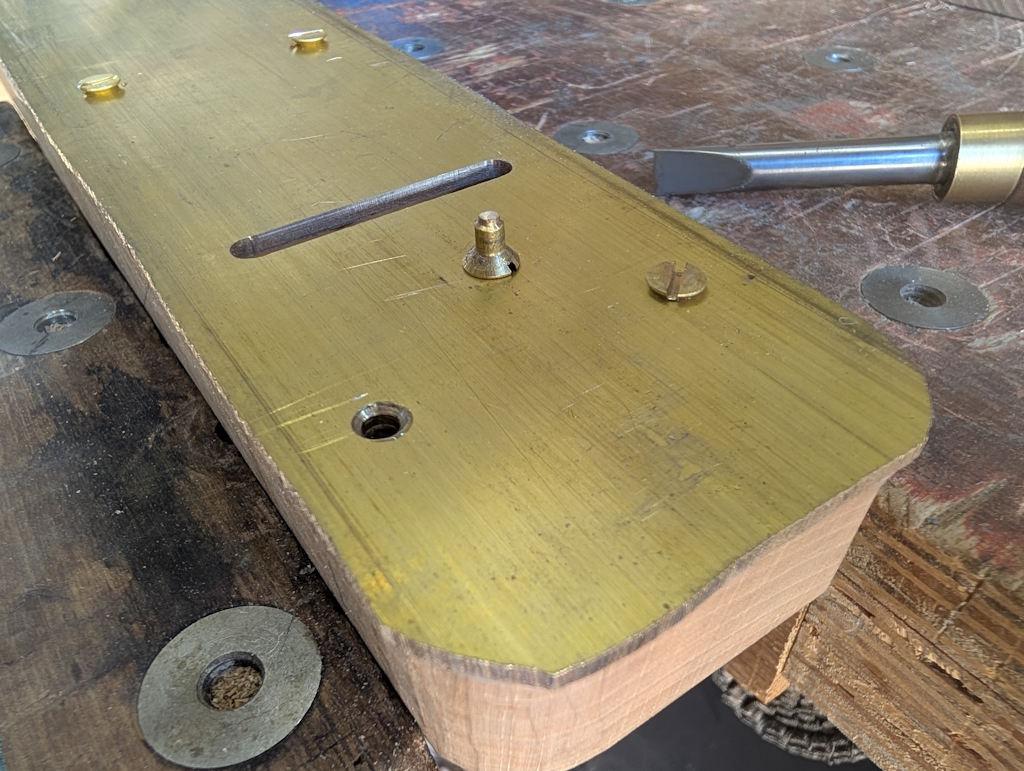
I'd considered pre-screwing the holes with some steel wood screws (to give the brass an easier life) but none of my steel screws have the same pitch thread as these brass ones so I thought it would probably be a bad idea.
I didn't have any bigger brass wood screws so the only thing I could think to do was to drill the broken screw out with a 4.2 mm drill bit...
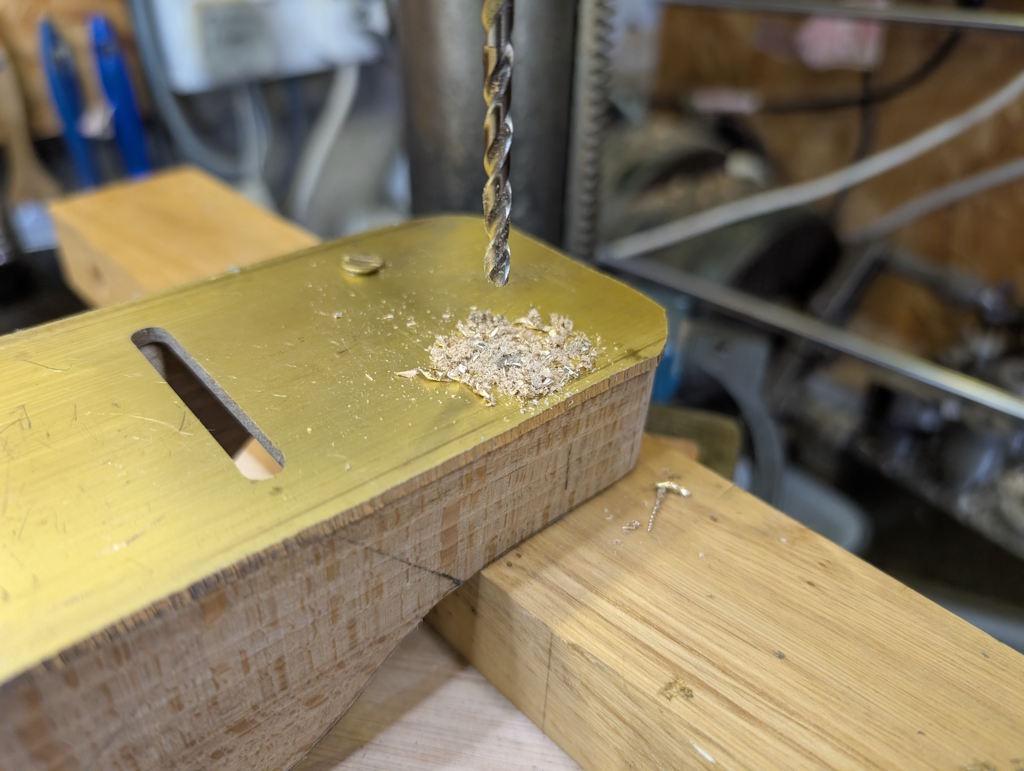
... then tap the resulting hole M5. An M5 thread in wood isn't going to be that strong but I'm hoping that the combination of the M5 thread and a lot of epoxy might be better than nothing.
I don't have any M5 countersunk machine screws, but unlike wood screws, machine screws are easy to make:
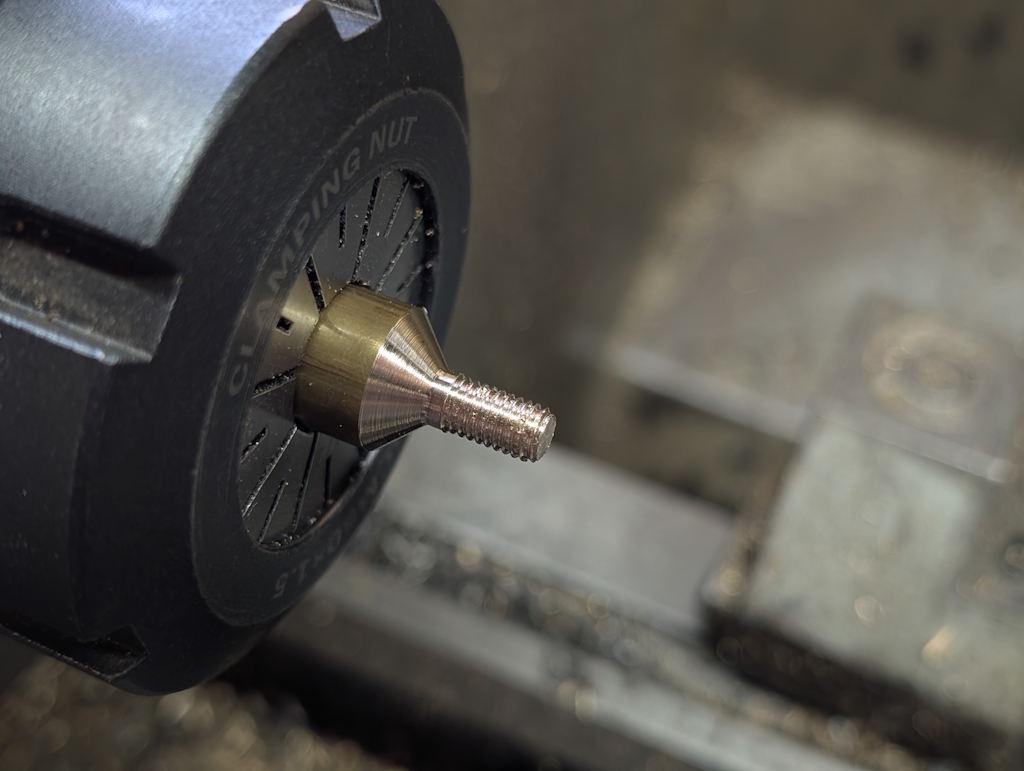
I could have just left the body as a cylinder and tightened with pliers but I figured I might as well use my home-made (from a Hemingway kit) rotary broach and then I could use an Allen key to fit the screw (after daubing it in epoxy:
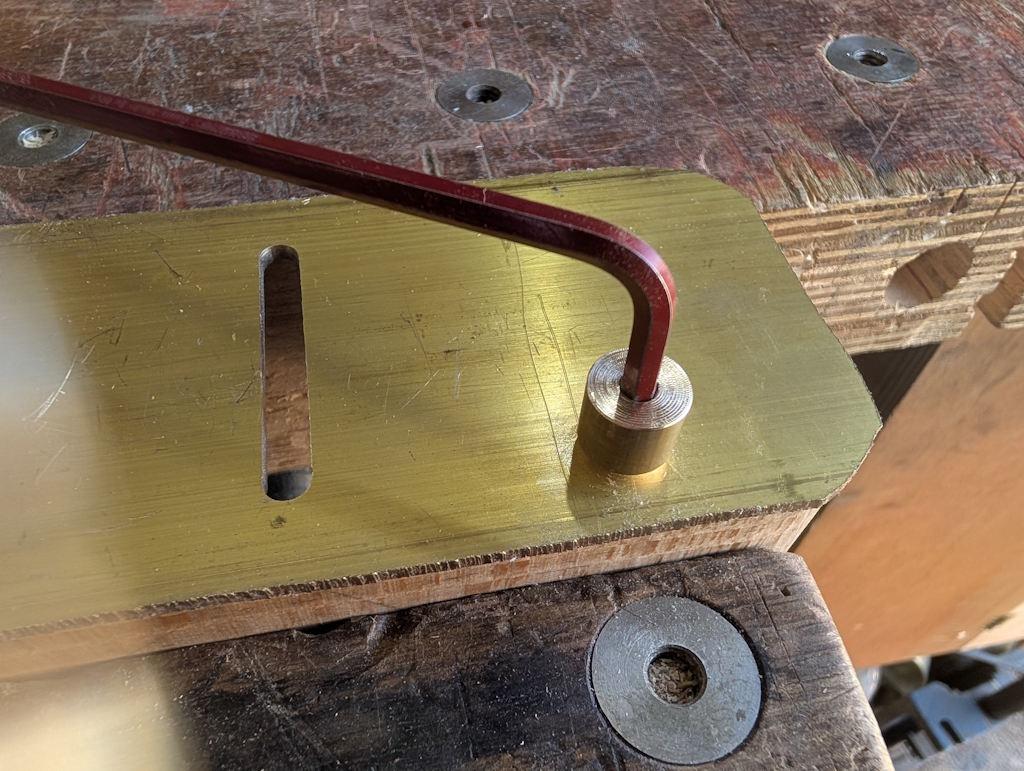
I'll leave it overnight now and then try to clean up that screw head first. If it comes out or breaks off then I'll probably make or buy a much bigger diameter wood screw and find a way to fit it and fill the hole.
Page 9 of 25
This website is free and ad-free, but costs me money to run. If you'd like to support this site, please consider making a small donation or sending me a message to let me know what you liked or found useful.