
Bevel Up or Down Smoothing Plane Build Process
 Return to main project page
Page 8 of 25
Posted 5th April 2026
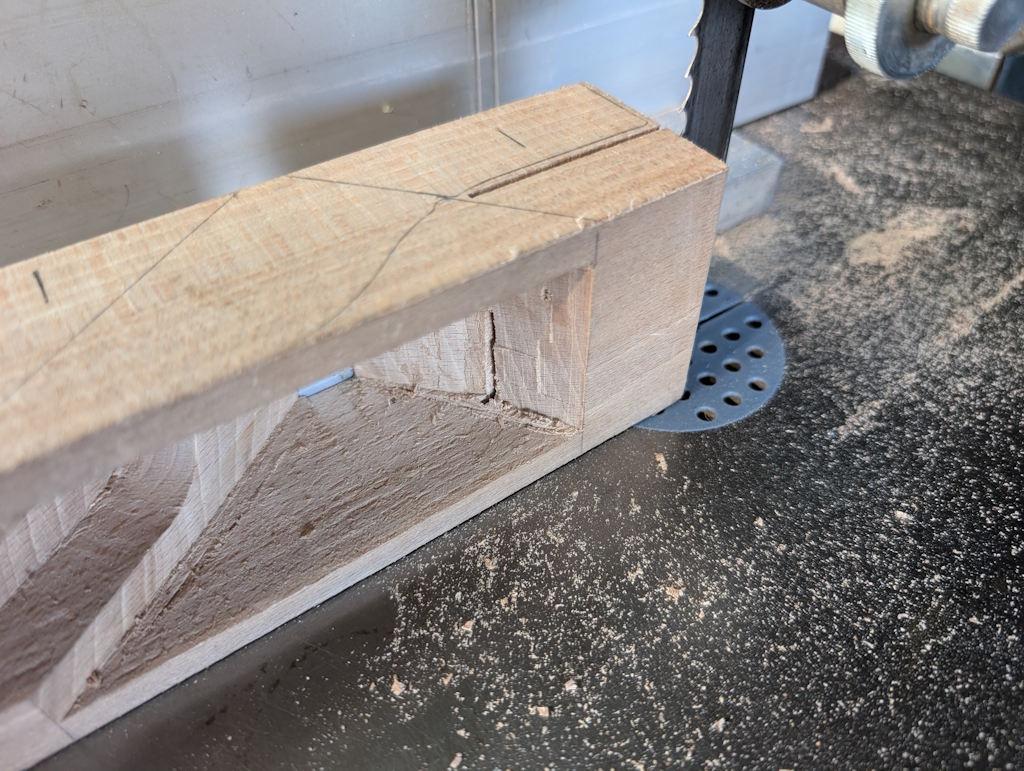
This morning I've been working on the body again. The first job was to get rid of some of the waste that comes as a result of the curvy top shape I've picked. I started by cutting along the straight bit at the front with the bandsaw, stopping just as the blade came into the opening (so the blade didn't make too much of a mess of the unsupported top web):
The back was simpler and I could just cut a section out with the bandsaw:
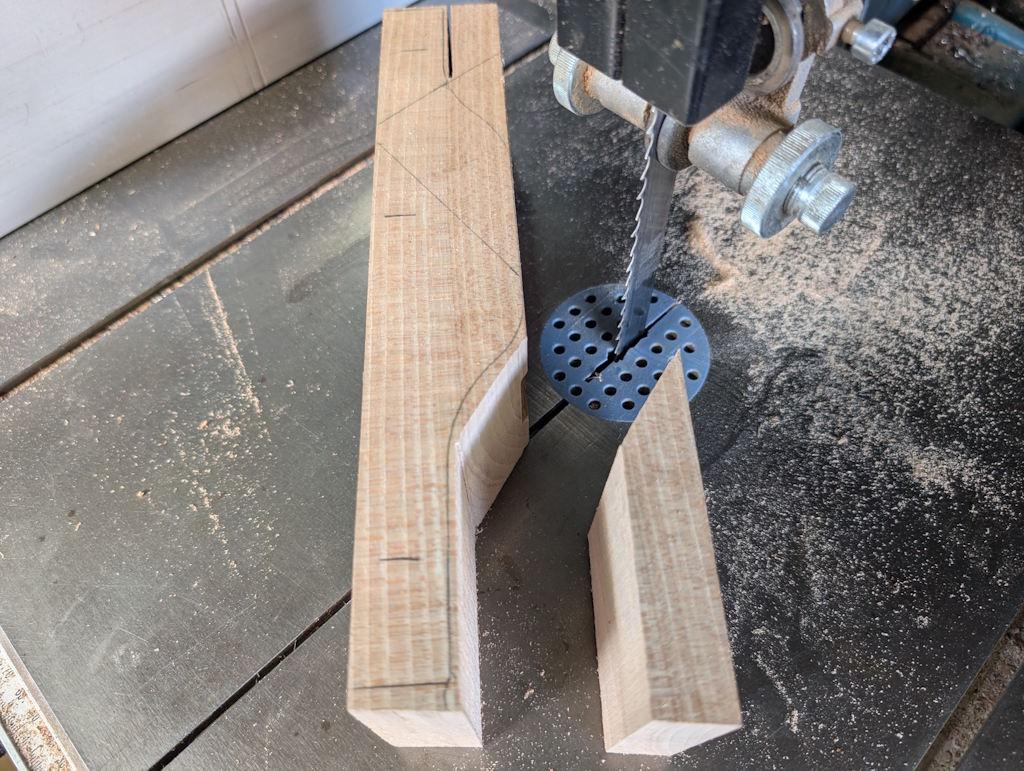
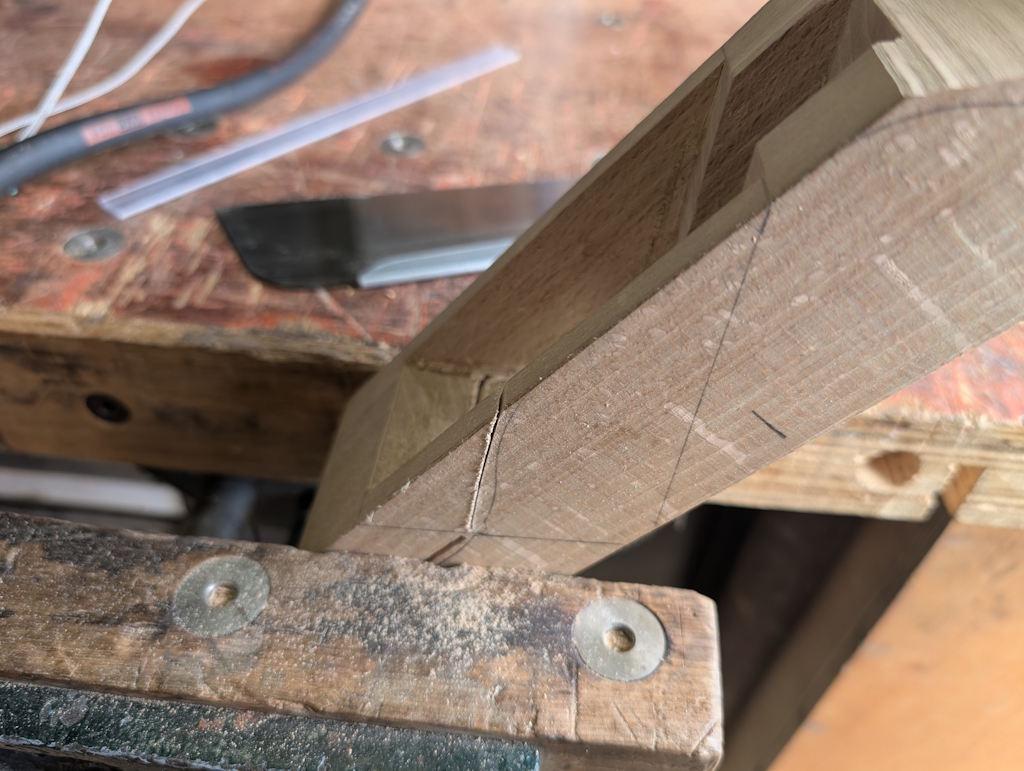
To remove the back piece, I sawed down each side separately with the Dozuki:
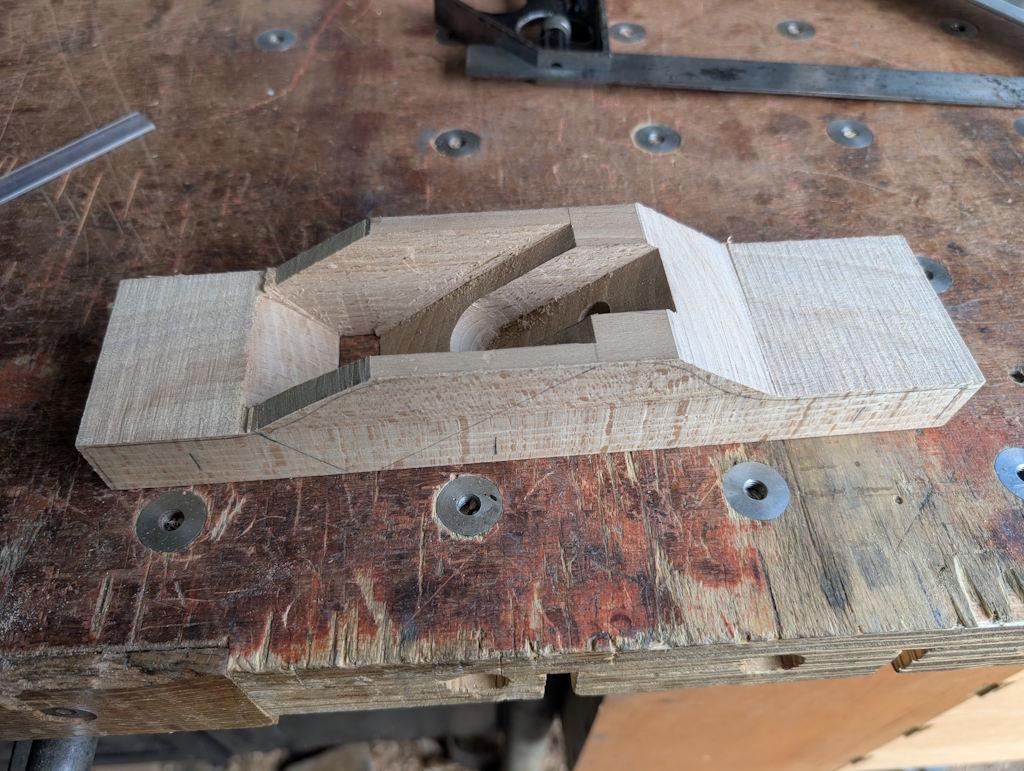
That gives an idea of the rough shape that the plane will be:
I squared up the front end using my shooting board and low-angle jack plane (equipped with my home-made shooting handle):
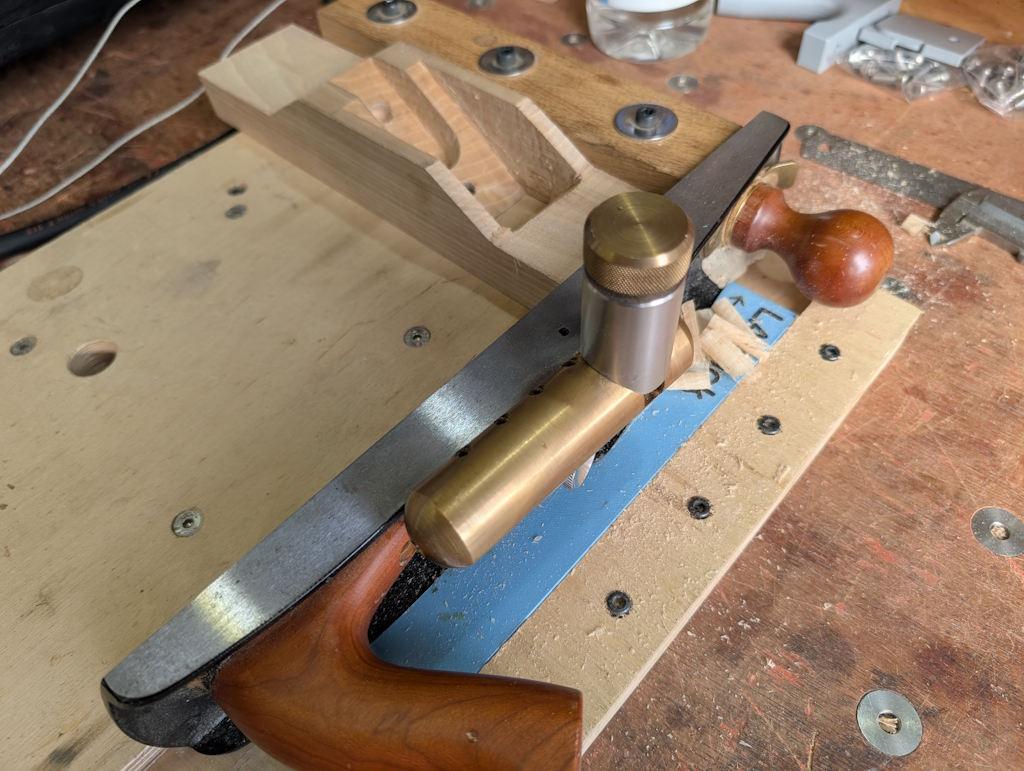
The back got shortened a bit...
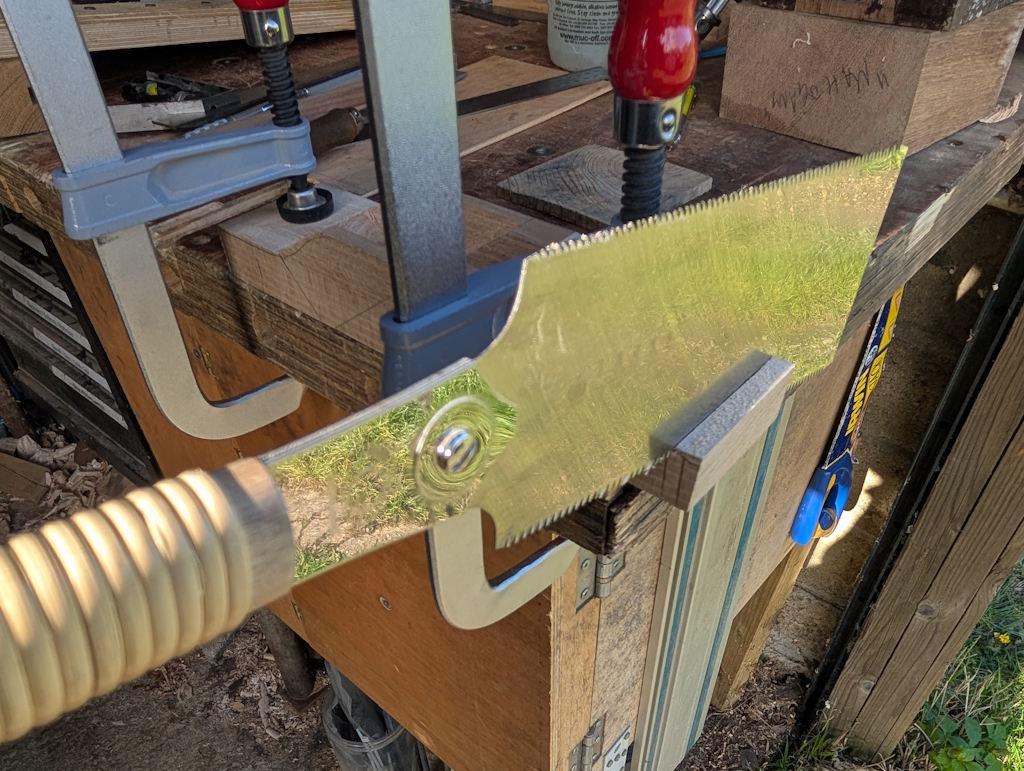
... before it too was subjected to the shooting board.
For the convex bits of the curves and the outer areas of the flat bits, I used my home-made block plane:
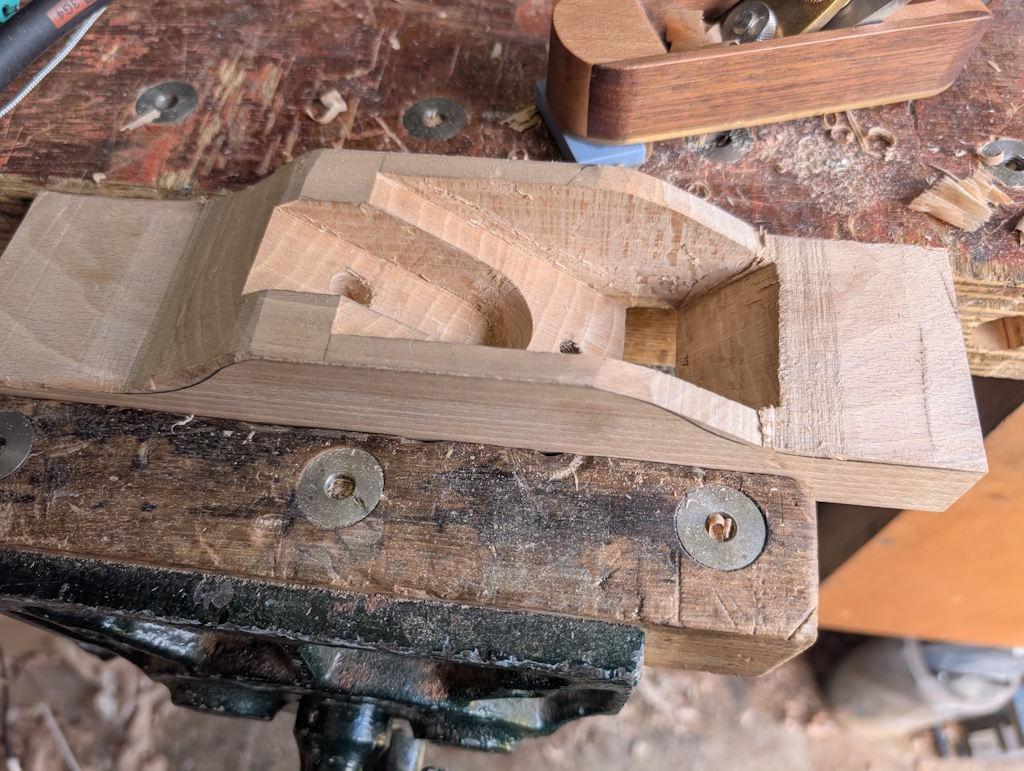
I was quite nervous about the concave areas as I've never felt very confident dealing with the transition between grain going down the curve and (on one end) grain going the other way along the face. I started by putting the body on its side and chopping down with a chisel to get rid of the bulk of the waste:
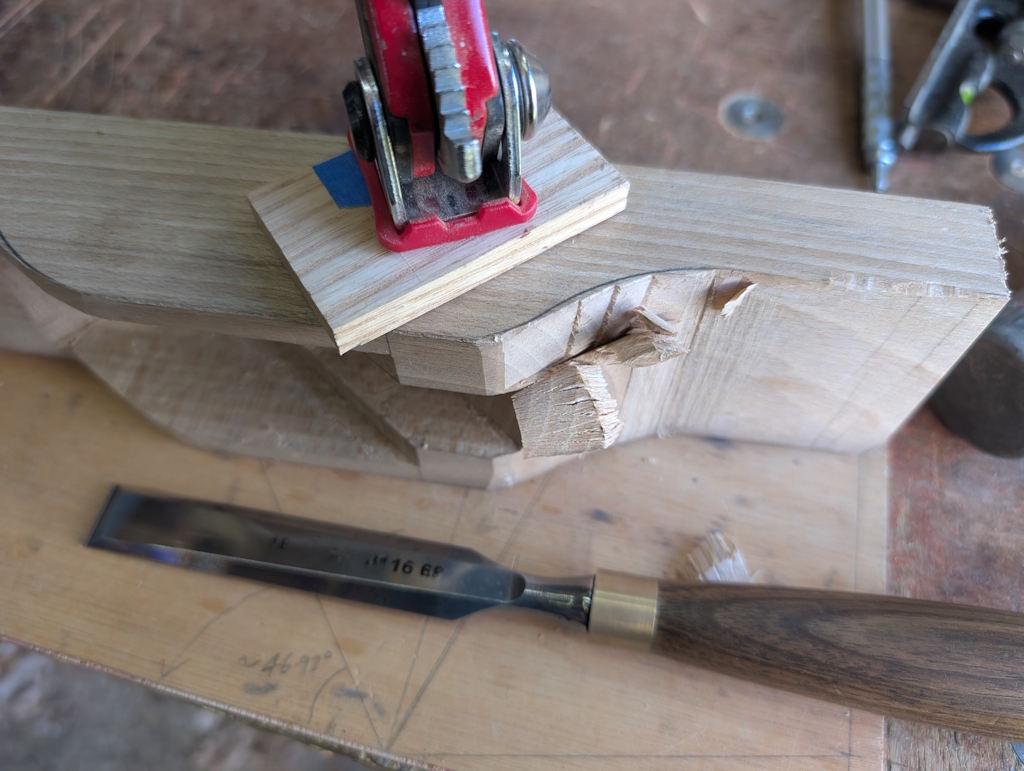
A bevel-down chisel then did a lot of the remaining work down to the flat:
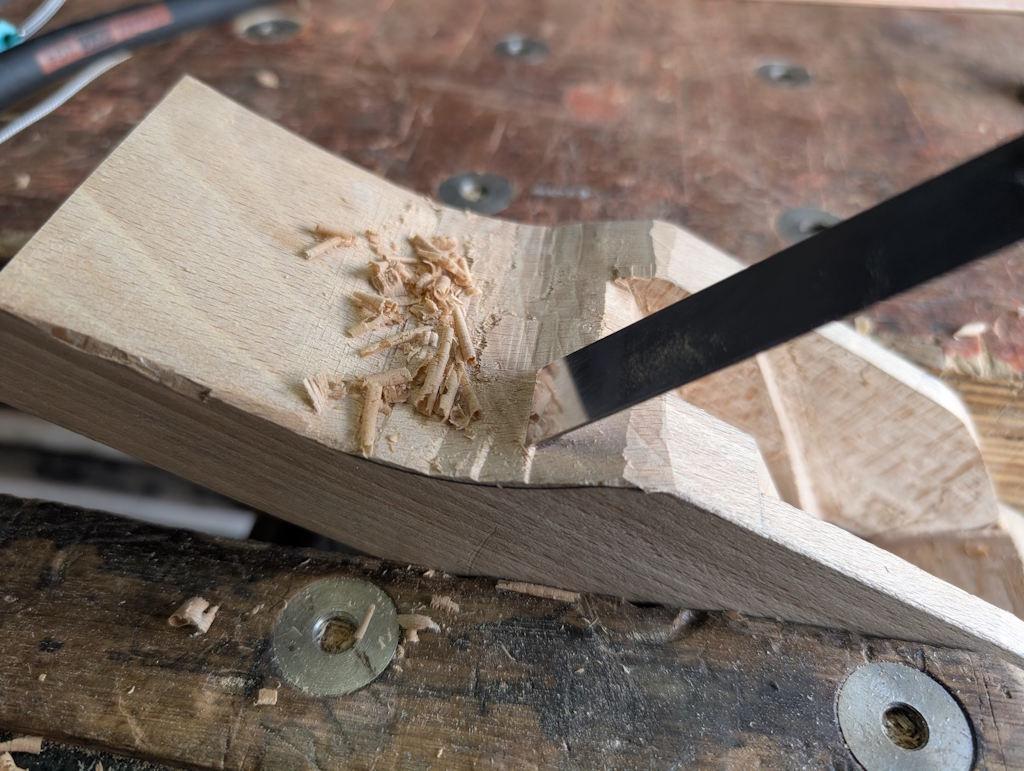
In that photo you'll notice a bit of tear out where I forgot to chamfer (what was then) the rear side before planing across the grain with the block plane. It's not a big deal as I intend to round that edge off quite a bit when the plane is closer to finished.
To deal with the flat bit that the block plane couldn't get to (near the transition to curved) I thought I'd pull out one of my most infrequently used tools: the Record #73 shoulder plane. That brought the surface down closer to the line, but I quickly reminded myself why I don't use it very often.
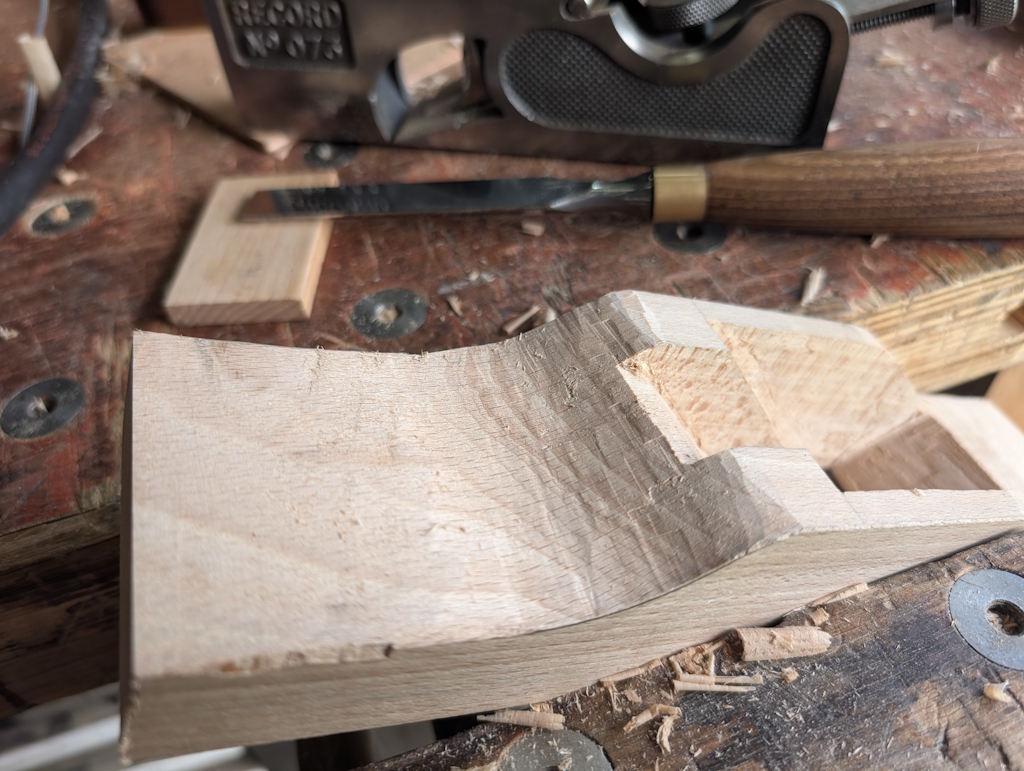
To tidy up my rough bevel down chiselling and rough shoulder planing, I used the wonderful get-out-of-jail free card that is a card scraper to tidy the back surface up:
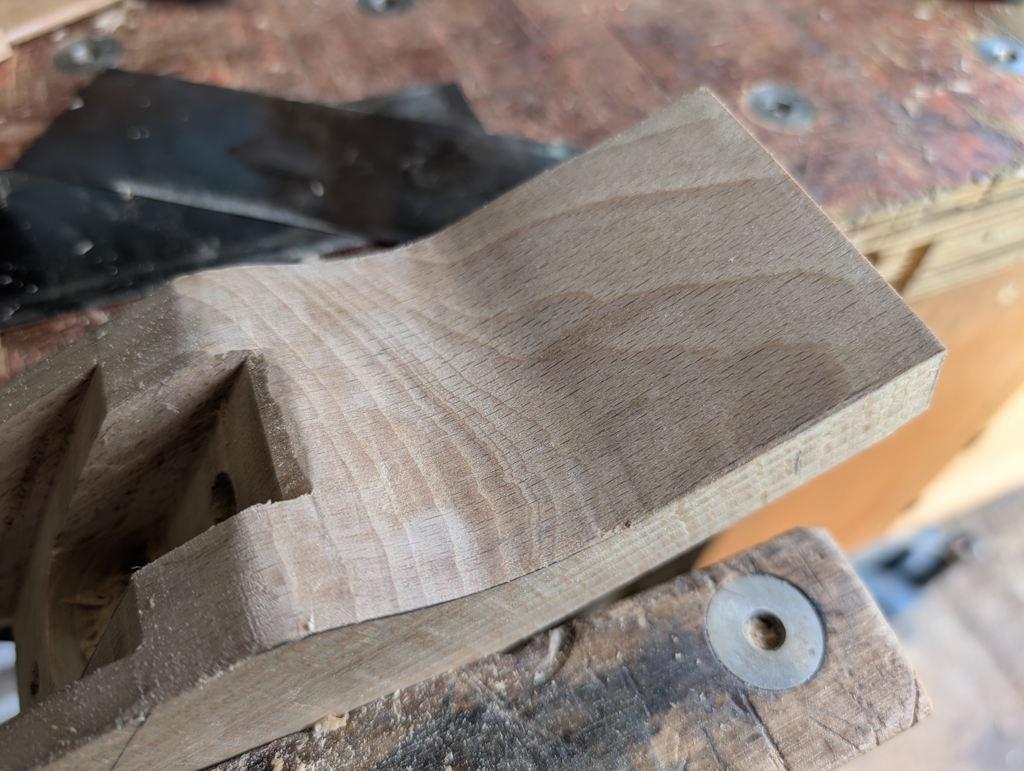
For the front surface, I thought I'd try a different shoulder plane, this one with a skewed blade with the skew in the right direction (for the front of the plane) to make a fairly smooth cut:
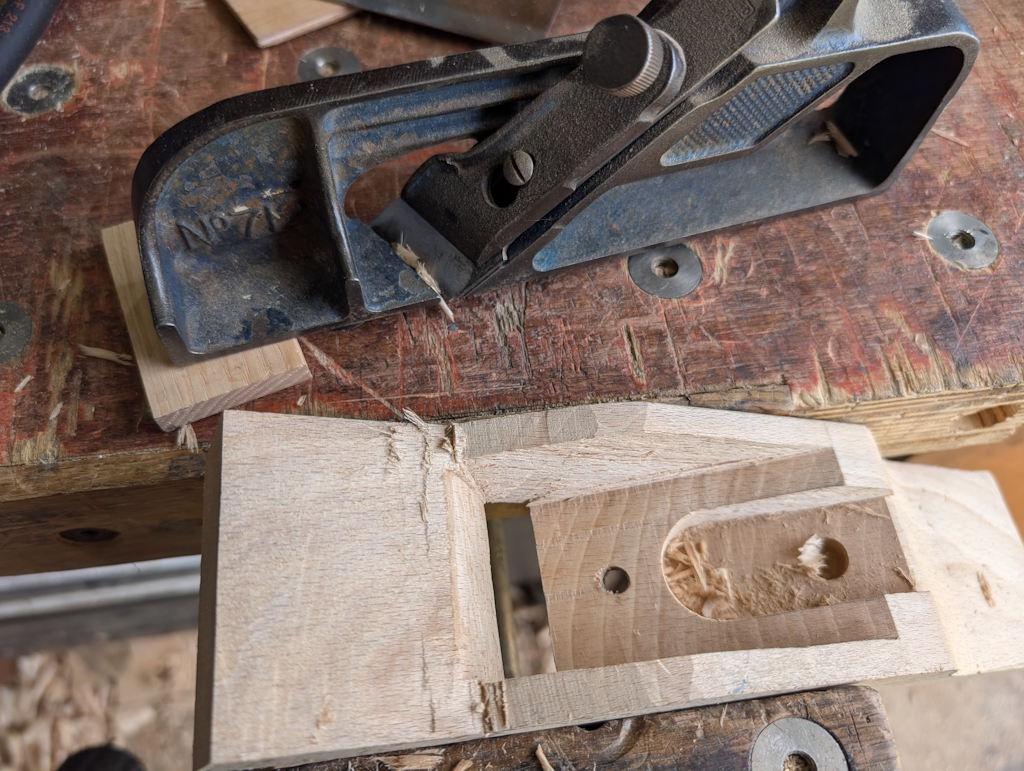
In the end, however, I did what I usually end up doing when experimenting with shoulder planes and went back to using a chisel instead:
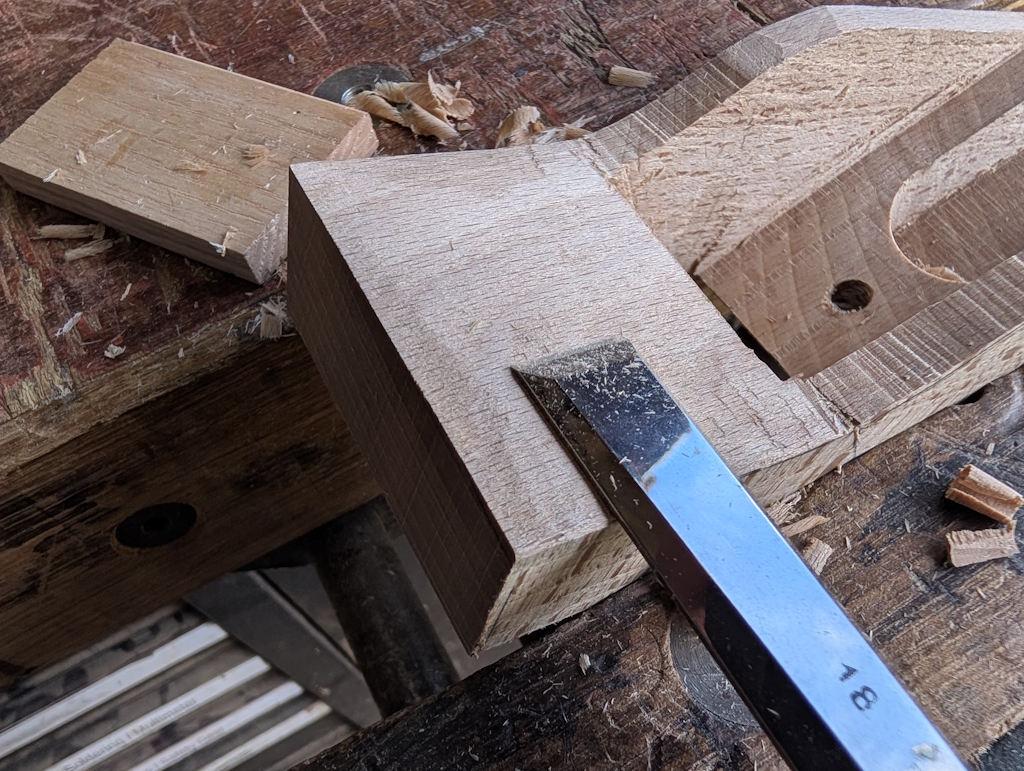
The sloping walls were a bit easier this time (as they are thinner and the grain direction is such that the chisel can keep going when it meets the face), so a bevel down chisel followed by a light touch with a card scraper sorted it out.
Next up was to round off the corners. I marked a 16 mm radius with this little printed guide:
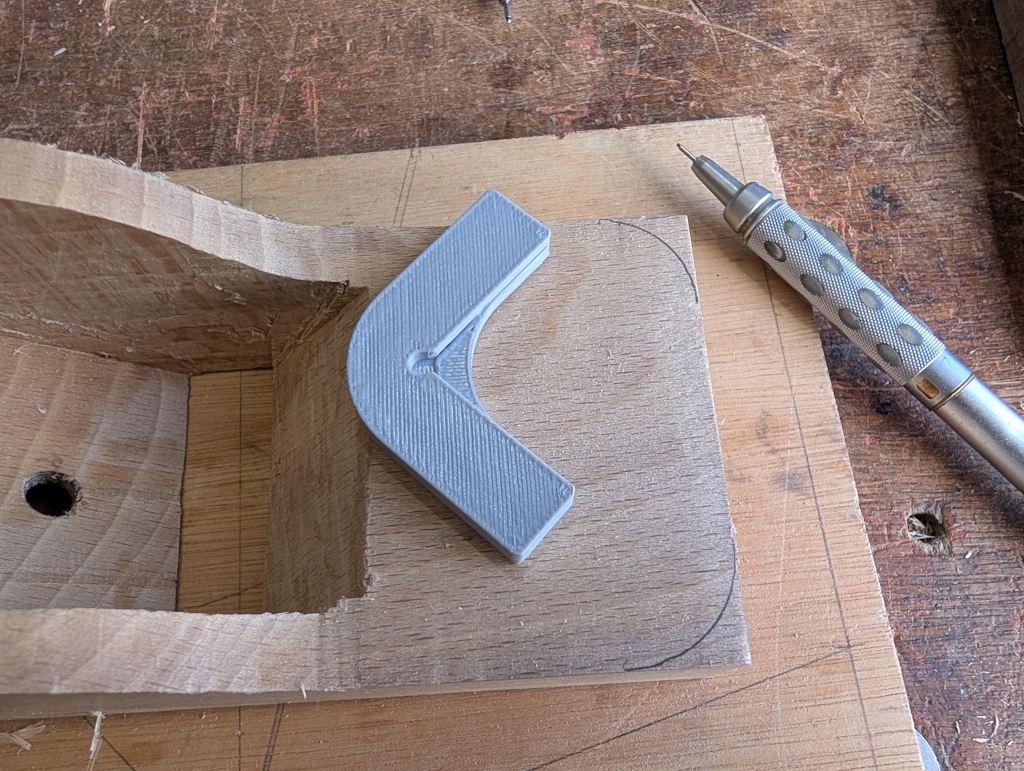
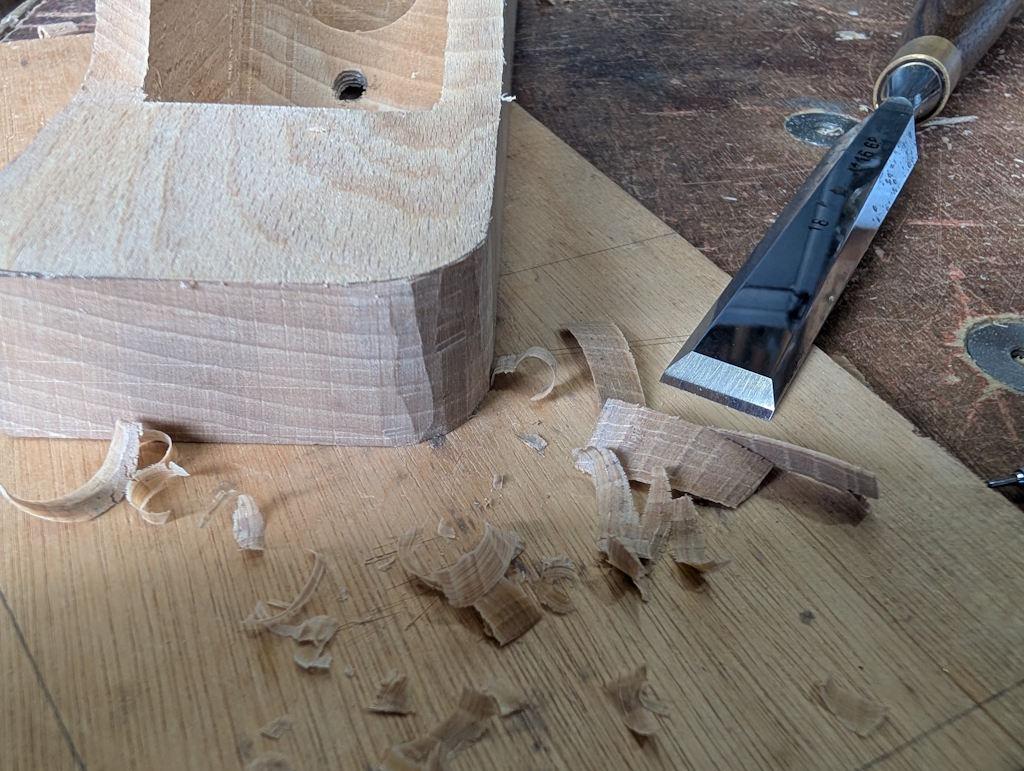
A few years ago the only way I would have thought myself capable of rounding a corner like that would have been with an electric router and a template. It's much more pleasant just doing it with a chisel:
With all that done, I could tidy up the side walls a bit more and then do a test fit of the blade:
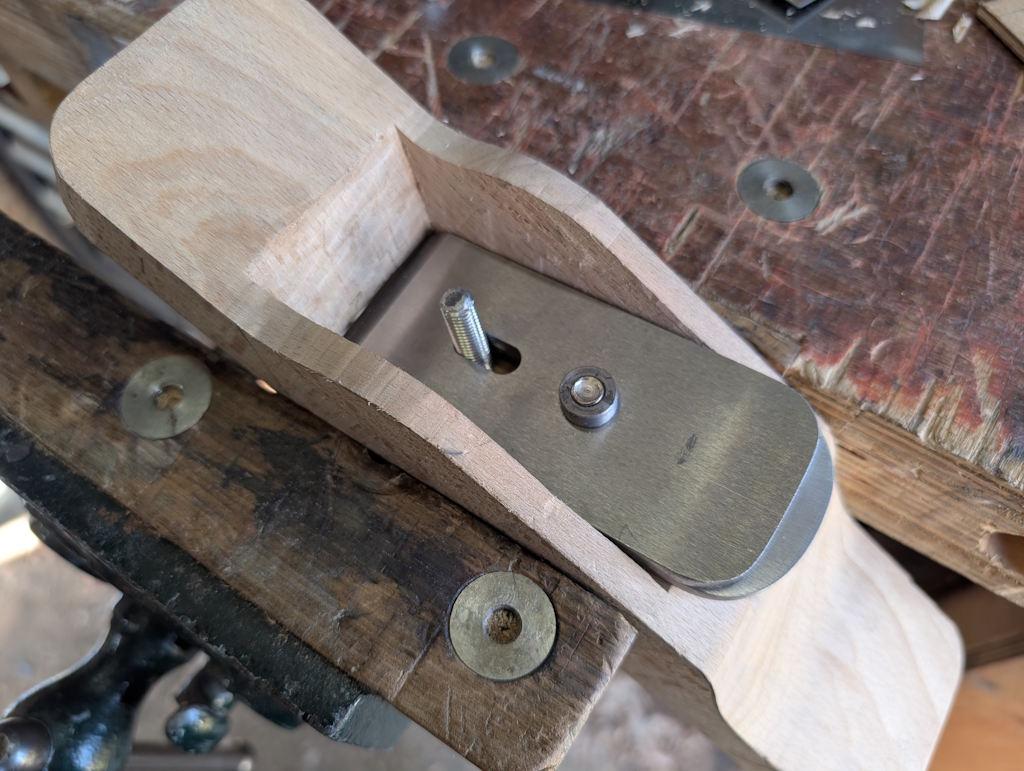
I can't fix it in place yet as there's no lever cap (and I haven't even figured out the design of the lever cap yet - that's a problem for later down the line).
With hindsight I think it would have been better to move the threaded rod location a bit higher up the slope and/or lengthen the slot further. With the blade and cap iron pulled back as far as possible (as shown in that photo), the blade protrudes 2.5 mm out of the bottom of the body. That should be just okay as the brass base is currently 3.2 mm thick so even after attaching it and removing a bit of material through flattening the blade should still be retractable to the point that it doesn't cut.
If it proves to be a problem I can extend the slot in the cap iron (which will remain unhardened) and grind a bit more off the tip of the blades, but I think it should be okay.
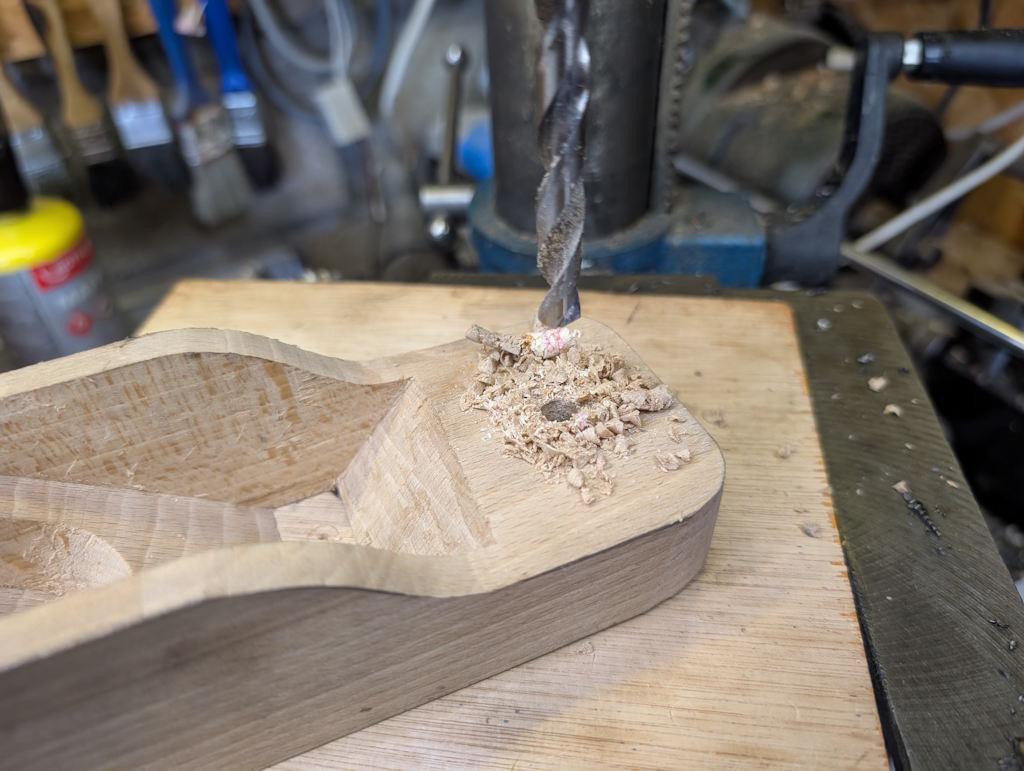
Another quick job before moving onto the next thing: drilling an 8.2 mm hole (clearance for M8) in the front:
It then got flipped over and an 11.1 mm hole drilled 12 mm deep followed by a 14 mm end mill (still in the pillar drill) drilling clearance for the head of a threaded insert:
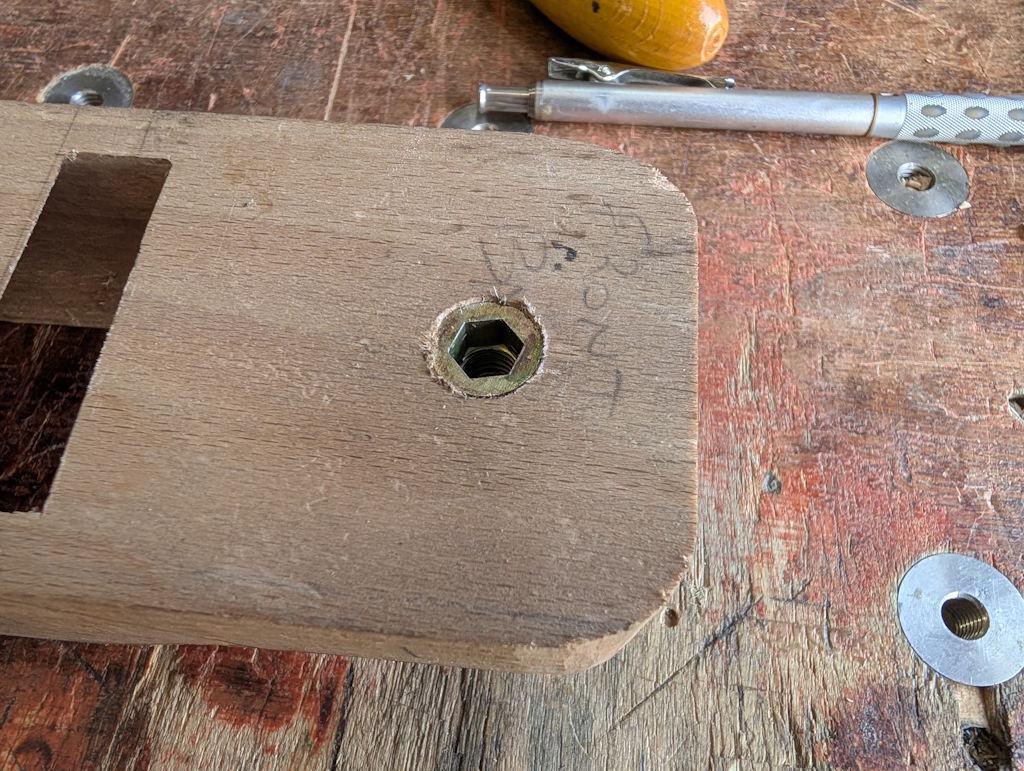
In most situations, inserting a threaded insert from the rear isn't a very good idea as tightening the screw from the other end can also untighten the threaded insert. In this case I think it's okay as the brass base will stop that threaded insert from going anywhere.
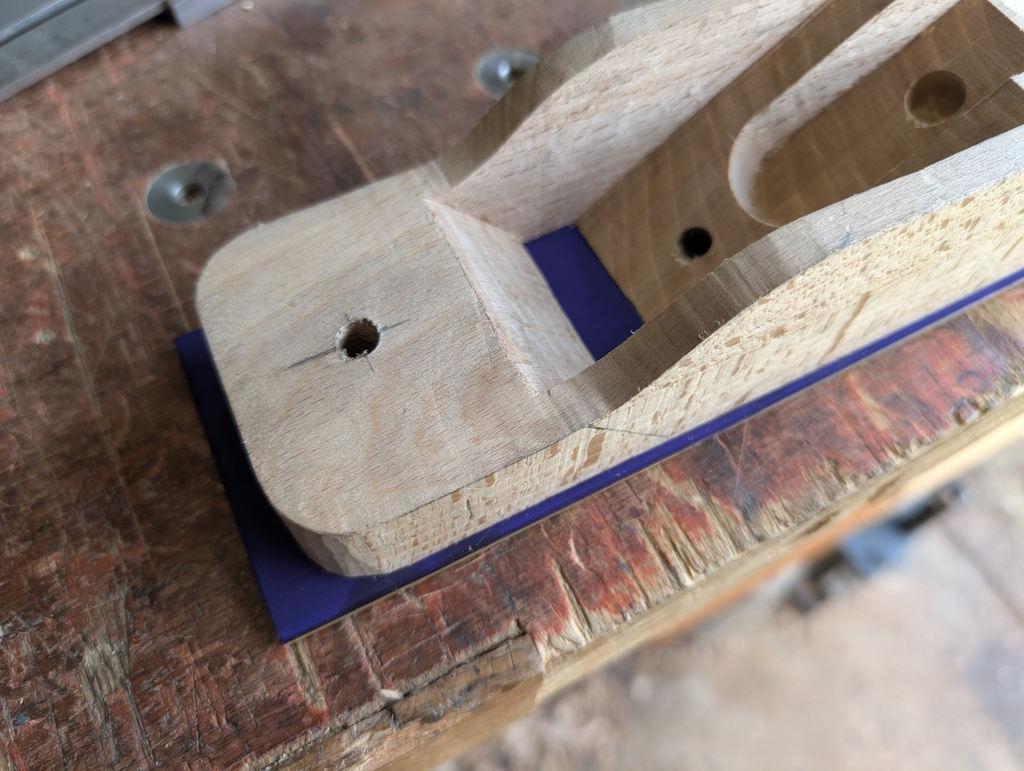
A few days ago, I'd coated the brass base with Dykem. With the basic outside shape of the plane defined, I could plonk it on top of the brass piece and draw around it:
The result:
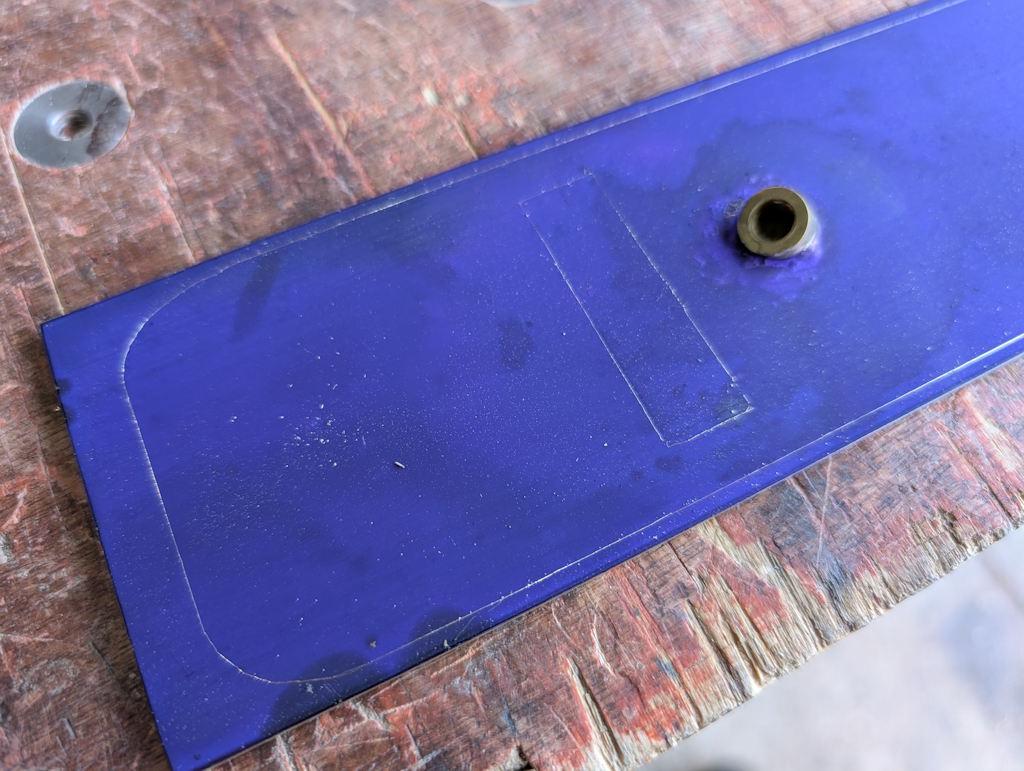
That mouth opening is the maximum size at the upper face. It'll be a lot smaller on the bottom face (the 36° bed angle and 3.2 mm thickness equates to a 4.4 mm reduction in size and there will be a smaller reduction at the front too). I think I'll probably drill or mill it out quite a bit smaller than I expect it to end up. As much as I dislike filing, I think the only way to get the right shape for the mouth will be needle files (all the bigger files I measured were 5 mm thick, which is the same as the blade thickness and hence too thick for filing a close-fitting opening for the blade).
Page 8 of 25
This website is free and ad-free, but costs me money to run. If you'd like to support this site, please consider making a small donation or sending me a message to let me know what you liked or found useful.