
Bevel Up or Down Smoothing Plane Build Process
 Return to main project page
Page 7 of 25
Posted 4th April 2026
Another steel milling job that needed doing was to make the cap iron. The process for this was quite similar to that for the blades except that I didn't use the pillar drill but went straight to the milling machine:
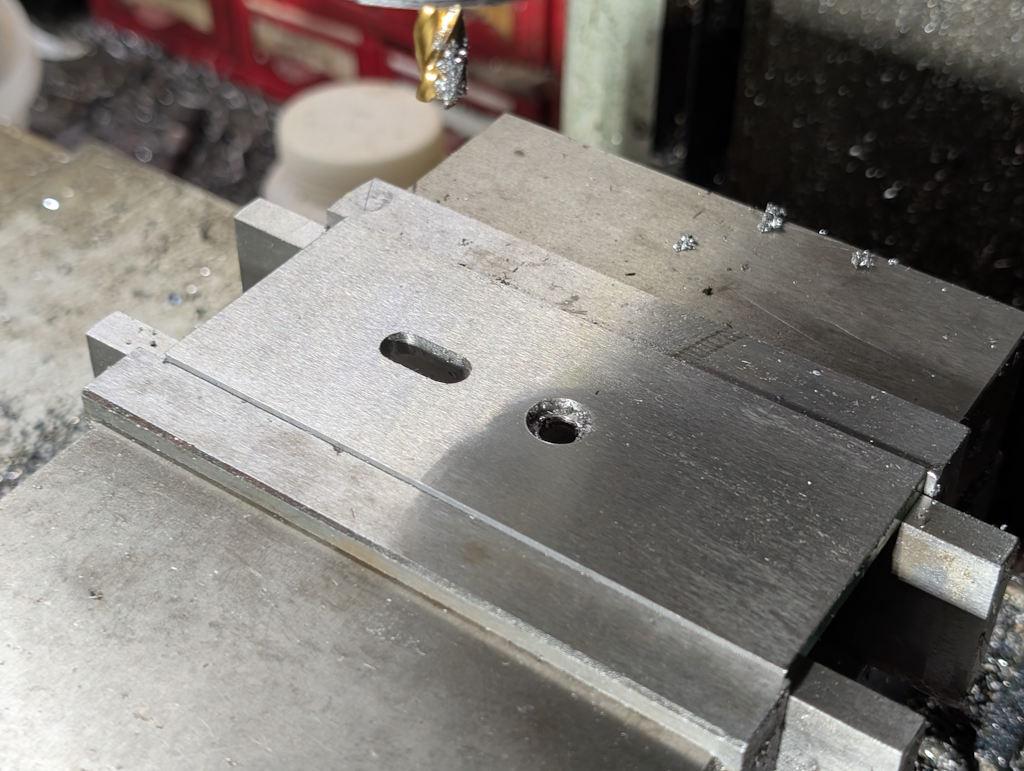
I'm shaping the cap iron to be a bit like a blade but it won't get hardened as it isn't actually cutting. I cut a bevel on it at the final intended angle:
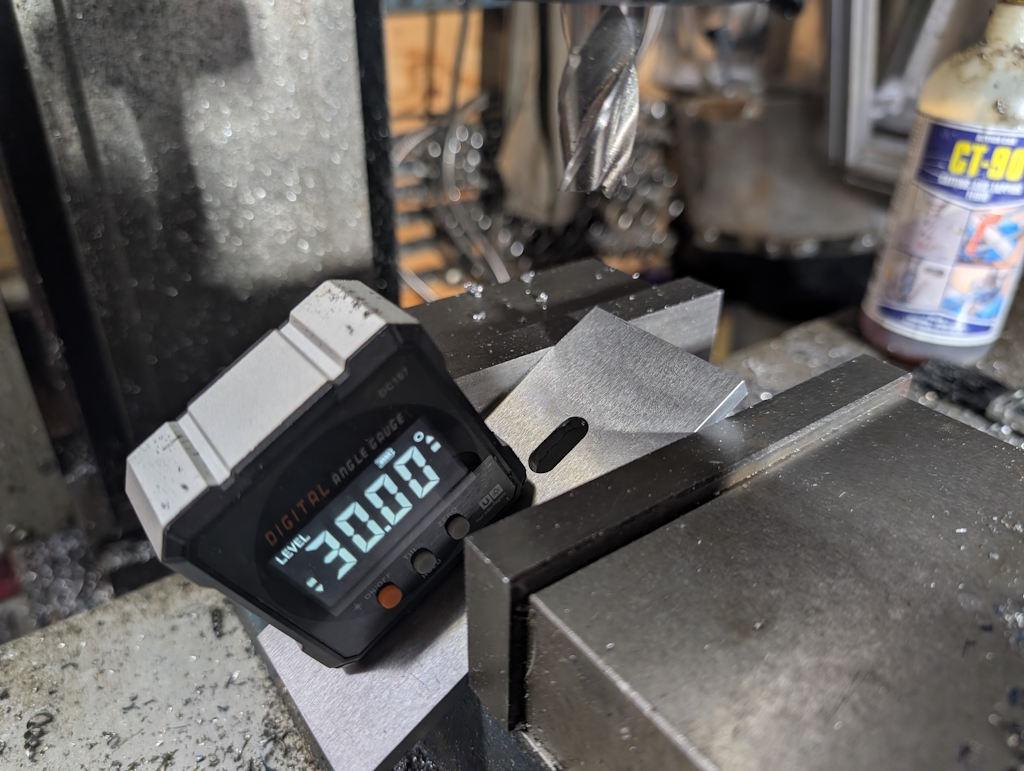
The back got shaped in the same way as the blades but with a slightly different shape for no particular reason:
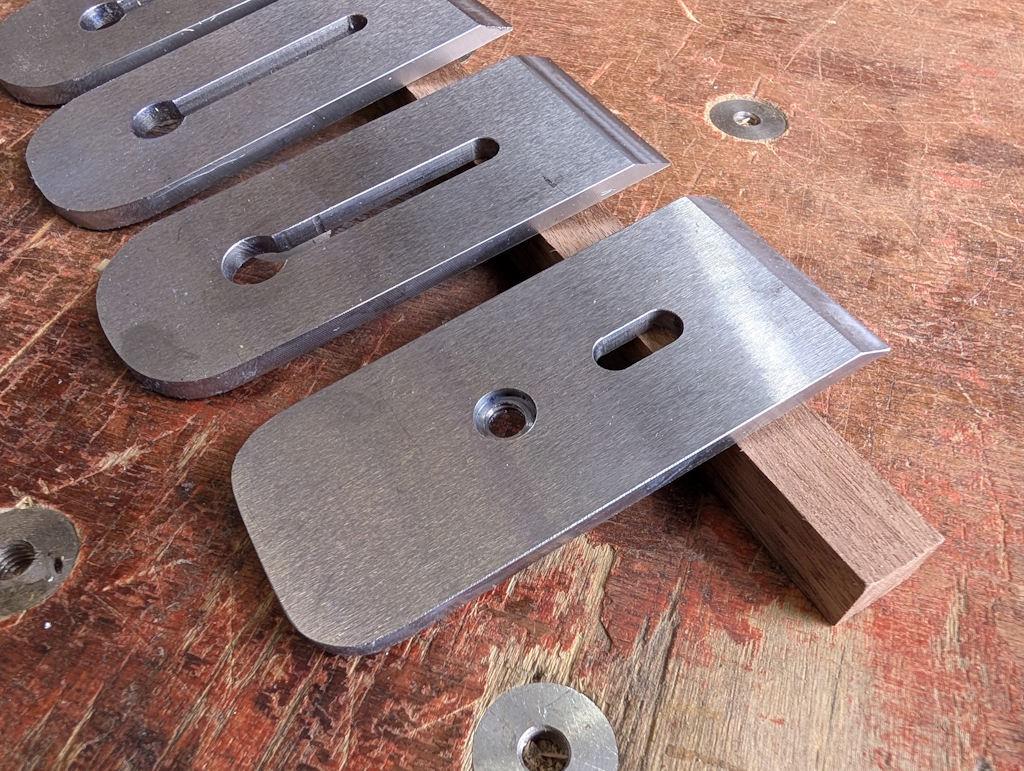
Most cap irons I've seen have a slightly curved shape. The intention of the curve is that, when they're clamped down to the blade, the tip is forced into tight contact with the flat surface of the blade and causes shavings to be deflected by the cap iron rather than getting jammed underneath it.
I've decided to stick with a flat cap iron for this plane (although if it causes problems later I can always come back and modify it or make a new one). As it won't have been hardened, I should be able to slightly deform the very tip with a hammer (like the process done on soft-backed Japanese chisels) so that the tip is ever so slightly curved down but the rest of the cap iron is flat (and that deformation can be quickly re-done if the cap iron bends back). All being well, that'll serve the purpose of giving a tight contact between the blade and the cap iron but without the hassle of making a fully curved part. I won't know the outcome of that until I've finished making the plane, but that's the plan for now.
To attach the blade to the cap iron, I needed to do a very simple turning job:
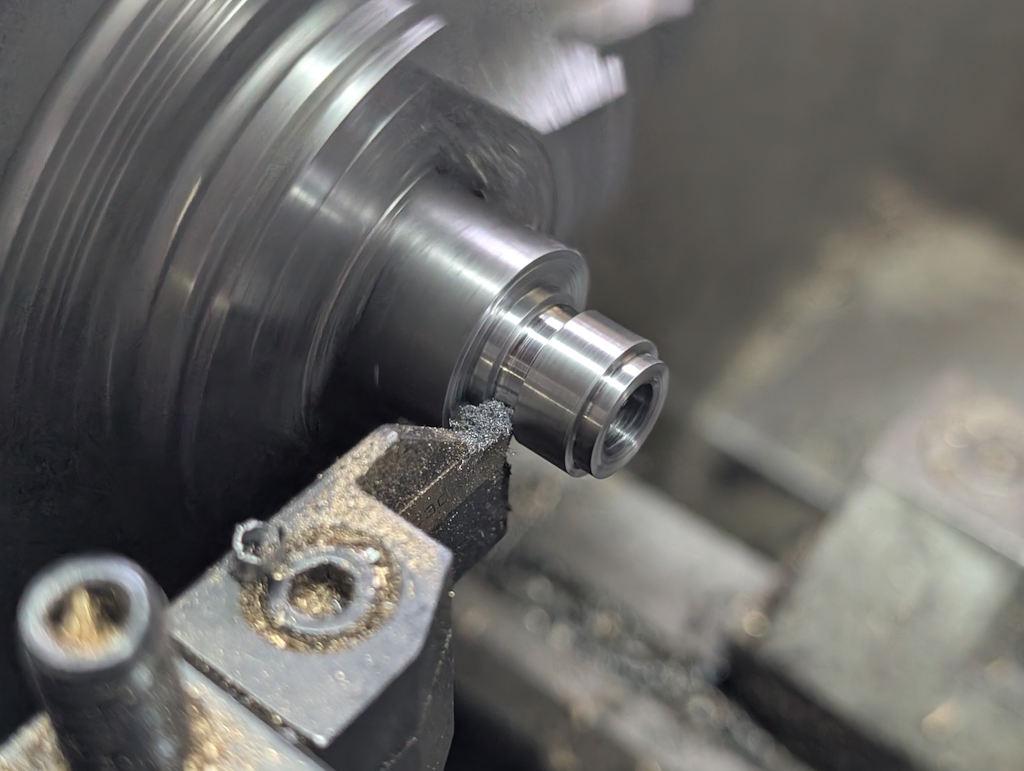
That's 13 mm diameter, reducing to 11 mm at the tip. It has a 6.8 mm through hole. My favourite metal glue got used to fix that into the little pocket in the cap iron:
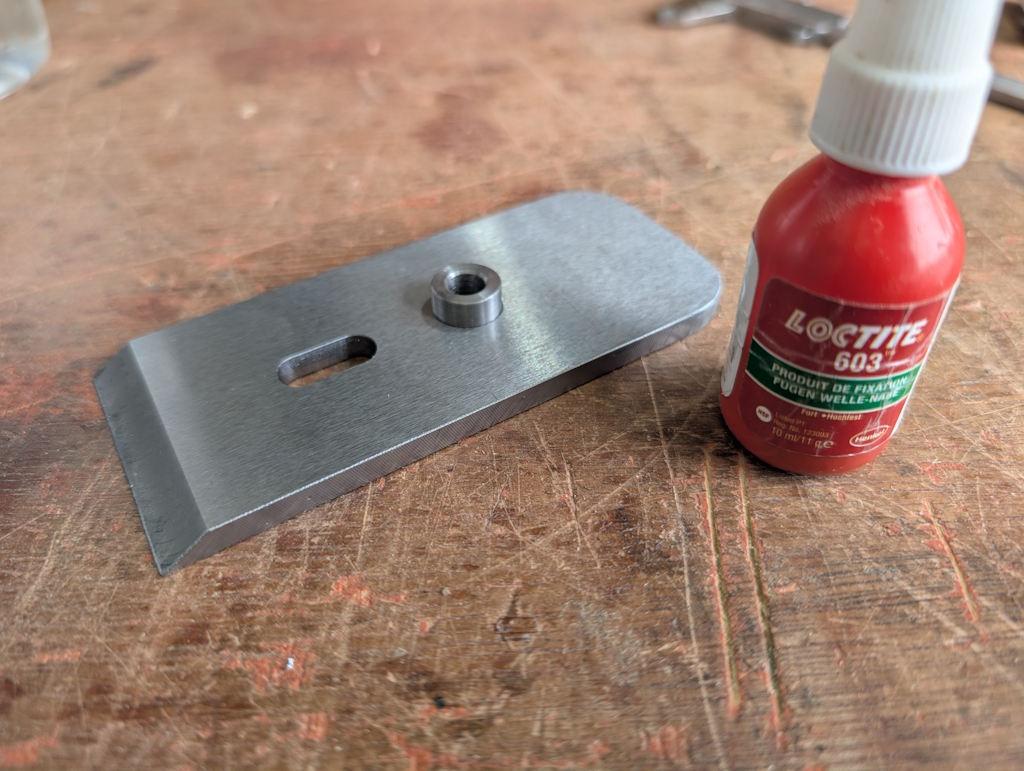
Once the glue had been left for plenty of time to set, I clamped the turned part in the bench vice and then tapped M8 through both together:
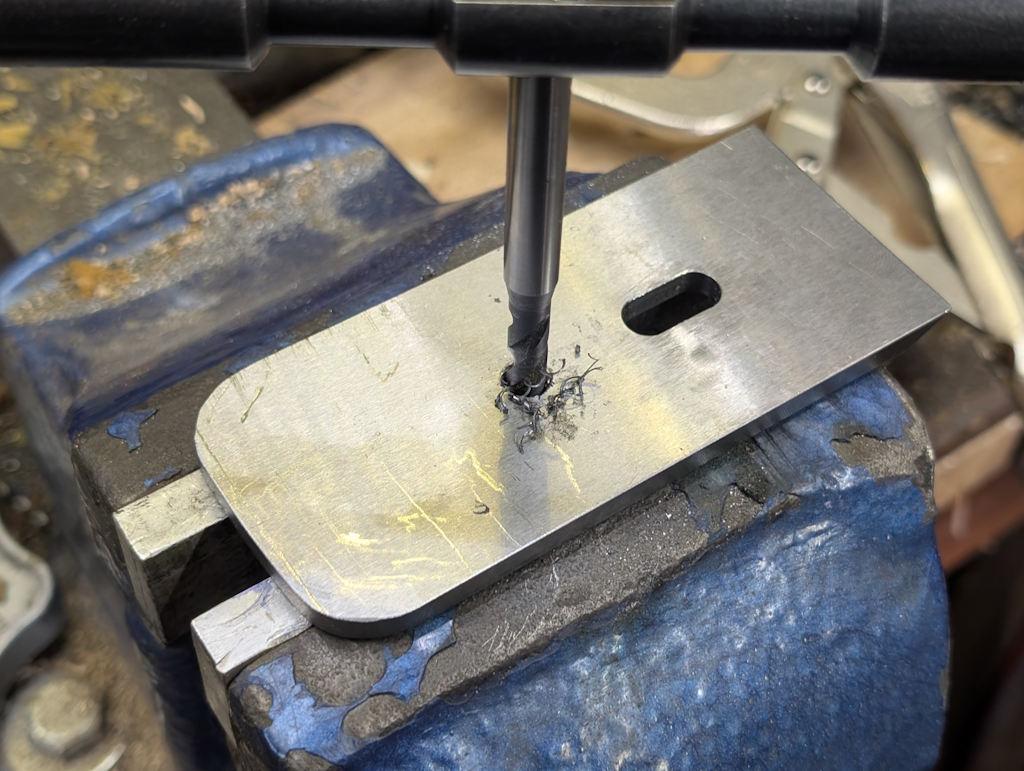
The added bit adds a lot more thread depth (and hence thread strength) but, being glued to the cap iron and having threads in the cap iron as well, I won't need to us a spanner (or similar) to hold onto it when tightening. I think this is a similar approach to how a lot of older cap irons were made, although it was often brass, probably brazed to the cap iron.
A quick test fit showing the cap iron mounted to a blade:
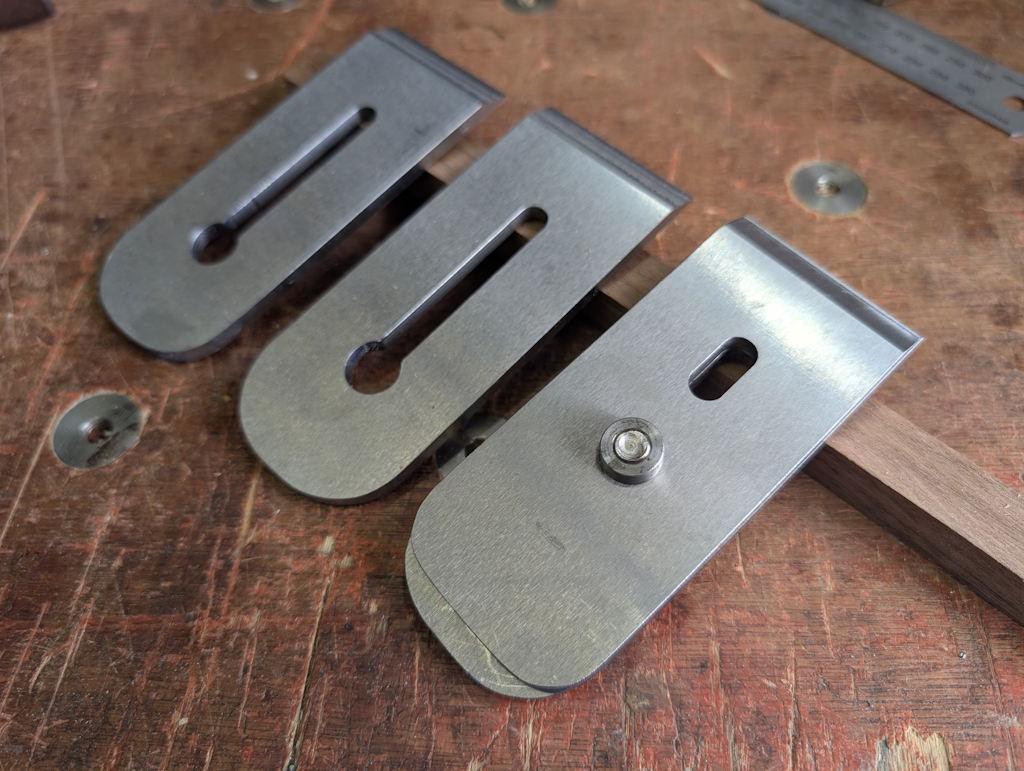
As you can see, I made this cap iron before heat treating the blades (as the process of making the cap iron was quite similar to that of the blades so it made sense to do them at the same time) but I thought I'd post about it separately as it's a distinct part.
Page 7 of 25
This website is free and ad-free, but costs me money to run. If you'd like to support this site, please consider making a small donation or sending me a message to let me know what you liked or found useful.